Stephanie L. Church, Editorial Director

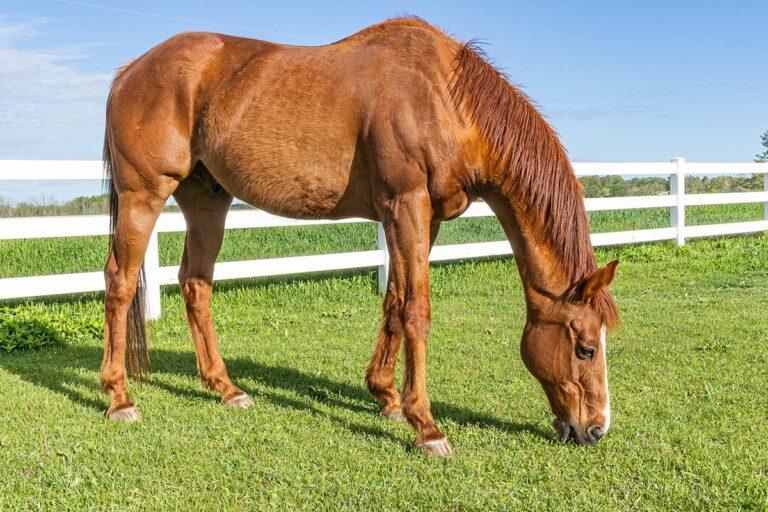
Stephanie L. Church, editorial director for The Horse and Stable Management, grew up riding and caring for her family’s horses in Central Virginia and received a B.A. in journalism and equestrian studies from Averett University. She joined The Horse in 1999 and has led the editorial team since 2010. A 4-H and Pony Club graduate, she enjoys dressage, eventing, and trail riding. Her heart horse, It Happened Again (“Happy,” pictured), a former graded-stakes-winning Thoroughbred gelding, was her longtime mount and remains a lasting inspiration. She now has an 8-year-old off-track Thoroughbred, Dune of Pilat (“Dune”), and is enjoying building a partnership with him. Stephanie is based in Lexington, Kentucky.

Articles by: Stephanie L. Church, Editorial Director

EEE: Still on the Offensive

Eastern equine encephalitis (EEE) case reports have risen into the hundreds this year, with confirmation of equine cases in at least nine states as the virus seemingly moves northwest from hot spots in the Southeast. Florida has been hit hardest, with a total of 174 equine cases reported from 47 counties as of July 25. The outcome of 163 of those cases is known: About 66% of those cases died

Read More

EEE Advisory Issued in Tennessee

Tennessee animal health officials on alert for the return of West Nile virus are also on the lookout for the re-emergence of another mosquito-borne disease in the Southeast–Eastern equine encephalitis (EEE). Tennessee’s first EEE case for 2003 was confirmed last week.

“Outbreaks of viral encephalitis in horses is a seasonal occurrence due to the prevalence of mosquitoes this time of

Read More

Catastrophic Wounds and Treatments

Two novel methods of wound treatment were used on five valuable American Saddlebreds attacked and injected with an unknown caustic substance in the back of their left front pasterns on June 30. The tissue in the injected area became necrotic (died), leaving painful, difficult-to-treat lesions that has resulted in death of two of the horses. The attackers of the horses based near Lexington,

Read More

Update on Two Surviving Saddlebreds

Cats Don’t Dance, one of the two surviving American Saddlebreds injected with a caustic substance several weeks ago, was recovering yesterday (June 21) at Hagyard-Davidson-McGee Associates (HDM) in Lexington, Ky. Nathan Slovis, DVM, Dipl. ACVIM, is the treating veterinarian of the 6-year-old gelding at the hospital’s medicine facility.

Read More

Saddlebred Attack Turns Deadly

Two of the American Saddlebreds attacked and injected with a caustic substance in their left front pasterns were euthanized early today (July 17) in Versailles, Ky., due to complications from their injuries.

Read More

Injured Saddlebreds Continue Treatment: One Still in Critical Condition

Five American Saddlebreds injected with an unknown caustic substance several weeks ago continue to recover from their injuries under the care of several practitioners. Hyperbaric oxygen chamber therapy continues for the animals, and a medication that promotes tissue restoration has been added to the treatment regimen.

Carol McLeod, DVM, MS, a practitioner with the practice of John R.

Read More

West Nile Virus Spreads: Horses in at Least 15 States Affected This Year

West Nile virus (WNV) is steadily spreading across the country, having been detected in at least 33 states so far this year*. Horses in 15 states have been infected with the virus in 2003; the most recent announcements of equine WNV cases were from Kansas and New Mexico.

Health officials in Kansas announced July 9 that they had logged the state’s first equine WNV case for this year.

Read More

Mexico Declares West Nile Virus State of Emergency

According to a Reuters health story distributed via ProMED-mail, Mexico has declared a state of emergency due to West Nile virus (WNV), declaring it a severe risk to the horse population and a growing public health threat.

The first discovery of avian WNV in Mexico was made on May 16 in Tabasco state. The finding prompted the government to launch an equine vaccination campaign for the

Read More

Florida Officials Urge Caution As EEE Cases Reach Epidemic Proportions

Florida Commissioner of Agriculture and Consumer Services Commissioner Charles H. Bronson is concerned about the high number of Eastern Equine encephalitis (EEE) cases in the state and is urging horse owners to get the proper immunizations for their animals against EEE as well as West Nile virus (WNV).

So far this year, 158 horses in 42 counties have been diagnosed with EEE (as of

Read More

Injured Saddlebreds Under Continual Treatment: Growth Factor and Hyperbaric Therapy

The five American Saddlebreds that were injected with a caustic substance the weekend of June 28-29 are on the road to recovery, according to Ric Redden, DVM, founder of the International Equine Podiatry Center in Versailles, Ky. Redden has been checking on the horses daily along with several other veterinarians, and reported that hyperbaric oxygen therapy has been added to the treatment

Read More

Five Saddlebreds Injected With Damaging Substance Under Treatment

The five American Saddlebreds that were injected with an unknown substance and suffered serious injuries as a result continue to recover at Double D Ranch in Versailles, Ky. Ric Redden, DVM, and founder of the International Equine Podiatry Center in Versailles, Ky., visited the horses Wednesday, July 2, further assessed their condition (Carol McLeod, DVM, and others have been treating the

Read More

Maryland Horse Tests Positive for Rabies

Maryland state veterinarian Phyllis Cassano, DVM, announced today that an Anne Arundel County, Md., horse has tested positive for rabies. The 7-year-old Quarter Horse mare named Coup de Harmony had recently competed at the East Coast Barrel Bash in Harrington, Del., June 19-21.

The mare began showing clinical signs July 20, while still at the show. According to the owner’s report, she

Read More

Saddlebred Attacks

In a malicious attack that garnered nationwide news coverage, five top American Saddlebreds were injected with an unknown, necrotizing (tissue-killing) substance the weekend of June 28-29, 2003, at Double D Ranch in Versailles, Ky. These

Read More

First Equine Clone is a Mule

The landscape of equine reproduction research dramatically changed May 29, when a University of Idaho (UI) and Utah State University team announced they were the first to clone a member of the equine family–the mule–according to an article to be published in the journal Science. The research team includes Gordon Woods, DVM, MS, PhD, Dipl. ACT, UI professor of animal and veterinary

Read More

Florida EEE Case Count Escalates to 70; Georgia Count is Nine

The number of Eastern equine encephalitis (EEE) cases in Florida had risen to 70 as of May 30, further substantiating an earlier suspicion that 2003 will be a tough year for fighting the disease. Florida’s case count for all of 2002 was 25 horses.

The disease is caused by a virus found in wild birds, and it’s transmitted to horses and humans via the bite of an infected mosquito. Horses d

Read More

More From The Horse

electrolytes for horses; Why Do Electrolytes Encourage Horses to Drink?
spring pasture, turnout tips, horse turn out, horse in pasture, grazing, spring, spring turnout
Horses in their stable
What's New With Weaning?

Stay on top of the most recent Horse Health news with

FREE weekly newsletters from TheHorse.com

Sponsored Content

Weekly Poll

sponsored by:

How often do you apply fly spray to your horse during peak fly season?
176 votes · 176 answers

Readers’ Most Popular

The Horse
Privacy Overview

This website uses cookies so that we can provide you with the best user experience possible. Cookie information is stored in your browser and performs functions such as recognising you when you return to our website and helping our team to understand which sections of the website you find most interesting and useful.