TheHorse.com en Español: Revisión a Enfermedad Equina de los Pastos
Spanish translation of an article reviewing equine grass sickness (enfermedad equina de los pastos).


Spanish translation of an article reviewing equine grass sickness (enfermedad equina de los pastos).
In the world of blood-sucking tabanid flies, a white horse is not nearly as attractive as a brown or black horse, noted a group of researchers from Hungary, Spain, and Sweden.
This interesting tabanid tidbit is likely to be welcomed
More than 1,370 readers of TheHorse.com responded to a poll asking, “How often do you deworm your horse(s)?”
Among the many topics pertaining to the 2010 Alltech FEI World Equestrian Games that have generated lots of virtual ink is the cost of attending.
Dr. Jenn helps riders get into a better mental place so they can communicate better with their horses. Listen in as she speaks about creating
A few blogs ago I discussed “blue sky” and “mini vacations,” where you allow yourself a few minutes to get away and dream of your

Miscellaneous sessions at the 2009 AAEP Convention, including skin characteristics of horses affected with hereditary regional dermal asthenia (HERDA, effects of Lawsonia infection on performance, unwanted horses survey, castration complications and more.

No horse owner wants to think of even a single worm burrowing in their horse’s innards. But a goal of zero tolerance for worms is no longer a realistic one; increasing resistance of worms (particularly small strongyles) to common deworming drugs means we have to use fewer drugs to avoid creating even more resistant superworms. (Presented at the 2009 AAEP Convention)

Deworming medication resistance, persimmon risks, peritonitis treatment advances, Salmonella biosecurity guidelines, and more equine gastrointestinal topics were discussed at the 2009 convention of the American Association of Equine Practitioners.

Researchers discussed respiratory topics in horses including influenza outbreaks and vaccination boosters, furosemide for exercise-induced pulmonary hemorrhage, dorsal displacement of the soft palate, dynamic respiratory tract endoscopy (during exercise), and more at the 2009 convention of the American Association of Equine Practitioners.

Guidelines for trimming horses’ feet and the results of a study evaluating toe grabs and catastrophic injury in racing Quarter Horses were discussed at the 2009 convention of the American Association of Equine Practitioners.

Options for general anesthesia in horses, analgesics (painkillers), and standing sedation were covered in depth at the 2009 convention of the American Association of Equine Practitioners.

For more than 150 years veterinarians have been performing prepurchase exams, also referred to as vetting, purchase exams, and soundness exams. Two veterinarians discussed purchase exams in general and specifically for Western performance horses at the 2009 American Association of Equine Practitioners Convention.
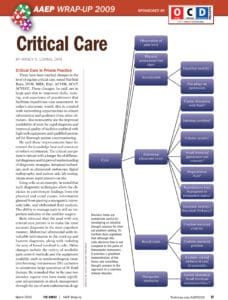
There have been marked changes in the level of equine critical care, noted Fairfield Bain, DVM, MBA, Dipl. ACVIM, ACVP, ACVECC, during the 2009 convention of the American Association of Equine Practitioners. These changes, he said, are in large part due to improved skills, training, and experience of practitioners that facilitate expeditious case assessment.

Diagnosis and treatment recommendations for equine protozoal myeloencephalitis (EPM), the evolution of West Nile virus, and a new treatment option for equine herpesvirus were discussed at the 2009 convention of the American Association of Equine Practitioners.

With a bit of patience, time, and understanding of the horse’s flighty nature, veterinarians and horse owners can easily train a horse to work with them rather than against them. Included are training methods from an authority on equine training.