Haylie Pfeffer

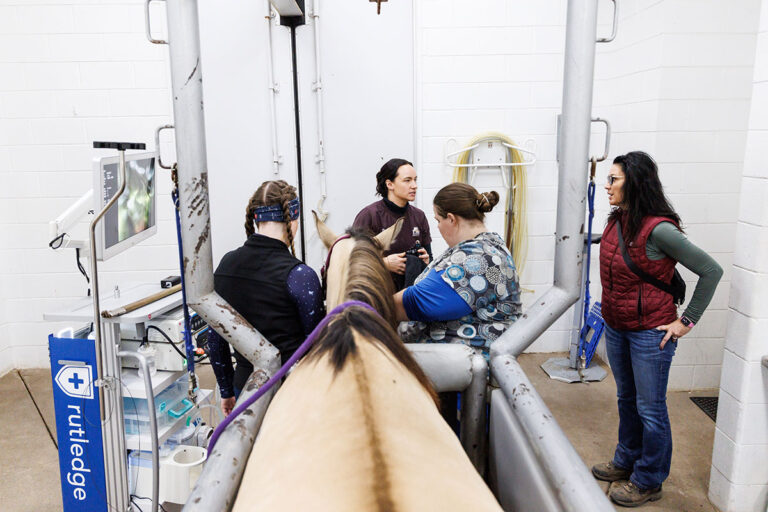
Haylie Pfeffer, Digital Editor, holds a degree in equine studies with a concentration in communications and a minor in social media marketing. She is a Pennsylvania native and, as a horse owner herself, has a passion for helping owners provide the best care for their horses. When she is not writing or in the barn, she is spending time with her dog, Clementine.

Articles by: Haylie Pfeffer

Evaluating and Measuring Hoof Shape

Researchers at the University of California, Davis, recently developed a new three-dimensional system for measuring various aspects of the horse’s sole. One day their work might help ascertain if hoof shape abnormalities can be predictors of impending injury. Additionally, the system might help researchers design new footwear and/or evaluate the foot during movement.

Susan Stover, DVM,
Read More

Preparation of the Mare for Normal Foaling

Riddle said that most mares are outside all of the time or are only brought up for feeding until they reach one month before their expected foaling date. Whatever is preferred, broodmares thrive on routine.

Read More

Dystocia Management

Incidence of dystocia is around 4%, although this varies by breed, Embertson said. While many dystocias are resolved on the farm, some cases need to be referred to a hospital. This decision should be made based on the position of the foal, duration of the dystocia, distance to and preparedness of the referral hospital, and the experience of the farm’s foaling personnel and veterinarian.

Read More

Jump-Starting the Dummy Foal

The term “dummy foal” is being used less and less. A more accurate term for the foal exhibiting behavioral or neurologic abnormalities that are not related to infectious or toxic conditions, congenital or developmental abnormalities, or metabolic disorders is hypoxic ischemic encephalopathy (HIE). Sometimes the term “neonatal maladjustment syndrome” is used.

Read More

Abdominal Pain in Foals (AAEP 2003)

Abdominal pain in the foal can have many different causes, making it difficult to diagnose a cause. However, with knowledge of the different causes, a proper physical exam, the use of diagnostic tools, and common sense, a veterinarian can pinpoint a diagnosis from which decisions on treatment can be based

Read More

When a Foal Needs Surgery (AAEP 2003)

If your new foal develops a disease or medical problem that requires surgery, then time is of the essence. In his AAEP Convention presentation “Surgical Disease of the Neonate,” Rolf Embertson, DVM, Dipl. ACVS, of Rood and Riddle Equine Hospital in Lexington, Ky., discussed a few abdominal and upper respiratory problems that might require surgery and gave veterinarians tips on how to perform some

Read More

The Equine Stomach (AAEP 2003: Milne Lecture)

Merritt’s presentation highlighted advances made over the last 40 years in the understanding of how the equine stomach functions and its related diseases. His presentation had a special emphasis on equine gastric ulcer syndrome (EGUS), and slides of his presentation helped attendees visualize the concepts.

Read More

Alleviating Acute and Chronic Hind Limb Pain

Musculoskeletal pain associated with acute and chronic hind limb injuries is common in equine practice. Unabated pain can result in complications such as gastrointestinal disorders and supporting limb laminitis. Pain management is critical to decrease peri-surgical (before surgery) stress responses, to promote early ambulation (movement), and to minimize the devastating effects of contralateral

Read More

Alternative Site for Collecting Blood

The jugular vein is the most common place to draw blood from a horse; however, this is not always possible. If the jugular vein is damaged or if the horse is no longer tolerant of the procedure, there is an alternative location to draw blood, said Honor Ame Walesby, DVM, MS, Dipl. ACVS, of Louisiana State University, during her presentation at the 2003 American Association of Equine

Read More

Managing a Rabid Horse

Is it colic, or could it be rabies? The horse with rabies is extremely dangerous to himself, other animals, and humans. Rabies is a fatal viral disease of mammals that can be spread to humans through bites, licks, or through contact with the victim’s mucous membranes or an existing wound. Horse owners must use extreme caution if rabies is suspected, and a veterinarian should be called immediately.

Read More

Surgery for Dorsal Displacement of the Soft Palate

Dorsal displacement of the soft palate (DDSP) occurs when the palate partially obstructs the airway by becoming displaced on top of the epiglottis. This obstruction can affect breathing, especially during intense exercise. DDSP is known to be difficult to diagnose and treat. However, one viable option for treatment might be a combination of procedures during one surgery

Read More

Breeding The High-Risk Mare

With advances in modern veterinary medicine happening all of the time, the practitioners agreed that management of high-risk mares is becoming easier, and the probability of a healthy foal is increasing.

Read More

Reproduction/Perinatology Forum at AAEP 2003

Veterinarians interested in reproduction and perinatology (the foal immediately after birth) crowded into the Reproduction/Perinatology Forum at the 2003 American Association of Equine Practitioners’ convention to discuss mare reproductive loss syndrome (MRLS), terminology for the mare breeding soundness examination, vaccination of broodmares with the West Nile virus vaccine, current trends

Read More

AAEP 2003: Multiple Ovulations

There are three major reasons to attempt to have a mare “superovulate” or ovulate more than one follicle at a time. First, in embryo transfer programs there is a greater chance of recovering an embryo with superovulation, thus reducing the expense of getting a viable embryo for transplanting. Second, it has been found that superovulation of a mare in transition (early in the year before she i

Read More

More From The Horse

Fine art horse nose with black copy space
checking horse for ulcers
feeding healthy hard keepers
horse nose

Stay on top of the most recent Horse Health news with

FREE weekly newsletters from TheHorse.com

Sponsored Content

Weekly Poll

sponsored by:

What is your biggest challenge when caring for horses in hot weather?
2 votes · 2 answers

Readers’ Most Popular

The Horse
Privacy Overview

This website uses cookies so that we can provide you with the best user experience possible. Cookie information is stored in your browser and performs functions such as recognising you when you return to our website and helping our team to understand which sections of the website you find most interesting and useful.