Stop the Bleeding
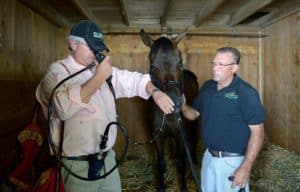
As prevalent as EIPH is, we still don’t fully understand this potentially performance-limiting condition; here’s what scientists are trying to find out.


As prevalent as EIPH is, we still don’t fully understand this potentially performance-limiting condition; here’s what scientists are trying to find out.

Join two internationally acclaimed equitation science researchers to find out how this growing field of study can improve equine welfare, as well as you and your horse’s relationship.

Dr. Clair Thunes defines the differences between grains, concentrates, and complete feeds for horses and explains how much a horse needs.
Raymond Geor, BVSc, PhD, Dipl. ACVIM, will take his new post at Massey University in March 2015.

Utah animal health officials have announced that tests have confirmed three cases of West Nile virus (WNV) in horses in Box Elder, Uintah, and Iron counties.

Find out why a mare might be guarding her caretakers during feeding.

Michigan animal health officials have confirmed three equine cases of Eastern equine encephalitis (EEE): one in a horse from Oakland County and two in horses from Lenawee County.

Researchers have learned that a low dose of a certain omeprazole preparation was as effective in treating some ulcers as the standard dose.
The University of Maryland Equine Extension will host an introduction to equine nutrition clinic on Nov. 1 at the university in College Park.

The aim of equitation science is the scientific measurement, evaluation and interpretation of human-horse interactions that provide evidence that can improve the training, performance, and welfare of the ridden horse.

Researchers are testing a vaccine to treat melanomas, which are among the most common skin tumors in horses.
An Oklahoma man wanted in connection with the theft of four Texas horses has turned himself in to authorities.

The Royal College of Veterinary Surgeons has published its surveys of the veterinary and veterinary nursing professions for 2014.
The horse, a 2-year-old Arabian male from Suffolk, had been vaccinated for Eastern equine encephalitis and West Nile virus more than a year ago but was not revaccinated this year.
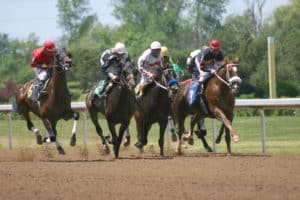
Researchers recently found no link between the vast majority of horses who suffer from exercise-induced pulmonary hemorrhage (EIPH) and long-term racing performance.

Select riders, trainers, and other professionals toured the Purina Animal Nutrition Center, watched research demonstrations, and learned about equine nutrition in lectures in the company’s semi-annual Professional Horse VIP Meeting, held Sept 15-17.