Listen to this article:
Review some of the common plants toxic to horses and their effects

We have all seen that puddle of drool form under our horse’s mouth when he’s standing in the crossties. You might be aware this is caused by consumption of clover, but do you know a toxin called slaframine causes the hypersalivation? Slaframine commonly forms on red clover and irritates horses’ oral and gastrointestinal mucosa (the lining of these structures), causing the drool puddles we see. Although hypersalivation causes no significant threat to our horses, other common plants can have more sinister toxic effects.
Toxic Plants Horses Should Not Eat
Buttercups, for example, add a nice bit of color to the fields but contain the toxic compound ranunculin. This mild toxin generally only causes irritation to oral mucosa but, if a horse consumes it in large amounts, can affect the mucosa deeper in the intestinal tract. Horses that have eaten buttercups could exhibit clinical signs of colic or develop diarrhea. Unlike clover, buttercups are not particularly appetizing to horses and rarely cause problems despite their abundance.

Dock, a hearty weed, flourishes in harsh climates and overgrazed paddocks. It contains high levels of nitrates and oxalates, which are both toxic. When it comes to horses, our primary concern is the oxalates, which bind calcium and magnesium, affecting muscle contraction. Common clinical signs include muscle twitching and weakness, but the muscles at greatest risk are the diaphragm and heart. Oxalates will also concentrate over time in the kidneys, causing damage to renal tubules. Unlike some other toxic plants, dock maintains its toxic principles even when dried, so it is not considered safe in hay.
Horses should also avoid cherry trees, including wild cherry, chokecherry, black cherry, and fire cherry. While the fruit is safe and delicious, the pits, stems, leaves, bark, and branches contain cyanoglycoside. When consumed the cyanoglycoside converts to cyanide, which binds to iron in the red blood cells and prevents delivery of oxygen to the tissues. In cattle the rumen amplifies the conversion to cyanide, making these leaves far more dangerous. Toxicity does occur in horses and is very difficult to treat due to the rapid onset. Clinical signs range from bright red gums and rapid respiratory rate to acute and severe ataxia (incoordination) and confusion. It is worth noting the cyanoglycoside disappears once the leaves completely dry, so cherry leaves in hay are considered safe.
Black walnut trees commonly grow on horse farms in the eastern United States. These trees contain juglone, a potent toxin that alters blood flow. Consumption of bark, leaves, nuts, or the roots of these trees can lead to colic, laminitis, and even death. The juglone toxin is so potent in horses that simple contact exposure can have severe toxicity. The most common way horses come into contact with it is when fresh black walnut wood is incorporated into bedding. Exposed horses can rapidly develop laminitis, oftentimes along with significant vasculitis and limb swelling.

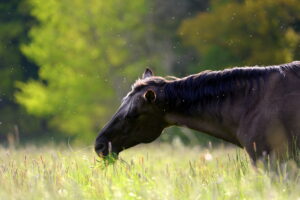
These are only some of the commonly seen toxic plants. While horses find clover very appealing, they generally don’t find most toxic plants appetizing or palatable. Horses typically avoid most of these if they have plenty of other forage available.
Limit Your Horse’s Exposure to Toxic Plants
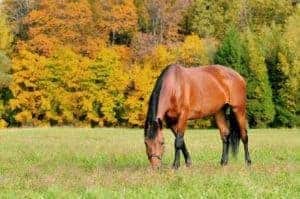
The key to avoiding problems with toxic plants is responsible pasture management. Overgrazing is the primary reason for weed overgrowth in pasture and why horses consume forages outside of their normal diet. Another important part of pasture management includes removing fallen limbs. Following heavy winds or storms, check for not only branches affecting fences but also limbs down in fields that might look like a tasty snack or interesting chew toy for horses. Awareness is key to equine care in every instance, so be on the lookout for clinical signs of toxicity and call your veterinarian immediately if you suspect it.