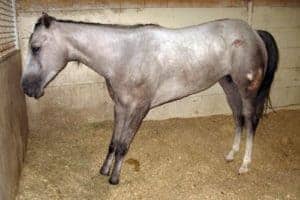
Equine gastric ulcer syndrome (EGUS) often causes lesions in the squamous (upper) or glandular (lower) regions of the horse’s stomach. Researchers have long linked gastric acidity and gastric ulceration, making acid suppression the primary treatment to raise intragastric pH. Monitoring pH levels could help veterinarians assess treatment effectiveness.
Researchers in Australia recently identified a minimally invasive technique to measure stomach pH continuously and accurately without repeated gastroscopy or invasive procedures.
Measuring Gastric pH Levels in Horses
Currently, veterinarians often use aspiration to collect gastric fluid during gastroscopy to measure pH, but this provides only a single time point, and the fasting and sedation necessary for the procedure could affect results.
Indwelling nasogastric pH probes allow continuous monitoring but can shift or break, and users can’t pinpoint their exact position—an issue because pH varies by regions of the horse’s stomach, said Evelyn Hodgson, BVSC, MSc, MANZCVS, an internal medicine resident at the University of Queensland, in Gatton, Australia. More invasive options, such as percutaneous endoscopic gastrotomy (PEG) tubes or gastric cannulas, also allow continuous monitoring but require placing a tube or cannula directly into the stomach through the abdominal wall, she added.
“We wanted to figure out if it was possible to measure the pH of a horse’s stomach wirelessly and, if so, to describe the method we developed,” said Stephanie Bond, PhD, also from the University of Queensland. “We also wanted to determine how long we could continuously record the pH using this technique.”
A Noninvasive Way to Study Gastric Ulcers in Horses
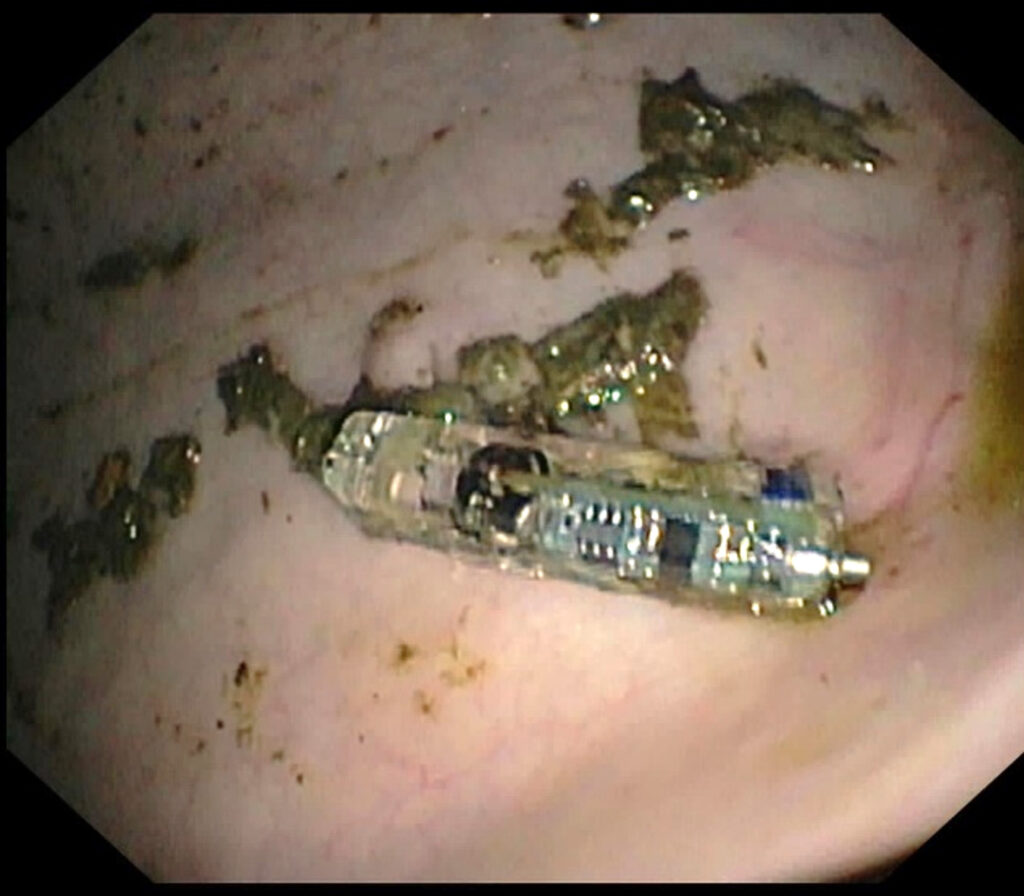
The researchers adapted wireless pH capsules designed for esophageal pH monitoring in humans to the mucosa (lining) of the horse’s stomach using endoscopic clips. They attached a total of 18 capsules to either the squamous mucosa (which lacks protection from gastric acid) or glandular mucosa (lined with a protective mucus-bicarbonate layer) across 11 horses. Additionally, they attached a wireless recorder to each horse via a surcingle to allow continuous pH data collection. Before this gastroscopy the researchers withheld food from the horses for 16 hours and water for two hours.
“The wireless signal from the capsules was strong enough that we were able to continuously record the pH in all capsules, both when the horses were fasted and when they were fed,” said Bond. The researchers reported that capsule attachment time varied among horses, with 53% remaining attached for at least 24 hours and squamous capsules lasting significantly longer.
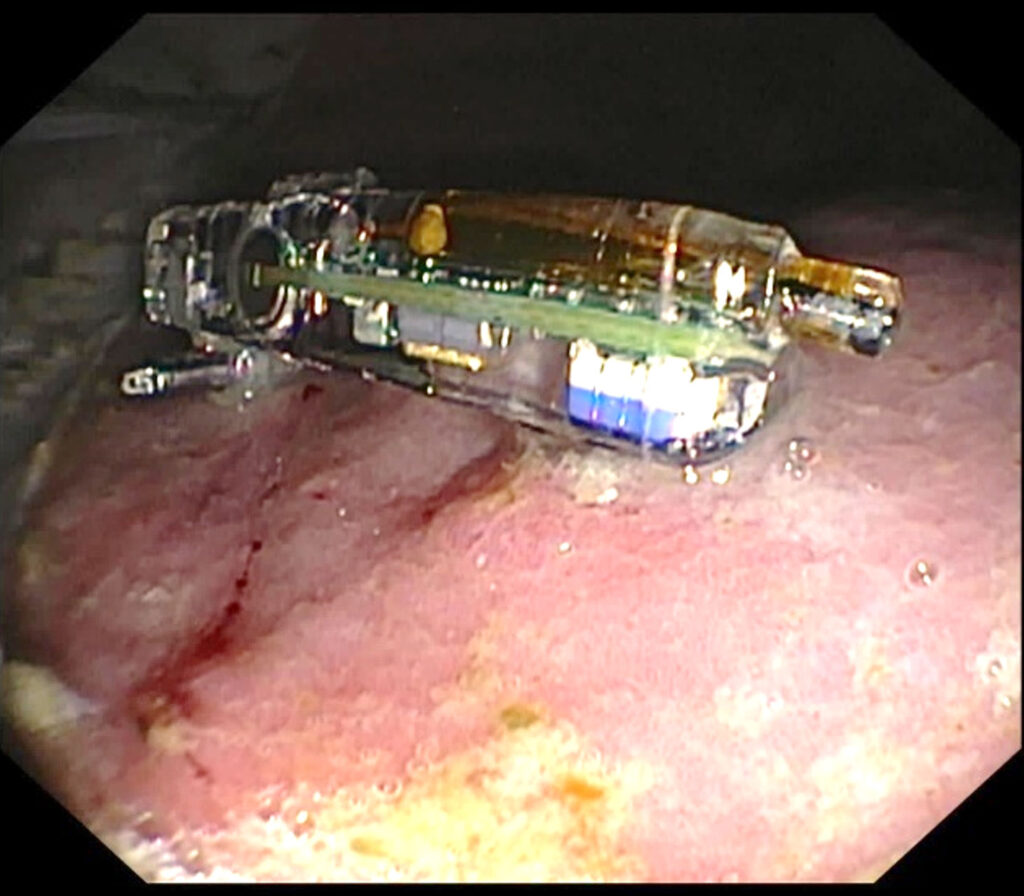
The researchers reported that all study horses tolerated the capsule-clip attachments well and without any complications or adverse effects. “Retention of capsules improved with technique refinement, and the use of more clips increased the attachment duration,” said Bond. “Importantly, there was no substantial damage to the lining of the stomach due to capsule attachment.” They identified only mild focal lesions at capsule attachment sites in six horses, which was clinically insignificant.
“Aspiration of a gastric fluid sample only provides a single-point-in-time measurement and can only be performed when the horse is fasted to allow for a clear view of the stomach lining,” said Bond. “In contrast, our method allows the measurement of gastric pH continuously, including when the horse is eating.”
Hodgson said the capsules’ fixed electrode location and noninvasive placement make them a promising tool for studying EGUS treatments, including new acid-suppressive medications, said Hodgson. It might also help veterinarians in the field identify and manage horses not responding to standard ulcer treatment.
Take-Home Message
Veterinarians can apply his novel technique to measure intragastric pH in horses at a known, fixed location in the stomach in both fasting and fed states, using commercially available equipment. The approach offers a viable noninvasive alternative model to reliance on invasive, single-point pH measurements for research and clinical scenarios and can be used in a field setting.
The study, “A novel placement method of a calibration‐free pH capsule for continuous wireless measurement of intragastric pH in horses,” appeared in the Journal of Veterinary Internal Medicine in December 2024.