Thrush remains one of the most common hoof problems in horses, and one of the most inconsistently treated.
The best thrush treatments use effective delivery methods and ingredients that don’t harm healthy tissue. But horse owners often reach for whatever treatment they have on hand without knowing what’s in the product or whether it can reach the infection site.
Equine Thrush Explained
Thrush is a bacterial and fungal infection of the horse’s frog, which is the soft, V-shaped structure on the underside of the hoof.
Fusobacterium necrophorum is the most common anaerobic bacteria species associated with thrush in horses. Hooves packed with manure, mud, or wet bedding create an ideal oxygen-depleted environment for anaerobic bacteria and fungi to grow.
The result is a black, foul-smelling discharge in the frog’s grooves. If left untreated, the infection can reach sensitive tissue and cause lameness. Severe cases require veterinary intervention.
How Thrush Treatment Ingredients Work
Thrush treatments rely on a range of antimicrobial ingredients, each with a different effect on the surrounding tissue:
- Copper sulfate and iodine act as general antiseptics, denaturing proteins in bacterial and fungal cells on contact. Both are typically used in diluted form because concentrated solutions can irritate surrounding tissue.
- Formaldehyde- and phenol-based powders are more aggressive, breaking down cell membranes and proteins indiscriminately. That same action makes them caustic enough to damage the healthy tissue around the infection.
Absorbine’s Silver Honey® line uses ingredients that treat the infection without damaging the tissue it’s trying to heal:
- Manuka Honey provides natural antibacterial and antifungal action, helping maintain a balanced environment that supports healing.
- MicroSilver BG® provides broad-spectrum antimicrobial protection and remains on the surface rather than being absorbed, thereby extending its effect over time.
Thrush Treatment Delivery Formats
Thrush hides deep within the frog’s central and collateral sulci, which are the grooves in the middle and along both sides, respectively. A treatment that never reaches the infection does little good, no matter how effective the ingredients.
- Liquid solutions pour on easily but run off before soaking into tight spaces.
- Gels and ointments cling better but take a hoof pick to pack deep into a groove.
- Hoof packing makes solid contact but needs a wrap or a boot to stay in place.
- Powders hold up in dry conditions but can form a crust on the surface instead of penetrating beneath.
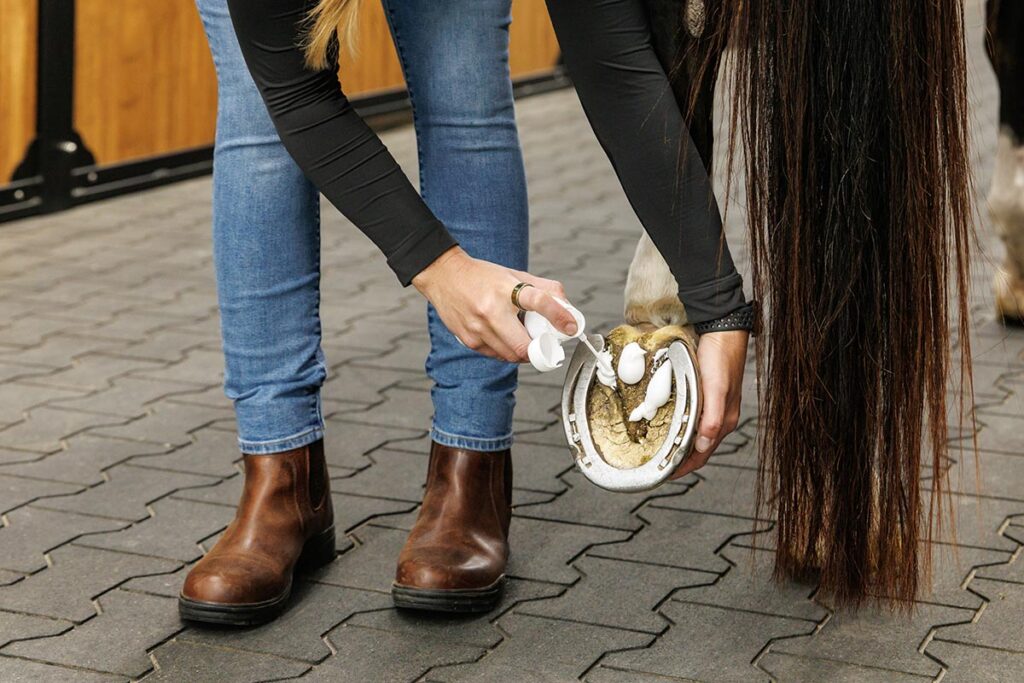
- Foam expands on contact to fill those same sulci without running off, closing the gap the others leave.
Silver Honey® Rapid Hoof Care Thrush Foam
Silver Honey® Rapid Hoof Care Thrush Foam uses Manuka Honey and MicroSilver BG® to fight thrush. This vet-developed formula stops 99.9% of bacteria without the tissue damage associated with caustic ingredients.
The precision straw applicator reaches areas other delivery formats miss. The foam it delivers expands on contact and pushes into frog sulci and surface cracks without running off or staining the hoof wall.
For an active infection, apply daily for at least three days. For maintenance, apply it twice weekly to prevent thrush from returning.
Take-Home Message
Most thrush treatments fail for one of two reasons: The ingredient can’t kill bacteria without harming healthy tissue, or it never reaches the infection site. A treatment that solves both problems can clear thrush and keep it from coming back.