
Flehmen Response in Horses
Flehmen is the term used to describe the behavior in which a horse extends its neck, raises its head, and inhales as it rolls its upper lip back, displaying its front teeth. Sharon Crowell-Davis, DVM, PhD, Dipl. ACVB explains that horses display the flehmen response to facilitate transfer of inhaled scent molecules (pheromones and possibly some other substances) into the vomeronasal organ (VNO)
UC Davis to Host “Hoof Management in Sport Horses” Lecture
The 2011 Charles Heumphreus Memorial Lecture will take place on Jan. 29, 2011, at the University of California, Davis, School of Veterinary Medicine. Michael Ross, DVM, Dipl. ACVS, and Patrick Reilly, farrier, both from the New Bolton Center of the University of Pennsylvania School of Veterinary Medicine, have been invited as featured speakers to discuss “Hoof Management in Sport Horses.”
Heart Problems in Horses
The circulatory system (heart and blood vessels) and respiratory system (lungs and airway) work together to provide oxygen throughout the horse’s body, and to transport waste material from the horse’s tissues. During exercise, the circulatory and respiratory systems are the mechanisms that allow the horse’s musculoskeletal system (bones, connective tissue, muscles) to produce motion from energy.
Merry Christmas from The Horse
The holiday season is once again upon us! Here at our home office in Lexington, Ky., we are fortunate enough to be celebrating a white Christmas this year. Today, we are spending the day with our families (both two- and four-legged!), and we hope you are doing the same. Our goal all year long is the bring you the latest and most informative horse health care information, and we sincerely appreciat
Tying-Up in Thoroughbreds: Narrowing the Genetic Search
Researchers suspect tying-up in horses is a heritable condition; however, they have yet to determine the gene–or genes–responsible. But a team of Japanese researchers recently moved the investigation forward with a groundbreaking study of affected Thoroughbred racehorses’ DNA. Muscle disorders such as polysaccharide storage myopathy (PSSM, recognized mainly in Quarter Horses) and recurrent
Neuroaxonal Dystrophy in Horses
Neuroaxonal dystrophy (NAD) is a degenerative central nervous system disease of horses, humans, and other animals. Horses affected with NAD usually appear dull or depressed with weakness and mild to severe gait abnormalities (ataxia) that affect all four limbs, although the hind limbs are usually more severely affected. Clinical signs of NAD are usually first observed in young horses under the
New Propofol Controls: AVMA Offers Important Guidance
The American Veterinary Medical Association (AVMA) has offered input to help smooth implementation of proposed new federal guidelines on a useful and effective induction agent, propofol. The Drug Enforcement Agency (DEA) has proposed making propofol a Schedule IV drug (drugs that have a safe and accepted medical use in the United States, including those certain narcotic and non-narcotic drugs,
Horsey Hollywood: Meet the Equine Stars of “True Grit”
On Dec. 22, Paramount Pictures released the remake of the 1969 John Wayne classic, True Grit. Among the star-studded cast of the film are Jeff Bridges, Matt Damon, and a slew of equine actors that bring the Western movie to life. The “director” of the equine stars for True Grit was Rusty Hendrickson, who has worked with horses on movie sets for more than three decades and has been the head horse
Stats Look at Fatal Horse Racing Injuries Over Two Years
An analysis of statistics compiled by the Equine Injury Database (EID) for a two-year period shows a slight decline in the number of catastrophic injuries to Thoroughbred racehorses during that time, officials said Dec. 15.
Surgical Methods for Angular Limb Deformities Assessed (AAEP 2010)
Angular limb deformities (ALDs) of the carpus (knee) are a common problem in foals and yearlings, and researchers have narrowed the surgical treatment options down to the two that present the best results. Eric R. Carlson, DVM, an equine surgery resident at the University of Illinois’ Veterinary Teaching Hospital, gave a presentation on these options at the 56th Annual Convention of the American
More Than 100 Horses Seized from Arkansas Farm
The Fulton County Sheriff’s Office, with assistance from the American Society for the Prevention of Cruelty of Animals (ASPCA), the Humane Society of the United States (HSUS), and the American Humane Society recently seized 117 horses from a farm in Viola, Ark.
Barbara Schmidt to Serve as Next AVMA Treasurer
The American Veterinary Medical Association (AVMA) executive board has elected Barbara A. Schmidt, DVM, of Union, Ky., as the association’s next treasurer. Schmidt, an equine practitioner, will officially begin serving as AVMA treasurer in July. The treasurer is a nonvoting member of the executive board.
Horse Tip Daily aaep-20063 – Dr. Johnson on Grading Lameness
Dr. Jenny E. Johnson is a regular contributor to the Jumping Radio Show. Listen in today as Dr. Johnson speaks about the grading of of
NARHA Announces New Certification
The NARHA Equine Specialist Certification Subcommittee and the NARHA staff announced the Equine Specialist in Mental Health and Learning Certification. Equine-Facilitated Learning and Equine-Facilitated Psychotherapy are rapidly growing fields, and this certification is meant to improve the experience for all involved. A lot of hard work has been done by the Equine Specialist Certification S
Complaint Seeks Probe of Wyoming Lawmaker
A Wyoming woman has asked the Speaker of the State’s House of Representatives and other officials to investigate Representative Sue Wallis on grounds that the lawmaker violated ethics laws when she sponsored legislation to allow horse processing plant development in that state. Wallis was the primary sponsor of HB 122
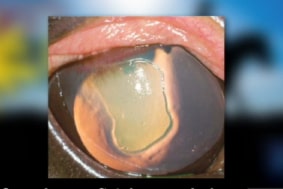
Ocular (Eye) Surface Failure in Horses (AAEP 2010)
Update on what veterinarians and horse owners need to know about ocular (eye) surface failure (such as corneal ulcers) in horses, from Dr. Dennis Brooks of the University of Florida. (Presented at the 2010 American Association of Equine Practitioners convention, Milne State-of-the-Art Lecture)


