Latest News – The Horse
Drug Interaction in Lame Horses
Whether it is in the Olympics, Major League Baseball, college football or horse racing, the use of multiple pain-relieving drugs to enhance performance is a major concern. Now, one University of Missouri-Columbia veterinarian is testing different combinations of non-steroidal, pain-killing drugs in horses to determine if their use actually enhances performance and to identify any side effects
Animal Identification Plan Largely Misunderstood
Comments collected on the draft U.S. Animal Identification Plan (USAIP) have been largely characterized by misunderstanding and frustration, according to one government official. The plan, which at this time is not an official program of the USDA, was designed to establish a timely traceback system to minimize the the spread of foreign animal diseases, such as foot and mouth disease, an
Inherited Quarter Horse Disease Traces To Poco Bueno
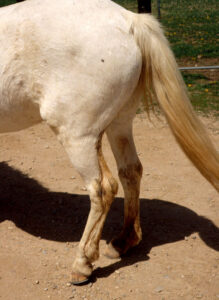
Poco Bueno has been identified as the sire line associated with the brutal affliction known as hyperelastosis cutis or hereditary equine regional dermal asthenia (HERDA).
Hereditary Disease Research Into HERDA
If we have any doubt about a horse with lesions that look like HERDA (also called HC), we can test to see if that animal does have this disease. Usually it’s easy to diagnose, once you’ve seen a few.
Good and Bad-Footed Horses
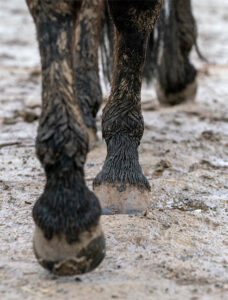
Bowker, one of the foremost researchers on the structure of the horse’s foot, discussed several characteristics that differ between “good” feet and “bad” feet in great detail. First, however, he defined what most consider a good, strong foot.
International Hoof-Care Summit Succeeds With Innovative Format
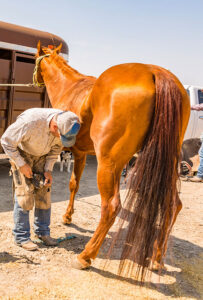
More than 500 farriers, equine veterinarians and other hoof-care professionals filled the lecture halls and meeting rooms of the first annual International Hoof-Care Summit, held Feb. 4 through 7 in Cincinnati, Ohio. The success of the Summit marks a milestone in the equine hoof-care industry because of the event’s unusual format.
The Summit broke the traditional structure of hoof-car
The Blood-Horse Launches Online Directory of Thoroughbred Welfare and Rescue Organizations
In conjunction with its focus on the plight of the retired and unwanted Thoroughbred in the Feb. 28 issue of Blood-Horse magazine, Blood-Horse Publications announces the establishment of what is believed to be the first-ever online directory of Thoroughbred welfare and rescue organizations. Located on the web at
Nutrient Requirements of the Foot
The hoof is a truly dynamic architecture, and its nutrient supply is critical for its strength and function, said Connie Swenson, PhD, research nutritionist with Zinpro Corporation, at the Second International Equine Conference on Laminitis an”P>The hoof is a truly dynamic architecture, and its nutrient supply is critical for its strength and function, said Connie Swenson, PhD, research nutritionist with Zinpro Corporation, at the Second International Equine Conference on Laminitis”>The hoof is a truly dynamic architecture, and its nutrient supply is critical for its strength and function, said Connie Swenson, PhD, research nutritionist with Zinpro Corporation, at the Second International Equine Conference on Laminit”The hoof is a truly dynamic architecture, and its nutrient supply is critical for its strength and function, said Connie Swenson, PhD, research nutritionist with Zinpro Corporation, at the Second International Equine Conference on Lamini”The hoof is a truly dynamic architecture, and its nutrient supply is critical for its strength and function, said Connie Swenson, PhD, research nutritionist with Zinpro Corporation, at the Second International Equine Conference on Lamini”he hoof is a truly dynamic architecture, and its nutrient supply is critical for its strength and function, said Connie Swenson,”e hoof is a truly dyn
Immune Responses to Equine Vaccines: Study
Lunn presented studies that he and six other scientists completed comparing immune responses between commonly used, commercially available vaccines.
Conformation And Racing Problems (AAEP 2003)
Genetics, racing surface, number of starts, age of the horse, pre-existing disease, conformation, and trauma have all been implicated as potential factors in the cause of racing and training injuries.
Maryland Barn Fire Kills 25 Horses
Twenty-five Quarter Horses were killed yesterday (Feb. 22) in a barn fire in Damascus, Md., according to an article in the online edition of The Baltimore Sun.
The fire was reported around 6 a.m. at Summerwind Farm, a breeding and training farm in Montgomery County. “Firefighters found a 100-foot by 100-foot barn
Equine Glaucoma: High-Pressure Eyes
Glaucoma (increased fluid pressure within the eye to a level incompatible with eye health) in horses is not well recognized, but look for it in cases of cloudy cornea, corneal edema, or severe unrelenting ocular inflammation.
KAEP Annual Meeting
The Kentucky Association of Equine Practitioners (KAEP) held its annual membership meeting Feb. 18 in Lexington, Ky. The organization was established in 1979 as a constituency of the Kentucky Veterinary Medical Association. It has grown from a handful of equine veterinarians to over 160 members and has been active all aspects of equine health and welfare in the commonwealth.
Outgoing
Famous Parasitologist Dies
J. Harold Drudge, DVM, Professor Emeritus in the University of Kentucky’s Department of Veterinary Science, died Jan. 28. Widely acknowledged for his numerous contributions to the field of parasitology, Drudge is especially known for the significance of his work in equine helminthology (the study of parasitic worms). He received various national and international awards, and wa
Possible Equine Anthrax Outbreak in India
According to a Feb. 23 ProMED-mail post, Kashmir, India, could be experiencing an equine anthrax outbreak.
In late December 2003, an India Times article reported that, “Veterinarians here have raised alarm over the spread of anthrax amongst livestock. Over 135 horses from a state-run stable have died due to the deadly disease. The numbers are rising.” According to the
North Carolina’s “Horse Health Awareness Week”
Feb. 21-28, 2004 has been designated by the North Carolina Horse Council (NCHC) as “Horse Health Awareness Week.” Equine veterinary practitioners and horse organizations across the state were encouraged to hold special clinics and other events this week to call attention to horse health.
The NCHC recommended that veterinarians emphasize four especially important diseases and made