Latest News – The Horse
UI Scientist, Cloned Mules Featured at Seattle Conference
Gordon Woods, DVM, MS, PhD, Dipl. ACT, the University of Idaho scientist who led the research team that successfully produced the first clone in the horse family, will be a featured speaker at the American Association for the Advancement of Science’s (AAAS) annual meeting currently underway in Seattle, Wash.
Idaho Gem, the
North Carolina Practitioner Chosen as First “My Vet Matters” Honoree
Ellen Tinsley Hoots, DVM, MS, of Hoof Beats Veterinary Practice in Willow Spring, N.C., has been selected as the January honoree of the American Association of Equine Practitioners’ (AAEP) My Vet Matters Contest. Hoots was nominated for the award by horse owner Denise Bricker of Clayton, N.C. Over 140 veterinarians were nominated during January.
In her nomination of Hoots, Bricker
Return to Racing for Roarers After Surgery
Results of a study from the University of Pennsylvania’s New Bolton Center suggest that there is a high chance that a horse can return to racing after surgery for laryngeal hemiplegia (partial or complete paralysis of the larynx, also called roaring) or arytenoid chondritis (inflammation of the arytenoid cartilages resulting in paralysis).
Rhodococcus equi: Genetic Variability and its Clinical Implications
If there are any two words that can cause a foaling operation’s manager to shudder, they are probably “Rhodococcus equi,” since the bacterium is considered the most common cause of severe pneumonia in foals.
Diagnosing Respiratory Tract Ulcers
“Indications to evaluate this area include respiratory noise and a persistent cough, often along with poor performance,” he said. “When the cough is observed while the horse is eating or when bitting up, this is pathognomonic (is indicative of a specific problem; in this case, subepiglottic ulceration).
Developments in Understanding Laminitis
For those who follow horse laminitis research, the name of Chris Pollitt, BVSc, PhD, is synonymous with advanced research on the subject. At a recent laminitis conference, he discussed research into hoof growth, laminitis triggers, and cryotherapy.
Medication Policy Takes Somewhat Different Approach
The National Horsemen’s Benevolent and Protective Association (HBPA) has adopted a position on medication and drug testing that states any changes in policies in each jurisdiction should be enacted only after there is scientific evidence that specific therapeutic drugs shouldn’t be used in racehorses.
The National HBPA supports efforts by the national Racing Medication and Testin
2004 ACVIM Veterinary Forum to Offer the Latest in Veterinary Internal Medicine
More than 3,000 veterinary specialists and veterinary health care professionals will convene in Minneapolis, Minn., June 9-12, to discuss and share the most recent advances in veterinary medicine. The American College of Veterinary Internal Medicine’s (ACVIM) annual forum has become a premiere resource of information on the latest advances in veterinary research and care. The topics of the
NAERIC Yearling Fillies and Draft/Draft Cross Mares to be Auctioned at Rutgers University
The 5th Annual Auction of the North American Equine Ranching Information Council (NAERIC) Incentive registered yearlings will be at the Round House, Cook College, Rutgers University in New Brunswick, NJ. This year, five adult Belgian and Belgian cross PMU mares will also be sold. Horses can be viewed by appointment during Ag Field Day on April 24 and/or starting at 11 a.m. on April 25,
Police Horse Diary 02/10/04
Will spring ever come? I don’t know about where you live, but I’m tired of cold weather, frozen water tanks, and frozen ground that then turns into a muddy quagmire the few days it gets above freezing. This hasn’t made for good training for the young police horses.
They’re growing. Fast. I’m going to try and take them this weekend to get weighed. Got a weight tape from Purina, so I’ll
Hoof Wall Growth and Adaptability
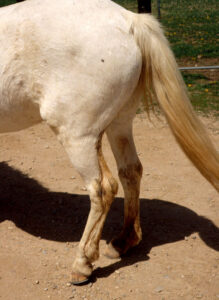
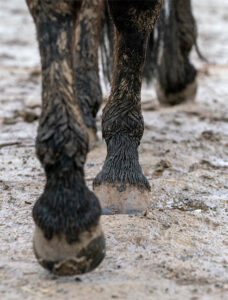
The structural appearance of the foot is continually being modified by the interactions of the foot with the environment and the environment’s influences on the foot and hoof wall. The term environmental influences includes just about everything that the horse has come into contact with since birth, including the extent of movement, ground surfaces, trimming and shoeing procedures or the lack of
Horse Identification Forms (downloadable)
Two identification forms for your horses–one full form for your records and one for halter tags.
Horse Rescue in Maryland Searches for New Farm
Samuel Johnson once said that, “Great works are performed not by strength, but by perseverance.” This old adage definitely applies to Days End Farm Horse Rescue, a 501(c)(3) non-profit equine rescue and humane education facility founded by Kathy and Allan Schwartz in 1989 and located in Lisbon, Md.
Unfortunately, Days End has outgrown its current property, which is leased to the
Tetanus Prevention in Horses
Tetanus, or lockjaw, is an often fatal disease caused by the anaerobic (grows in low oxygen conditions)bacterium, Clostridium tetani. The spores of C. tetani are commonly present in the soil and can contaminate puncture wounds, crushing wounds, open lacerations, surgical incisions, and the umbilici of foals. Upon gaining entrance to the body, they produce a powerful
The United States Animal ID Plan
Mad cow disease (bovine spongiform encephalopathy) in the United States highlighted the need to have all livestock–including horses–identified and easily traced. While some states have required equine identification programs in place now (such as Louisiana), there are grumblings from some horse owners about “big brother” becoming involved in the horse industry.
The identification
Cribbing: Effect on Colic (AAEP 2003)
Cribbing, the oral stereotypic behavior in which the horse grabs an object with his teeth while flexing his neck and sometimes swallowing air, has long been suspected as a cause of colic.