Equine Joint Supplements
Equine joint supplements have been purported to decrease inflammation, increase mobility, and more. This guide to equine joint supplements includes a seven-step quality evaluation process and tips for choosing a safe and effective product.

General Equine Supplements
Supplements, or nutraceuticals, are thought to have some beneficial effects for horses, but more studies are necessary.
Feeding Geriatric Horses
Just because a horse is older does not mean he needs a special diet. However, many older horses with special physical or nutritional needs (geriatric horses) require specific diets and feed modifications to maintain good health and body condition.

Feeding Easy Keepers
The term “easy keepers” refers to horses and ponies that maintain or gain weight on a minimum amount of food.
Hoof Supplements
Oral supplements might be indicated for horses with dry, cracked, or brittle hooves.
Vitamins and Minerals
Vitamins and minerals are two of the six essential nutrients required by horses (the other four are water, carbohydrates, protein, and fat).
Equine Arthritis
Equine arthritis refers to an inflammation of the joint. There are different kinds of arthritis, such as septic arthritis and rheumatoid arthritis. However, the most important arthritis affecting horses is osteoarthritis.

Equine Joint Injections
Equine joint injections can help veterinarians diagnose lameness or medicate a horse’s painful joint.
Equine Lameness
Equine lameness, defined as a deviation from a normal gait, is an indicator of a structural or functional disorder of the musculoskeletal system (the limbs or spinal column) that is noted while the horse is either moving or stationary.

Ultrasonography for Horses
Equine practitioners use ultrasound machines to help diagnose a number of physical abnormalities.

Composting
Efficiently managing manure is an important aspect of caring for horses. Composting is an economical and efficient method for managing manure for virtually any equine operation, regardless of size.
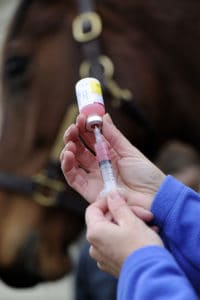
Vaccinating Older Horses
Reader questions whether older horses need to be vaccinated against equine influenze (“flu”); Dr. Justin McCormick’s answer discusses vaccination, vaccine efficacy, antibody titers, and increased risk of influenza infection in horses that travel.
Does Hand-Feeding Treats Promote Biting?
I’ve been told that hand-feeding treats to horses promotes biting. What is the “industry” stance on this issue? In my limited experience they seem to enjoy it and almost all horses I’ve hand-fed take it gently with their lips.
Cloning Horses and Other Equids
Cloning is defined as the process of creating a genetically identical copy of another cell or organism (i.e., bacteria, plant or animal) through non-sexual means.
Awards to Spotlight Second Careers for Thoroughbreds
After Thoroughbreds have completed their race careers, they are often ideal candidates for another vocation. To call attention to these horses’ second career possibilities, nationally recognized Rood & Riddle Equine Hospital has created a series of annual awards, the first of which will be presented to the top Thoroughbred sport horses of 2009.
Dogs Also Victims of 2007 Equine Influenza in Australia
Australian officials confirmed that the equine influenza virus infecting about 20,000 horses in the country in 2007 also infected dogs that had close contact with the sick horses.
“Dogs that were with or near equine influenza-infected horses were observed with a flu-like illness,” said Peter D. Kirkland, PhD, of the Elizabeth Macarthur Agricultural Institute in New South