Article

Subcategories:
None

Salmonella Basics: What You Should Know

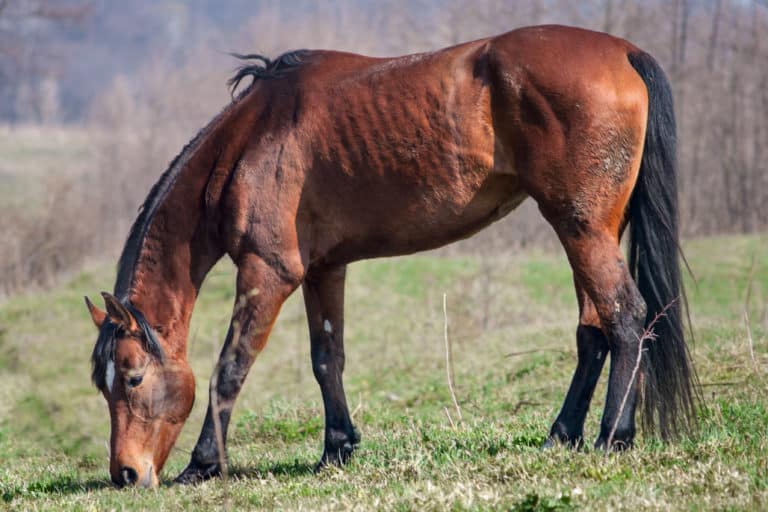
Clinically normal horses can shed Salmonella bacteria, especially when stressed. Reports on the percentage of horses shedding Salmonella have ranged from 1.5% to 64.5%, depending on whether the horse was hospitalized (higher numbers). Since stress can cause shedding, transport to the hospital–on top of the ailment requiring hospitalization–often means a high Salmonella
Read More

Stallion or Gelding?

A cryptorchid, also called a ridgling, is a male horse in which one or both testicles do not descend into the scrotum. In the developing fetus, the testicles are formed within the abdomen. As the fetus nears term, the inguinal rings and inguinal

Read More

Salmonellosis in Central Kentucky

On May 8, Rood & Riddle Equine Hospital in Lexington, Ky, sent out letters to area clients, farm managers, and veterinarians notifying them that an increased number of salmonella cases had been detected at the clinic this year, and explaining the methods staff were using to eliminate the Salmonella organisms and safeguard the health of patients. According to several area

Read More

Vesicular Stomatitis Hits Texas

Vesicular stomatitis (VS), a disease with international implications for animal movement because symptoms mimic those of foot and mouth disease (FMD), was confirmed May 19 in western Texas. Kentucky was the first state to respond–officials

Read More

It’s Bad, It’s Very Bad…

Midnight has come and gone by the time the Central Kentucky horseman pulls into the stableyard and unloads the young black mare. Both are bone-weary after a 15-hour trip home from the trainer’s stable. The man leans on the fence, watching the

Read More

It’s Not Greek to Them

When the Games of the XXVIII Olympiad begin with characteristic fanfare Aug. 13 in Athens–the birthplace of the ancient Olympic Games–approximately 10,500 of the world’s greatest athletes will convene to match skills and wits in 28 sports.

Read More

Horses Seeking Jobs

Wanted: Caring owner for a willing horse. Former training in running fast and turning left. Recent training in whoa, relax, turn, yield to leg, going slower, and trusting humans. Willing to do most any kind of work, from trail riding to jumping.

Read More

Hidden Treasure: Retraining Racehorses

“A prize in every box.” While that phrase refers to the little toy one finds in a box of Cracker Jacks, adopting a former racehorse is not so different: You’re not quite sure what you’ll get, but often the experience is fun and the horse can be a treasure for years to come. For the most part, ex-racehorses are well-trained, intelligent horses which, in the right hands, successfully move on to

Read More

Deserving of Dentistry

There may be no branch of equine veterinary medicine that is advancing as quickly as equine dentistry. As recently as a decade ago, it was still considered adequate to feel along the sides of a horse’s first upper cheek teeth and decide, based on sharpness alone, whether that horse needed a “float.” If treatment was deemed necessary, it consisted of a speedy rasping along the outsides of the

Read More

TRF Secretariat Center

Since its founding more than 20 years ago, the Thoroughbred Retirement Foundation (TRF) has been proud of its many accomplishments, from each horse that it has saved to each new farm or facility it has opened, to every time it has helped spread the message that there is a far better way of dealing with unwanted former racehorses than sending them off to a slaughterhouse. The TRF, it has been

Read More

Endurance and Endotoxemia

Endotoxemia in horses is usually associated with severe infections, inflammation, and colic. Endotoxin from intestinal bacteria activates release of inflammatory mediators such as thromboxane B2 (TxB2), tumor necrosis factor-alpha (TNF-alpha),

Read More

Sleep-Crashing

In any of the equine behavior literature that I have read, I am unable to find any description of the sleeping behavior we see in our retired broodmare (17 years old). She has functioned as the watch horse in the small herd she was from, and she now is retired at our two-horse farm and continues to maintain that role. She is rarely seen lying down, nor shows evidence of that–no surface dirt

Read More

Treating Navicular Disease From Inside the Bone

Healthy bone undergoes constant metabolic change to prevent bone loss or abnormal remodeling (cell turnover) that can occur with loading. Horses with navicular disease can have abnormal remodeling and formation of osteolytic lesions (areas of

Read More

Purchase Exams: Safe and Sound

Buying that first horse can be exciting and scary. Getting that dreamed-about horse is the exciting part, and being concerned that you don’t make mistakes in choosing the right one is the disconcerting and worrisome part. In this article, we’ll first look at the situation through the eyes of horse owners, then we’ll turn to a panel of veterinary experts who will discuss what to watch for

Read More

More From The Horse

Screenshot 2026-11-09 160213
gray horse
helping old horses gain weight
pregnant chestnut mare standing in field

Stay on top of the most recent Horse Health news with

FREE weekly newsletters from TheHorse.com

Weekly Poll

sponsored by:

Create a free account with TheHorse.com!

The Horse
Privacy Overview

This website uses cookies so that we can provide you with the best user experience possible. Cookie information is stored in your browser and performs functions such as recognising you when you return to our website and helping our team to understand which sections of the website you find most interesting and useful.