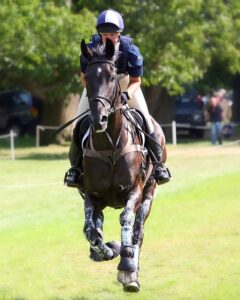
A multitude of issues can affect your horse’s back, sacroiliac joint, and pelvis
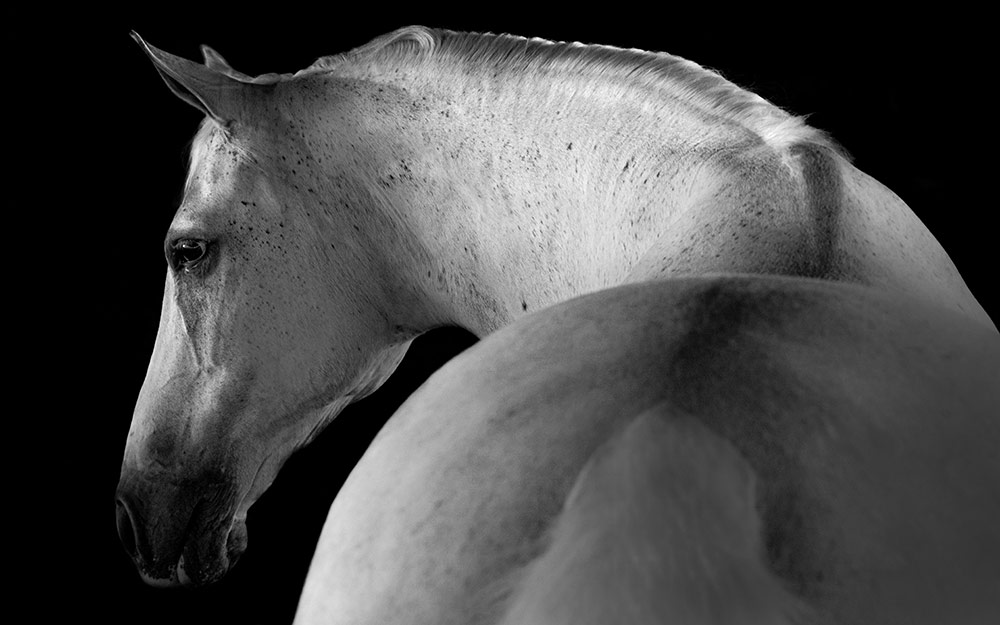
Back pain and hind-end lameness are leading causes of poor performance in ridden horses, and the two might be more connected than you realize. In one study, researchers found that 74% of horses with back problems were also lame, and the back problems were concurrently diagnosed in 32% of the lame horses they evaluated1. The authors concluded there was a strong association between equine lameness and back dysfunction in these horses.
These statistics might not surprise you. In fact, they might sound all too familiar if you’ve worked diligently with your veterinarian to resolve hock or stifle issues, only to find your horse’s back persistently sore.
In this article we’ll help you understand why that’s the case and share tips for addressing issues throughout your horse’s entire topline.
The Sport Horse’s Plagues: Back Pain and Hind-End Lameness
“My horse is back sore” or “he feels off behind” are common complaints you’ll hear from equestrians across virtually all disciplines and levels. Indeed, back pain and hind-limb lameness commonly lead to horses needing time off work and/or veterinary attention. Moreover, the two often come together due to a simple anatomical reason: The back and the hind legs are directly connected by the pelvis.
The pelvis consists of three bones—the ilium, ischium, and pubis—and contains several important articulations, namely the sacroiliac (SI, where the sacrum and the ilium—the largest, fan-shaped bone of the pelvis—unite) and the bilateral coxofemoral (hip) joints. Large, powerful muscles and their associated tendons, including the gluteal and hamstring muscle groups, as well as the iliopsoas muscles originating deep within the pelvis, move the bony structures of the pelvis.
When thinking about pelvic anatomy and biomechanics, remember two key points, says Sue Dyson, MA, VetMB, PhD, DEO, an independent equine orthopedic consultant, educator, and researcher who worked in clinical orthopedics at the U.K.’s Animal Health Trust Centre for Equine Studies, in Newmarket, for 37 years.
Firstly, the pelvis plays a big role in equine locomotion, affecting everything from propulsion and suspension to shock absorption. Secondly, as noted earlier, the pelvis creates a direct bony link between the horse’s back and his hind limbs. This makes it easy for pain and a reduced range of motion to extend from the axial skeleton (trunk) to the appendicular skeleton (legs) and vice versa. Additionally, problems originating in the pelvis itself, such as a pelvic fracture or SI arthritis, can easily cause problems that radiate into both the back and the hind limbs.
The SI Joint is Unlike Other Joints
While most synovial joints in the body articulate two bones to allow movement, the SI joint’s job is to restrict motion and stabilize bones. The five sacral vertebrae are fused together, allowing only minimal flexion2. “And that’s not it—the SI’s motion is further restricted by the stabilizing effect of three sets of ligaments,” says Robin Bell, BVSc, MVSc, Dipl. ECVS, ACVSMR, clinical professor of equine sports medicine at the University of Florida’s Equine Hospital at the World Equestrian Center, in Ocala. He points to studies in which researchers have shown this joint has only a 1-3% range of movement in the horse.
As a low-motion joint, the SI sits within a fibrous joint capsule rather than the typical synovial type found in leg joints such as the fetlock. A fibrous joint capsule primarily consists of relatively immobile, dense, tough connective tissue. It serves to offer structural support and limit excessive motion between adjacent bones.
“Another interesting characteristic of the SI joint is that its different surfaces contain different types of cartilages,” Bell adds. “The sacral surface is made up of hyaline cartilage, while the iliac surface contains primarily fibrocartilage2.” Hyaline cartilage is flexible, while fibrocartilage is comparatively rigid, providing structural support. Consider it a trade-off: This sacrifice in flexibility of the sacrum and the SI joint provides strength and toughness to a region responsible for carrying a 1,500-plus-pound animal forward.
Risk Factors
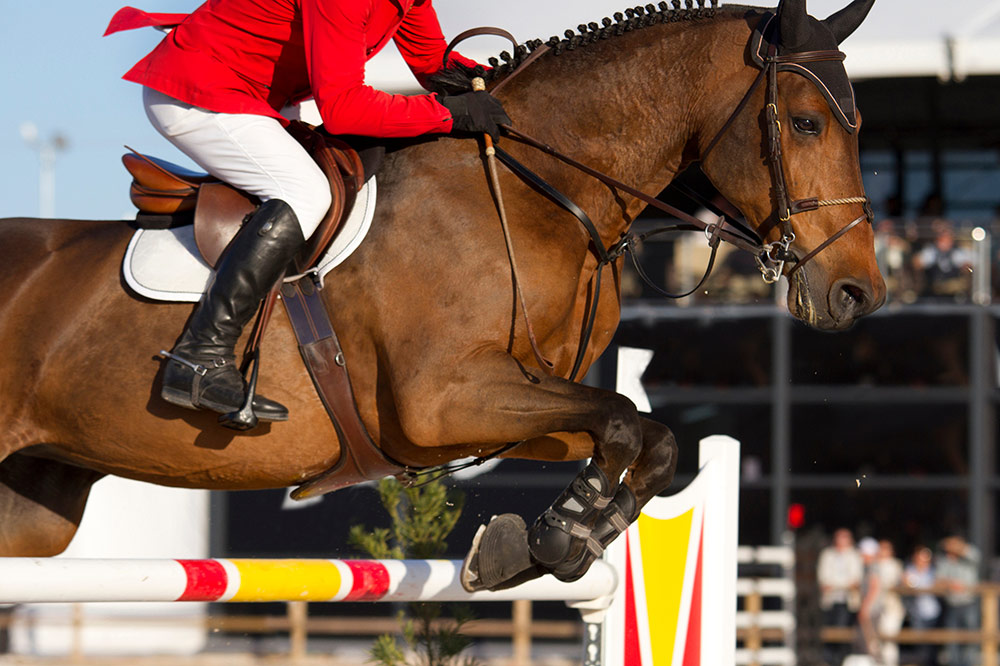
In a 2010 study, researchers identified discipline (specifically show jumping and dressage), older age, and a heavier body weight as the primary risk factors for sacroiliac pain in horses. The authors found no correlation between conformation and SI pain but did find a substantially higher proportion of Warmblood horses (51%) in the SI pain group compared to the control group (29%)3. As for the horse’s back, pain causes are numerous and often multifaceted. Common culprits include saddle fit issues, rider body weight exceeding 20% of the horse’s body weight, improper horse and rider biomechanics, lack of fitness, and strenuous training (TheHorse.com/1124683).
Understanding the Culprits: It’s All Connected
“As with any clinical problem that changes the way the horse ambulates, back soreness can be secondary to sacroiliac disease,” explains Bell, naming epaxial muscle pain and atrophy as common presentations of back troubles. The epaxial muscles run along and just above the spine, stabilizing it. To offload a sore pelvis, a horse might alter the biomechanics of his back, tensing up different muscles to alleviate the stress endured by his pelvic region.
“Because of these compensatory changes, he’s effectively stressing and overworking his back muscles and ligaments,” Bell explains. “Over time, this abnormal posture can lead to back pain, muscle tension, and stiffness throughout the horse’s entire topline and pelvis.”
Dyson has specifically observed prominence of the lumbosacral spine and concavity between the prominences of the tuber sacrale (point of croup) as long-term posture abnormalities secondary to lumbosacroiliac region pain. “Some horses who are lame in their hind end develop secondary lumbar epaxial muscle pain or hypertension. The hind-limb lameness may alter the gait and lead to lumbosacroiliac pain,” she says.
A Two-Way Street
We have established that hind-end lameness can cause secondary back pain. The reverse scenario is also true: Horses with sore backs could brace themselves, contracting their pelvic muscles excessively to avoid engaging their core and back muscles, and end up making their hind ends equally sore. And here is where it gets tricky: “Some horses have extensive radiological (X ray) evidence of impinging spinous processes (kissing spines) in the thoracolumbar region that is not causing pain,” says Dyson. “However, their physical closeness may restrict the range of motion and predispose the horse to pain further back in the lumbosacroiliac region.
“Horses are prey animals and adapt to musculoskeletal pain by diminishing the range of motion of their thoracolumbosacral region,” she explains. “They can reduce stride length and hind-limb impulsion to try to conceal pain, which results in a vicious cycle of muscle atrophy and loss of function, muscle hypertension and pain, and increased myofascial (that of the fibrous sheets of tissue that encase muscles and define their shape) tension.”
Let’s consider another scenario: a horse with pelvic pain and pain stemming from a lower part of the hind limb—for example, the hock or suspensory ligament—at the same time. Due to compensation patterns it might be difficult to identify both sources of pain simultaneously. Dyson explains that after your veterinarian numbs the distal limb with a diagnostic nerve block, the lumbosacral pain could predominate and become apparent, especially at the canter.
Likewise, blocking the SI joint by infiltrating local anesthetic in research settings has been shown to relieve the pain and discomfort in 98-100% of horses with suspected sacroiliac ligament strain and joint arthritic damage3. In the 2010 paper3 Dyson explained that numbing the SI area with anesthetic restores full movement in horses with SI pain—and this improvement can help
veterinarians reach a diagnosis. “Otherwise,” Bell adds, “misdiagnosis or lack of appreciation of the primary clinical problem (such as SI pain) that is causing secondary back pain is one of the reasons that horses with sore backs will have reoccurrence of back pain even after treatment.”
Recognizing Pelvic Problems
We know that pain originating from the pelvis can progress to both back pain and hind-limb lameness, and horses with hind-limb lameness can develop secondary back and pelvic pain. To help recognize a potential problem, our sources have compiled a descriptive list of the typical clinical signs associated with pelvic anomalies in horses:
- A stiff or stilted hind-limb gait.
- Bunny hopping, and bucking or kicking out with the hindlimbs, especially when landing from a jump.
- Cross-cantering and a lack of suspension phase (four-beat canter). Dyson notes these adaptations stem from discomfort.
- Lack of hind-limb power (poor hind-limb impulsion and engagement) and difficulty establishing and maintaining canter.
- Sudden transient acceleration—the horse scooting forward as though receiving an electric shock. “This is believed to be a nerve-related exacerbation of pain,” Dyson explains.
- Trouble with flying lead changes.
- Occasional unilateral hind-limb lameness (in one limb), but usually no overt lameness, only the gait abnormalities described above.
- Generalized resistance to work.
- Difficulty picking up the hind limbs for the farrier.
- Pain response to pressure applied over the tuber sacrale and hypertonicity and pain in the lumbar epaxial muscles. “These findings are almost pathognomonic of (specific to) lumbosacroiliac region pain,” Dyson notes.
Finding Relief From the Pain
“Acute onset of lumbosacroiliac region pain is more successfully managed than chronic problems,” says Dyson. “Chronic cases can lead to significant atrophy of pelvis and epaxial muscles, along with changes in horses’ posture.” Therapeutic options for musculoskeletal pain in equine medicine are always improving and multiplying, she adds.
Targeting the problem at the source by directly injecting therapeutic agents into the joints of the spine and pelvis is possible thanks to ultrasound guidance. Bell reports that in his practice the choice of intra-articular medication often depends on the following factors:
- Clinical signs.
- Severity of disease.
- Whether the veterinarian uses the injections strictly as a therapeutic measure or also as a diagnostic tool and a treatment trial to see if the pain truly comes from the back or pelvis.
- The constraints medication withholding times place on treatment—this criterion only matters for competition horses.
“For sacroiliac joint injections, I have had the best results using corticosteroids,
typically methylprednisolone or triamcinolone,” Bell says. He combines this protocol with a controlled exercise and physiotherapy treatment program designed to improve horses’ core strength.
Indeed, resolving equine back and pelvic pain involves a multimodal approach. In addition to injecting a horse’s back and/or SI, veterinarians can bring therapeutic tools such as mesotherapy and shock wave therapy into a horse’s treatment plan. Systemically, practitioners often turn to the non-steroidal anti-inflammatory drug (NSAID) phenylbutazone (Bute) and the muscle relaxant methocarbamol to relieve generalized and muscular pain, respectively. They commonly incorporate manual therapies such as chiropractic care and massage therapy into the long-term management plans for equine athletes with back and pelvic discomfort.
Take-Home Message
On a positive note, as an owner or rider, you have a lot of control over your horse’s topline health. Sacroiliac inflammation and back pain often occur due to excessive strain placed on the spine and surrounding soft tissues, making your riding and training practices crucial. Our sources say to be realistic about your horse’s current fitness levels, provide ample warm-up and cooldown time, and be mindful of high-impact forces on his pelvis, whether from jumping or making tight turns at speed. Finally, keeping a reputable trainer and veterinarian involved in your equine athlete’s topline health will pay dividends in maintaining his long-term soundness, comfort, and performance.
Editor’s Note: This article was originally published in the Fall 2024 issue of The Horse: Your Guide to Equine Health Care.
References
1. Landman MAAM, de Blaauw JA, Hofland LJ, van Weeren PR. Field study of the prevalence of lameness in horses with back problems. Vet Rec. 2004;155:165–168.
2. Deguerce C, Chateau H, Denoix JM. In vitro assessment of movements of the sacroiliac joint in the horse. Equine Vet J. 2004;36:694–698.
3. Dyson S, Murray R. Pain associated with the sacroiliac joint region: a clinical study of 74 horses. Equine Vet J. 2003;35:240–245.