Article

Subcategories:
None

Scientists Uncover New Way to Assess Ovulation

Veterinarians generally assess whether a mare has ovulated and is ready to breed by rectal palpation. However, new research suggests that a mare’s blood plasma sample can tell the veterinarian just as accurately that ovulation has occurred. The

Read More

Kentucky Breeding Regulations Amended

As was stated Feb. 4 in a news story on this web site, the Kentucky Department of Agriculture filed emergency regulations regarding testing procedures for contagious equine metritis (CEM) to be followed when breeding an imported mare i

Read More

John Henry Back Home

Two-time Horse of the Year John Henry, who underwent colic surgery Jan. 25 at Hagyard-Davidson-McGee veterinary clinic near Lexington, arrived back home at the Kentucky Horse Park Feb. 4. “He was given a clean bill of health, and everyone is happy

Read More

Emergency Breeding Procedures Filed for Kentucky Farms

Due to concerns resulting from last year’s foal losses attributed to Mare Reproductive Loss Syndrome (MRLS), the Kentucky Department of Agriculture today filed emergency regulations regarding procedures that are followed when breeding an importe

Read More

Uterine Tubal Patency Examination

Breeding is big business. Those who doubt need only look at the results of the 1998 Keeneland November breeding stock sale for verification. Prices for broodmares and weanlings soared–top price for a broodmare, $7 million; for a weanling, $1.5

Read More

Can You Influence Hoof Growth?

We ask an awful lot of an animal who walks on his middle toenails. Humans have recognized for centuries that the foundation of a horse’s soundness lies in his hooves–“No foot, no horse” is about as basic a principle as there is. It all comes

Read More

AAEP Convention 2001: Veterinary Forums

The day before the scientific sessions started during the AAEP Convention, there was a series of forums and committee meetings. These were moderated by selected experts in those fields, and were open to anyone for a majority of the time. The las

Read More
Look Into His Eyes

Look Into His Eyes

Your veterinarian has an array of instruments and techniques for examining your horse’s eyes.

Read More

Understanding Horse Health

Our friends and colleagues help us in many ways. We’ve seen an outpouring of caring for friends–and complete strangers–since terrorists took aim at our country on September 11. I think that has made us a little more aware of how we treat

Read More

Endotoxemia and Gastrointestinal Disease

Endotoxemia is one of the most commonly encountered life-threatening conditions in horses with gastrointestinal disease. It is, by nature, a very disappointing and frustrating disease to encounter, and is the leading cause of death in adult horses

Read More

Getting Your Horse in Shape

As spring approaches, visions of green grass, budding trees, and active wildlife might seem just around the corner for some. But for many of us, spring is but a dream, for we must endure a few more weeks of cold, snow, and ice-covered terrain.

Read More

A World on the Move

The World Equine Veterinary Association (WEVA) met in Sorrento, Italy, in conjunction with the October 2001 Italian veterinary association annual meeting. WEVA meets every other year in locations designed to attract veterinarians from countries

Read More

AAEP Convention 2001: General Medicine

Hormone Responses to Feeds

Joe Pagan, PhD, owner of Kentucky Equine Research in Versailles, Ky., discussed glycemic response in growing horses as an indicator of developmental orthopedic disease. He said looking at diet and

Read More

Managing Barren Mares

Not every mare that is mated during a breeding season becomes pregnant, nor does every mare that conceives carry a foal to term. Failure of conception, early embryonic losses, and abortions are a fact of life in equine reproduction, and problem

Read More

New IgG Stall-Side Test Kit

The equine industry has new technology adapted from the livestock industry to do a “stall-side” test of whether foals received an adequate amount of protective antibodies in colostrum (IgG test). This is commonly known as failure of passive

Read More

More From The Horse

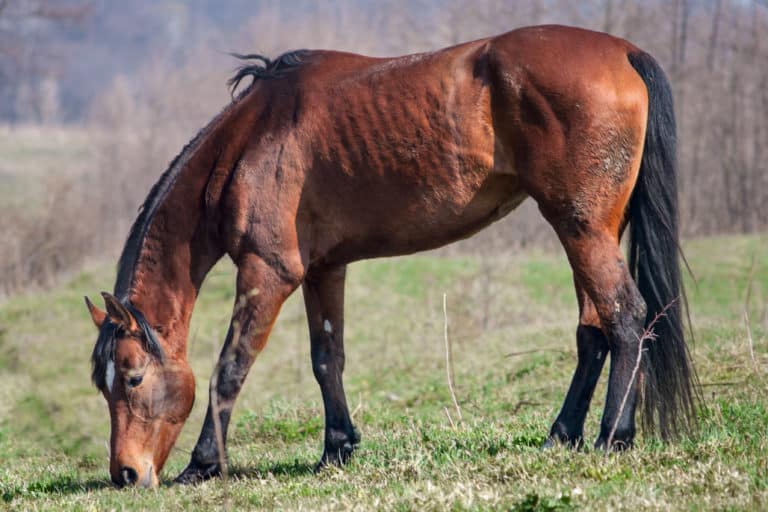
helping old horses gain weight
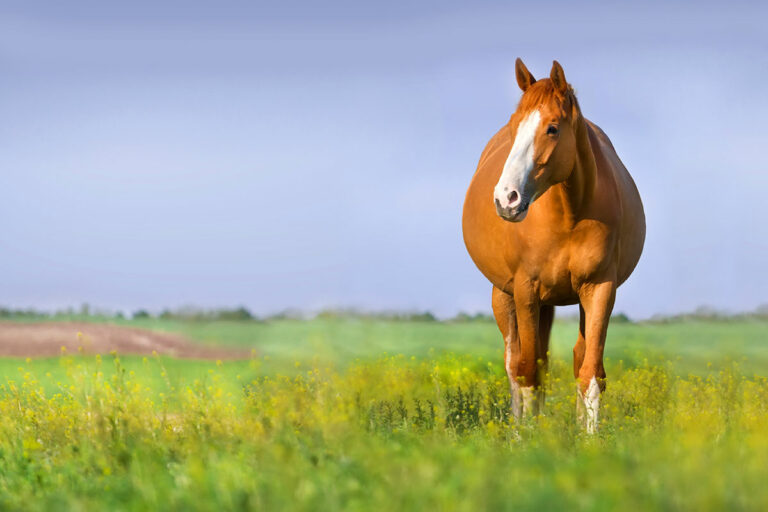
pregnant chestnut mare standing in field
Pferd im herbstlichen Wald
hydroponic fodder system

Stay on top of the most recent Horse Health news with

FREE weekly newsletters from TheHorse.com

Weekly Poll

sponsored by:

Create a free account with TheHorse.com!

The Horse
Privacy Overview

This website uses cookies so that we can provide you with the best user experience possible. Cookie information is stored in your browser and performs functions such as recognising you when you return to our website and helping our team to understand which sections of the website you find most interesting and useful.