UKVDL offers Rhodococcus equi Testing
The University of Kentucky Veterinary Diagnostic Laboratory offers real-time polymerase chain reaction assay testing for Rhodococcus equi.

The University of Kentucky Veterinary Diagnostic Laboratory offers real-time polymerase chain reaction assay testing for Rhodococcus equi.

Giving foals hyperimmune plasma did not prevent infection, but it did reduce the severity of R. equi pneumonia.

Many foals born with beating heart and pulse, but who fail to breathe, can be revived via CPR. Here’s what to remember.

Learn what GI diseases to watch for, how veterinarians detect them, and how to avoid them in the first place.

Though the overall prognosis isn’t great, some foals with incomplete ossification can race if managed properly.

Studies focused on ophthalmology, gastrointestinal disease, foal medications, pain management, and more.

While it’s not yet commercially available, vets recently constructed and tested a CPAP machine for equine neonates.

Of the 634 respondents, 531 (81%) said they have owned a horse 4 years old or younger.

Heart rate variability gives a broader and possibly more accurate look at fetal well-being than heart rate alone.
Researchers recently diagnosed the first homozygous case of Warmblood fragile foal syndrome (WFFS), a genetic disorder.

Researchers found that older weanlings appear to be–and seem to stay–more dominant in the social hierarchy.

Researchers say the uterine environment can significantly impact a foal’s future bone health, metabolism, and more.
Lecture topics will include dystocia, care of a sick foal, and postpartum mare management.
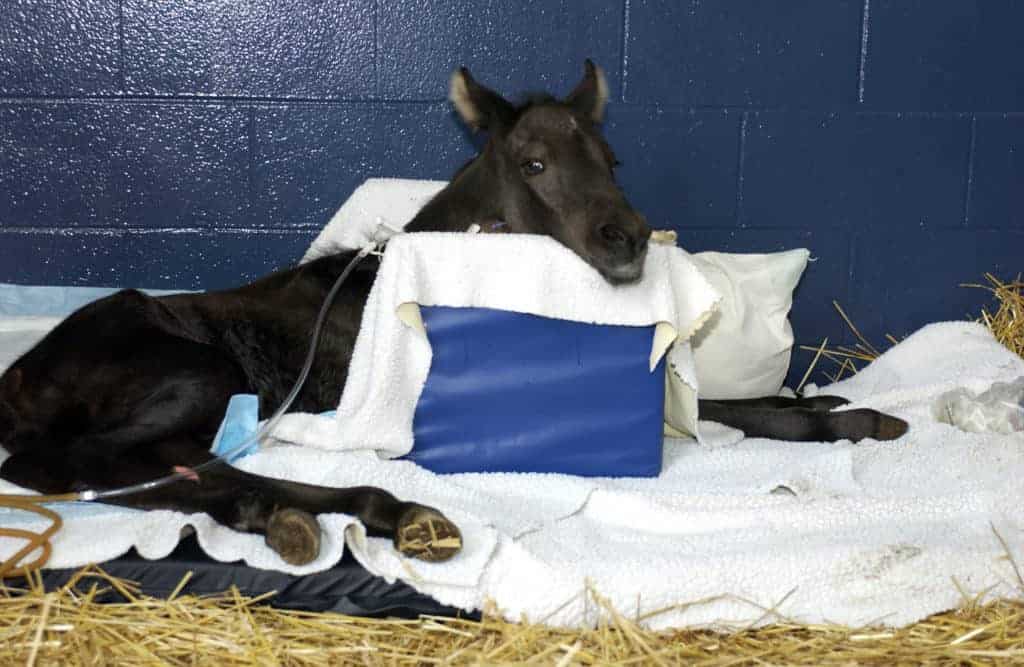
This finding is the first molecular characterization of resistance to three classes of antibiotics in R. equi.
Lecture topics will include mare, stallion, and foal care; navicular syndrome; the digestive tract; and more.
Foal sitters assist veterinarians and staff with a variety of tasks in the neonatal intensive care unit.