Vaccinating Pregnant Mares
Learn about what vaccines a broodmare should receive during gestation and why vaccinating mares is important for their foals from equine repro expert Dr. Ryan Ferris.

Learn about what vaccines a broodmare should receive during gestation and why vaccinating mares is important for their foals from equine repro expert Dr. Ryan Ferris.

The first step toward preventing pregnancy loss in horses is understanding why it happens in the first place.

Officials reported diseases including African horse sickness, equine influenze, strangles, EHV-1, EIA, and more.

EHV-1 can spread between horses before they show any signs of infection, creating a potential perfect storm for a significant disease outbreak. An infectious disease expert shares steps you can take to stop disease spread.

A barn was released from an EHV-1 quarantine, but is the risk for disease transmission gone? A veterinarian weighs in.
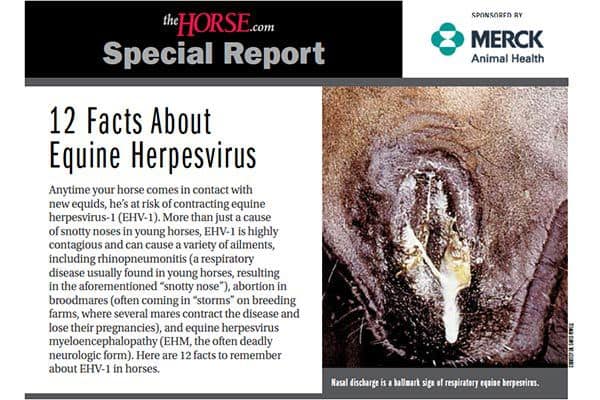
EHV-1 is more than just a cause of snotty noses in young horses. Learn more about this highly infectious disease and how to protect your horse in this special report.

Steve Reed, DVM, Dipl. ACVIM, of Rood & Riddle Veterinary Hospital, in Lexington, Kentucky, offers his insight about equine herpesvirus-1, including diagnosis, treatment, and prevention.

Confirmed diseases include equine influenza, equine herpesvirus, piroplasmosis, salmonellosis, rabies, and more.

With equine herpesvirus infections seemingly on the rise, here’s how to protect your horses this season.
The symposium and dinner will take place Thursday, Sept. 20, from 4-7:30 p.m., at Malone’s Prime, in Lexington, Kentucky.

Routine horse vaccinations are one of the easiest and most efficient ways to protect equids’ health against potentially fatal infectious diseases.

A barrel racing horse developed rapidly progressive signs of EHM (the neuorlogic form of EHV-1) on April 19 and was euthanized the same day.
The index case–a 17-year-old Thoroughbred gelding diagnosed with EHM, the neurologic form of EHV-1–remains quarantined and isolated offsite and continues to show clinical improvements.
The mule exhibited mild respiratory clinical signs and ultimately died due to pneumonia complications.
The affected horse from Weld County is undergoing veterinary treatment and recovering.
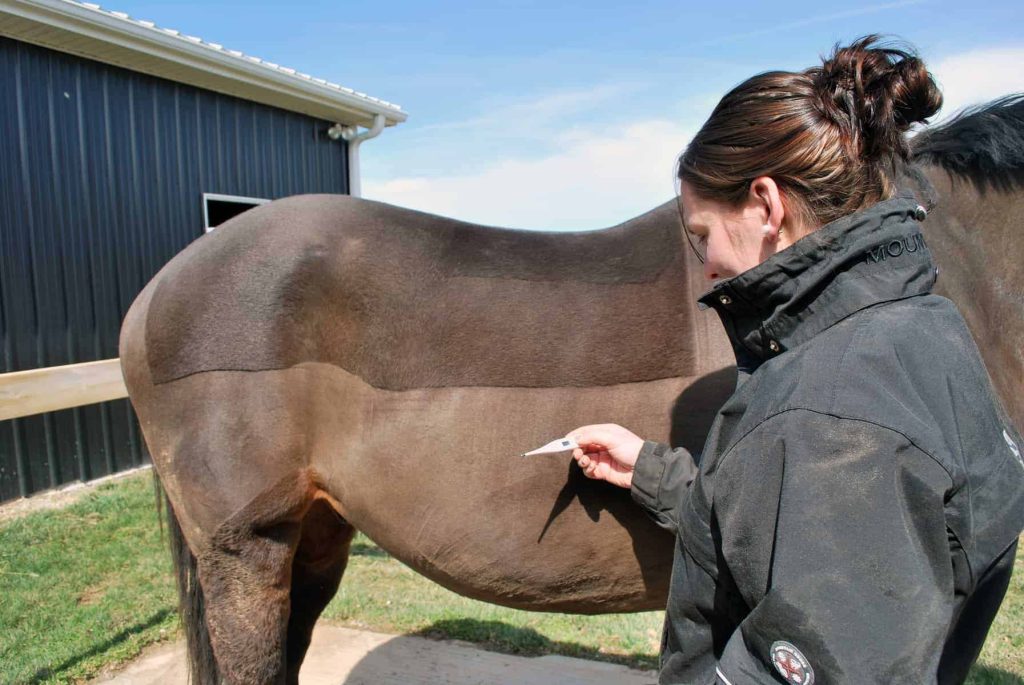
A 17-year-old Thoroughbred gelding was diagnosed with EHM, the neurologic form of equine herpesvirus-1 (EHV-1) after developing neurologic deficits.