Foal ‘Stealing’
Our pregnant mare thinks another mare’s colt is hers. Is it common for pregnant mares to adopt others’ foals?

Our pregnant mare thinks another mare’s colt is hers. Is it common for pregnant mares to adopt others’ foals?

Equine arteritis virus (EVA) and equine herpesvirus-1 (EHV-1) are the two main topics of research for Udeni Balasuriya, BVSc, MS, PhD, associate professor of virology at the Gluck Equine Research Center.
Our current understanding of the epidemiology, pathology, bacteriology, immunology, toxicology, and clinical aspects of MRLS has come through scientific research conducted over the last nine years.
A stallion in Wisconsin has become positive stallion No. 23 in an ongoing investigation into contagious equine metritis (CEM).
Wisconsin State Veterinarian Robert Ehlenfeldt, DVM, said this horse is considered part of the outbreak th
Veterinarians might be able to prevent abortions in some pregnant mares that show premature mammary development, Dietrich H. Volkmann, BVSc, MMedVet (Gyn), Dipl. ACT, told equine veterinarians at the 2010 Western Veterinary Conference, held Feb
Proteins, composed of essential and nonessential amino acids, are important nutrients for horses.
The High Risk Pregnancy in the Mare session at the 2009 AAEP Conference was very well attended.

How should a normal foaling progress and when should you call the vet? Dr. Mats Troedsson discusses the foaling process and its potential problems.
A ban that went into effect March 9 banning Penn National-stabled horses from entering Maryland Jockey Club facilities has been lifted.
The ban was ordered when a horse stabled at Penn National Race Course was euthanized after displa
Mare nutritional status is a critical component in foal health from conception through weaning.
Non-steroidal anti-inflammatory drugs could assist vets managing persistent mating-induced endometritis (PMIE), a chronic inflammation of the lining of the uterine wall after breeding or artificial insemination, a leading cause of reduced ferti
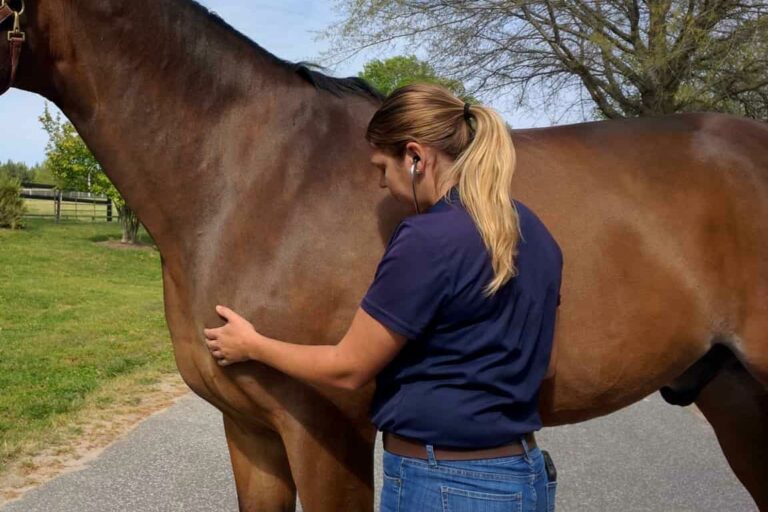
Fetal heart rate monitoring can help veterinarians easily and reliably assess the health of the unborn foal.
Broodmare farm operators in the southeastern United States are interested in managing tall fescue toxicity because of the pregnancy complications it can cause.

Dr. Karen Wolfsdorf of Hagyard Equine Medical Institute shows horse owners how to examine a placenta, a crucial step in managing foaling mares.
Anytime veterinarians talk about breeding the problem mare, it always develops into a lively, animated discussion. The Table Topic on Breeding the Problem Mare was no different at the 2009 American Association of Equine Practitioners (AAEP) Con