Equine Herpesvirus Immunity
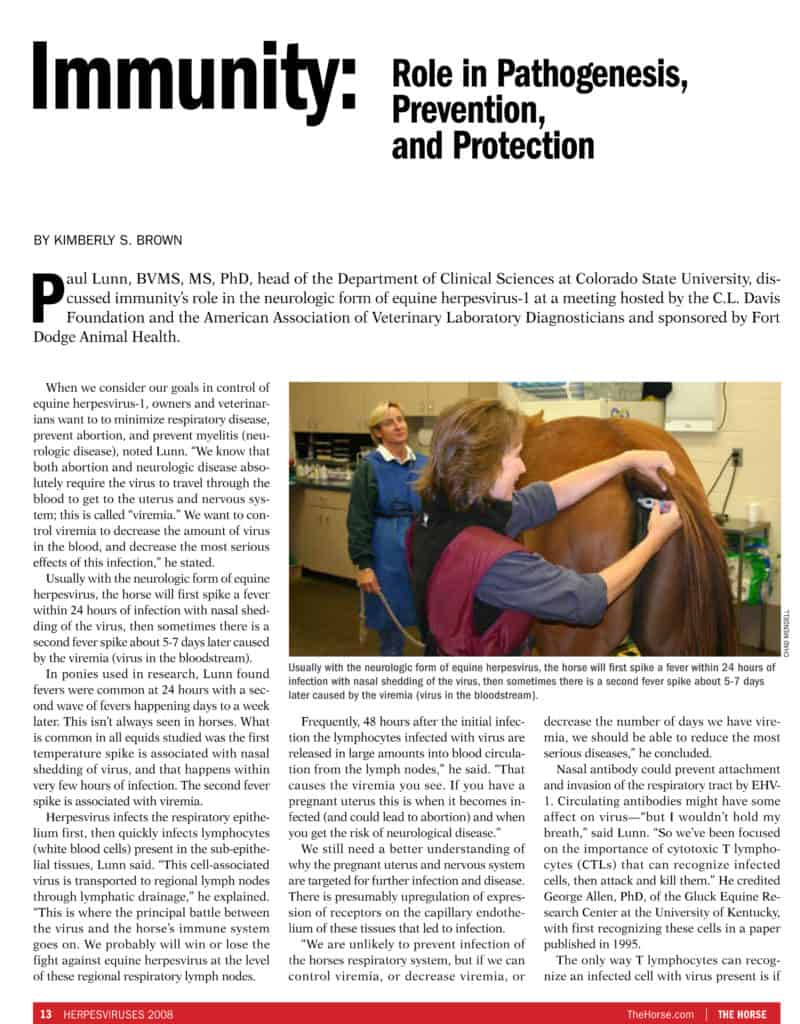
Dr. Paul Lunn discusses immunity’s role in the neurologic form of equine herpesvirus-1 at a 2007 meeting hosted by the C.L. Davis Foundation and the American Association of Veterinary Laboratory Diagnosticians.

Dr. Paul Lunn discusses immunity’s role in the neurologic form of equine herpesvirus-1 at a 2007 meeting hosted by the C.L. Davis Foundation and the American Association of Veterinary Laboratory Diagnosticians.

A day-long seminar in 2007 on equine herpesviruses started with an overview of herpesvirus infections in horses. Equine herpesviruses are found all over the world, and there are nine equine herpesviruses identified at this time.
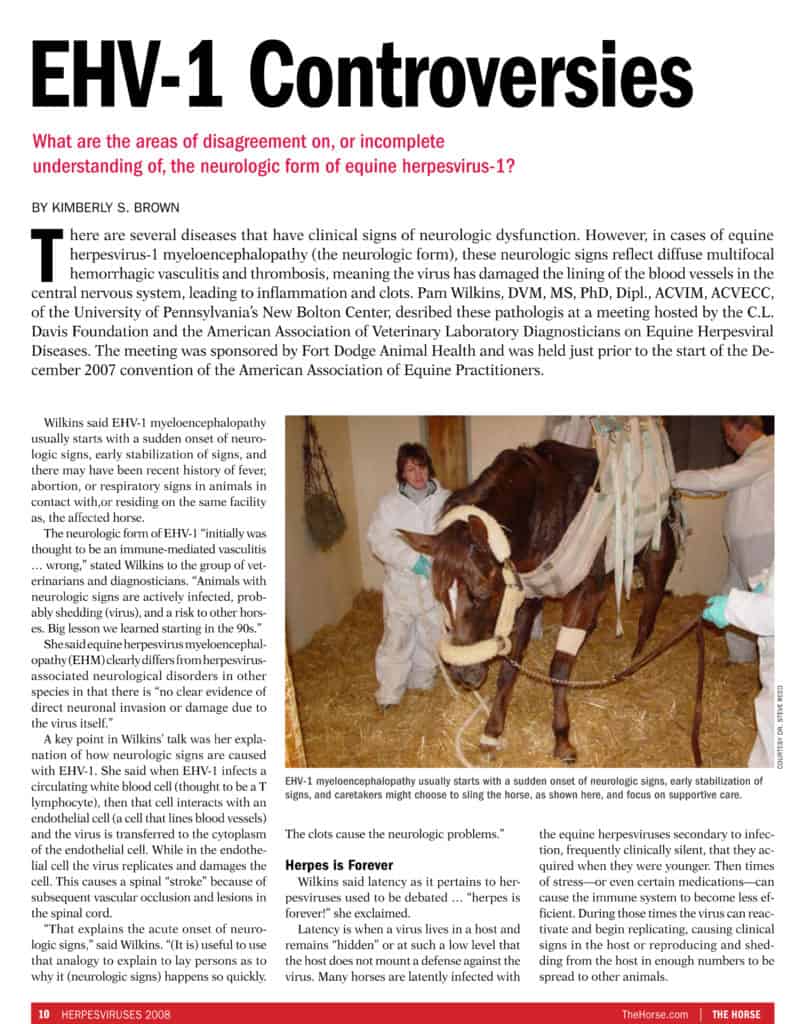
Pam Wilkins, DVM, MS, PhD, Dipl. ACVIM, ACVECC, of the University of Pennsylvania’s New Bolton Center, discussed several poorly understood aspects of equine herpesvirus-1 infection (such as latency, vaccination, treatment, and outbreak control) at a 2007 meeting.
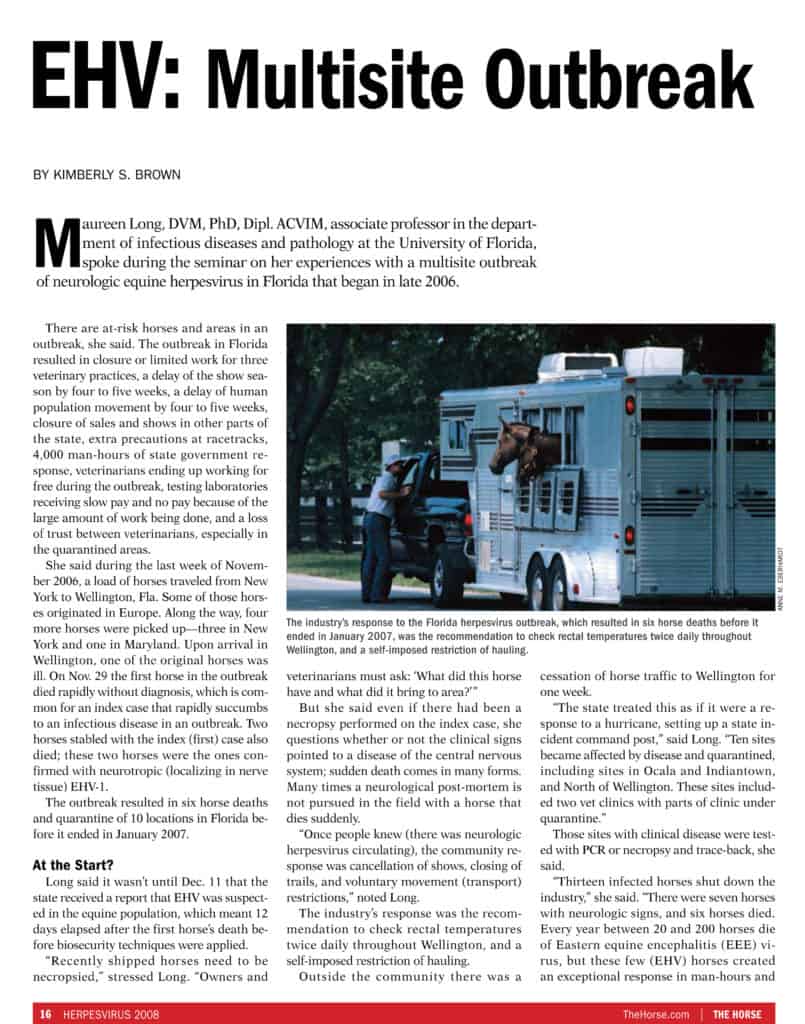
At a 2007 seminar on equine herpesvirus, Maureen Long, DVM, PhD, Dipl. ACVIM, associate professor in the department of infectious diseases and pathology at the University of Florida, discussed her experiences with a multi-site outbreak of neurologic equine herpesvirus in Florida that began in late 2006.

One of the biggest debates about equine herpesvirus meyloencephalopathy (the neurologic form of EHV-1) is whether there is a single mutant strain in circulation that causes EHM. We will discuss the roles of pathogenesis, prevention and protection.
A recent study of wild horses in New Zealand has found that broodmares that are healthiest at the time of conception are more likely to have colts.
The study, conducted by researchers Elissa Cameron, MSc, PhD, and Wayne Linklater, PhD, foun
The body condition of a mare and the sex of her foal will determine how much the foal plays, according to a new study by researchers at the Mammal Research Institute at the University of Pretoria in South Africa.
The group, led by Elissa
Horse breeders face a dilemma every year as the breeding season nears. Should they breed for early foals or breed their mares to foal out in the spring and summer? The fact that all foals in the northern hemisphere share the same
Despite being a relatively rare disease in horses, the neurologic form of equine herpesvirus-1 (EHV-1 myeloencephalopathy, EHM) continues to cause outbreaks of disease that result in devastating losses, both emotional and economic, to the equine
The latest Horse Course from the University’s of Kentucky’s Livestock Disease Diagnostic Center and Gluck Equine Research Center and presented by Fort Dodge Animal Health is now available for viewin
Despite having recently identified a genetic defect that results in polysaccharide storage myopathy (PSSM) in many horses, the underlying cause of PSSM remains to be determined in others.
When a foal is born with limb contractures preventing it from standing or walking normally, it is said to have contractures, or contracted foal syndrome (CFS).
Lawsonia intracellularis is known to be the causative agent of proliferative enteropathy (a spreading disease involving the intestines) in horses and is an important emerging
Q: I would like to know at what age a colt could breed a mare. I have a 10-month-old colt that has been in with mares until recently, and I was told he could have bred my mares.
A: There are many
What do nutritional supplements, infectious diseases, and snake bites have in common? All were considered “hot
In March 2008 Prometea, a