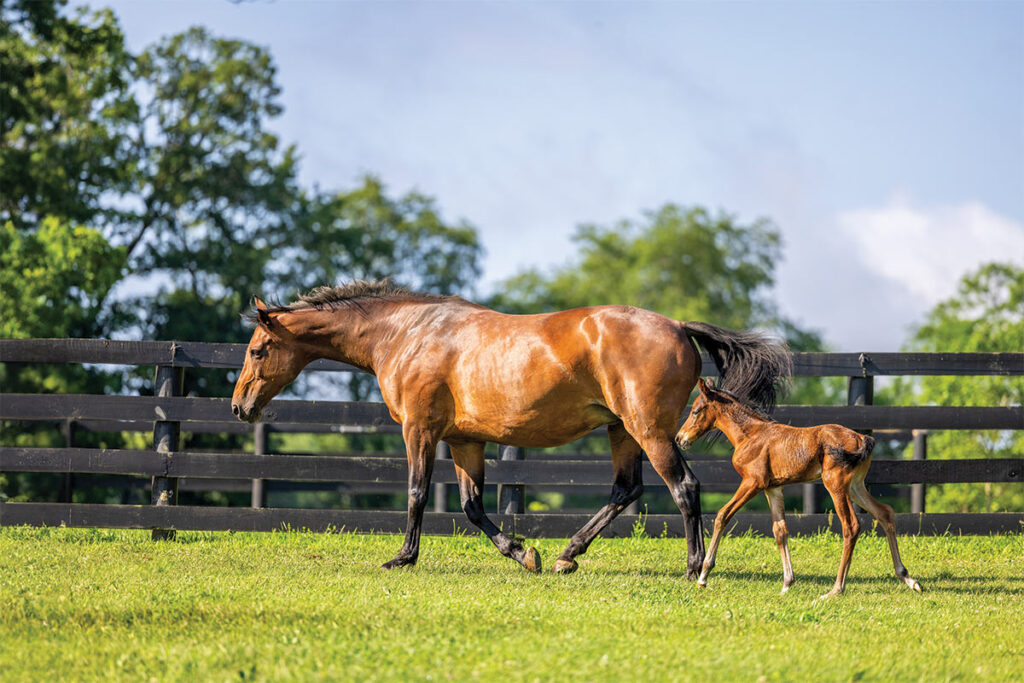
The first 24 hours of a foal’s life bring crucial events and milestones that dictate his health and viability. Learn what to expect, when to intervene, and how to involve your veterinarian in the Spring 2026 issue of The Horse.

Feeding weanlings through early training requires careful balance to support steady growth, proper mineral ratios, and sound development without overfeeding.

Discover why this common pasture grass is good for grazing but bad for broodmares.

When it comes to breeding success in mares, all timing matters, not just ovulation.
An expert explains how veterinarians can reduce stallion-related causes of equine reproductive failure.

Combining Gram staining and cytology gives veterinarians faster insight into uterine infections and helps reduce unnecessary antibiotic use.

Proteins and the amino acids that form them play important roles in the horse’s body, from muscle building and function to neurotransmission and hormone synthesis.

Newborn foals depend on colostrum‑derived antibodies, making rapid and accurate IgG testing to confirm passive transfer essential.

When will your mare foal? Learn the signs of impending foaling and what prognostic tools can help.

Because NSAIDs can interfere with ovulation, researchers investigated whether Bute use affects egg quality or embryo development during assisted reproductive procedures.

Rotavirus causes severe contagious diarrhea in young foals. New research explains why current vaccines miss Group B and how new vaccines could protect foals.

Sometimes mares don’t produce enough milk to support their foals’ demands. Here’s what you can do to help.

How to decide if your older mare is a good candidate for breeding and improve her chances of success.

How veterinarians navigate 4 common scenarios, from dehydration to the postpartum period, that increase colic risk.

Assessing a horse’s limbs, feet, and body can help you and your veterinarian identify anatomical traits that could end up being performance-affecting liabilities.