Grazing Muzzles’ Efficacy at Reducing Pasture Intake
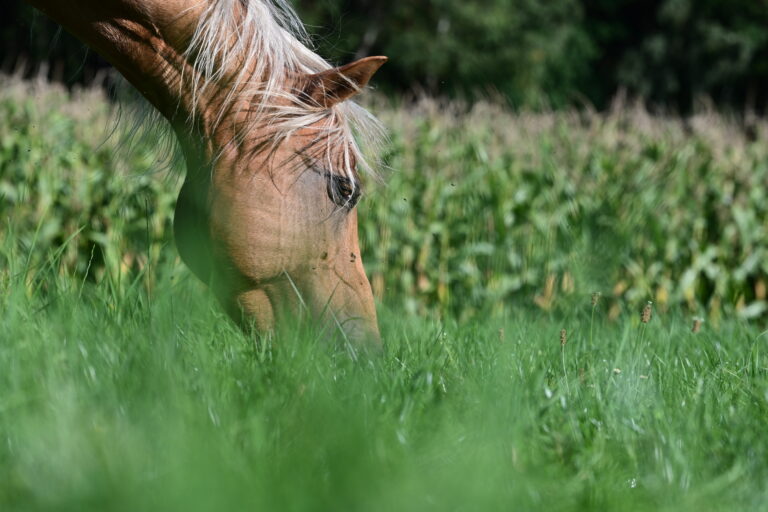
Grazing muzzles can be effective at reducing pasture intake, sometimes reducing intake by as much as 85%.

Grazing muzzles can be effective at reducing pasture intake, sometimes reducing intake by as much as 85%.

Is inflammation involved in chronic laminitis development in horses with equine metabolic syndrome?

Adjusting what a horse consumes can help prevent or squelch some equine ailments.
But how should you manage a horse that hasn’t yet developed laminitis, but is a likely candidate?

Horse owners must be able to acknowledge that a horse is overweight and needs to drop a few pounds.

The term “easy keepers” refers to horses and ponies that maintain or gain weight on a minimum amount of food.
Expression of a particular protein in fat tissue is positively associated with an increased rate of postoperative mortality in horses, researchers recently reported. The research was led by Melissa Packer, BVetMed, MRCVS, who recently
Equine metabolic syndrome is a devastating disease characterized by the three main features of obesity, insulin resistance, and laminitis. Certain breeds or individual horses are predisposed to EMS, and are often referred to as “easy keepers.” These

Equine obesity increases a horse’s risk for equine metabolic syndrome, laminitis, and insulin resistance. Owners can bring horses back to healthy body condition by replacing grain rations with a fiber-rich, low-carbohydrate diet, while increasing exercise to include daily workouts.
Pasture-induced laminitis (sometimes referred to as founder) can be triggered when susceptible horses ingest high amounts of sugar or fructans that are naturally found in some pasture grasses.
Susceptible horses include, but are not limited
At the Purina Equine Veterinary Conference, held Oct. 17-19 in St. Louis, Mo., Karen Davison, PhD, manager of Equine Technical Services for the Horse Business Group of Purina Mills discussed managing inflammation and oxidative stress in horses
Obese horses should be taken off pasture, except for very short (30-minute) turnout periods two or three times a day for
Insulin sensitivity and insulin resistance in horses have become increasingly important areas of research in equine medicine over the past several years, as evidenced by the timely and popular presentations at this year’s American College of
Does your horse have a cresty neck? Does he gain weight on air? Does he develop laminitis at the mere sight of spring grass? If so, your horse could have insulin resistance. Lydia F. Gray, DVM, MA, medical director/staff veterinarian for SmartPa
The International League for the Protection of Horses (ILPH) Right Weight Road Show will be fighting the flab on the road this spring. The Right Weight Road Show is a campaign to hel
Insulin resistance, the body’s inability to control blood sugar levels with normal amounts of insulin, is known to be associated with equine obesity, altered reproductive function, and pasture-associated laminitis. In addition, insulin resistance