EIA in Germany Affects Prominent French Horse Race
A horse stabled at the same racing center as the 4-year-old filly recently tested positive EIA.

A horse stabled at the same racing center as the 4-year-old filly recently tested positive EIA.

Officials in Massachusetts and Illinois have reported additional equine cases of EEE and WNV.
A horse residing in Cornwall, England, has tested positive for equine infectious anemia (EIA).

It’s prevalent in the United States, but how does West Nile virus affect horses in other countries?

According to the USGS disease maps, 364 cases of equine WNV had been confirmed at last update (Sept. 25).
At least one equine EEE case has been confirmed in Heflin, Ala.
Two EEE cases and one WNV case have been confirmed in New York horses this year.
A 16-year-old horse from Yuba County and a 2-year-old horse from Shasta County were euthanized due to WNV.

The unvaccinated horse began showing signs of disease on Sept. 16 and was euthanized the following day.
The 18-month-old unvaccinated Fresno County filly is reportedly recovering after testing positive for WNV.
A horse in the Hillsborough County town of Derry was confirmed positive for Eastern equine encephalitis.

How have you been addressing West Nile virus prevention in your horse(s)? How have you tackled mosquito source reduction in your barn area?
The unvaccinated 5-year-old Tennessee Walking Horse gelding from Garrad County was euthanized Sept. 18.
Summer might be winding down, but equine mosquito-borne disease case numbers continue to rise.
Mosquito-borne diseases in horses increase in wake of Hurricane Isaac.
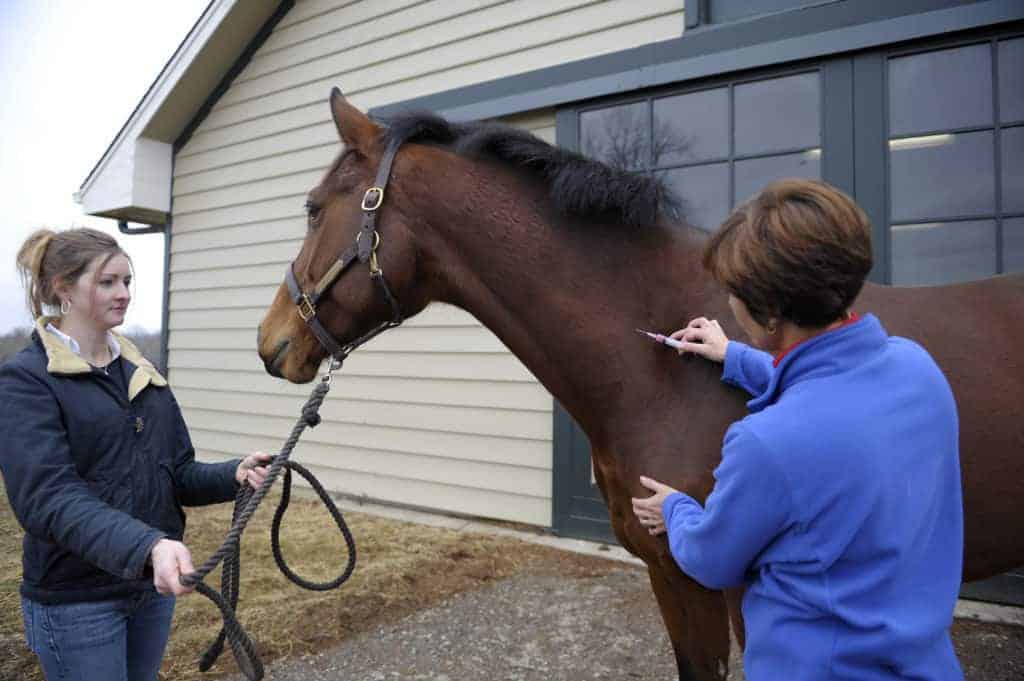
An unvaccinated 4-year-old gelding was euthanized after contracting the virus.