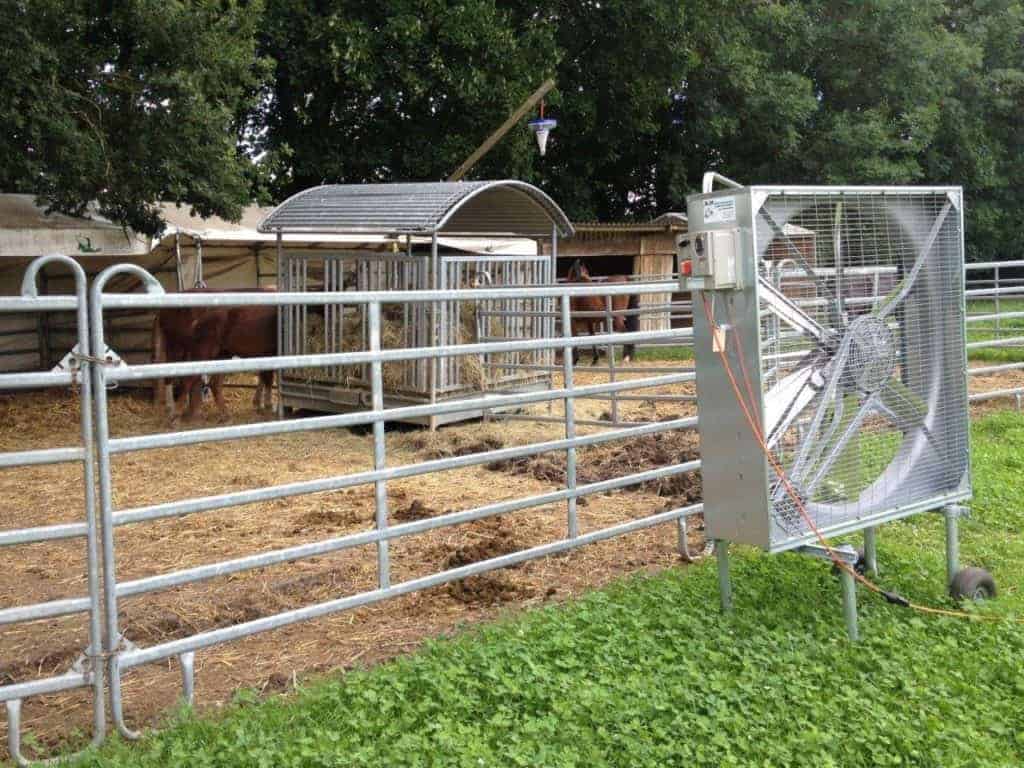
Researcher-Tested Fly Control Methods for Horses
Scientists recently studied fly control methods for horses and determined that mosquito netting and large fans could be the best defense against flying insects.

Scientists recently studied fly control methods for horses and determined that mosquito netting and large fans could be the best defense against flying insects.

The horse from the Greenwood community is recovering and expected to survive.
Reported diseases include vesicular stomatitis, equine infectious anemia, strangles, influenza, herpesvirus, and more.

The 10 year-old gelding from Gloucester County was euthanized on Oct. 3. The horse’s vaccination status is unknown.

The cases are spread across the state, and a lack of vaccination is a prevailing trend in the affected horses.

The majority of the affected horses were not previously vaccinated against West Nile virus (WNV).

The newly confirmed cases make for eight total WNV-infected Kentucky horses this year.
The two unvaccinated horses–one from Montgomery County and one from Nelson County–are alive, as of Oct. 1.
Despite cooler temperatures, officials are urging area owners to take steps to protect their horses from disease.
Two horses have been euthanized and dozens more quarantined in a rare West Nile virus (WNV) outbreak in France.
The majority of the affected horses were not previously vaccinated against West Nile virus.
The unvaccinated yearling Thoroughbred colt from Bourbon County is recovering.
Affected horses are from Alamosa, Boulder, Broomfield, Conejos, Fremont, Jefferson, Larimer, Park, and Weld counties.
The majority of the affected horses were not vaccinated against WNV, and one’s vaccination status was uncertain.

The 13-year-old mare developed neurologic complications and was taken to the University of California, Davis.

The unvaccinated 3-year-old Quarter Horse mare from Shelby County is recovering and is in stable condition.