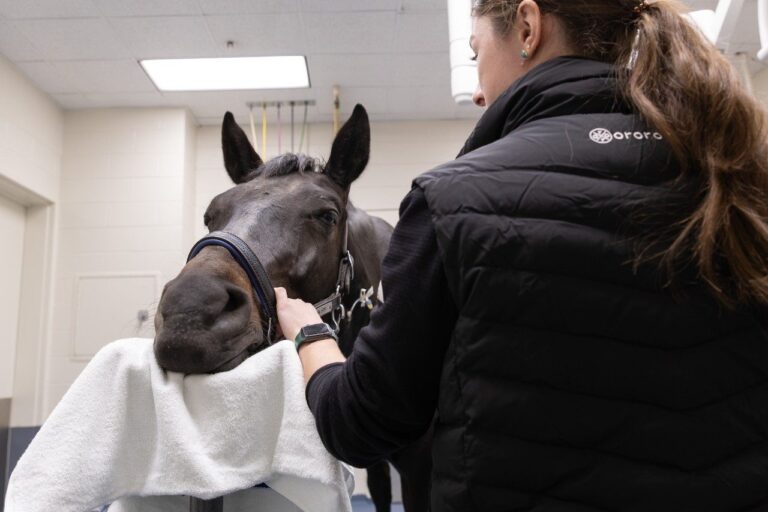
Thoroughbred Owners Group: Salix Effective in Treating EIPH
A group of researchers and the Thoroughbred Owners of California issued a statement supporting furosemide use.

A group of researchers and the Thoroughbred Owners of California issued a statement supporting furosemide use.
There are 236 OIE reference laboratories covering 112 animal diseases, including equine-specific ailments.
The video uses maps to help explain how equine influenza spread during the 2007 Australian outbreak.
Diseases reported include contagious equine metritis, equine herpesvirus, piroplasmosis, and more.

Researchers found that ERV is prevalent in Louisiana horses; more research is needed to determine its impact.
The changes are designed to prevent mistakes in Salix administration prior to races.

One of the most alarming infectious diseases in the equine industry is strangles.

Horses are hardy animals when it comes to weathering the cold months. But this doesn’t mean you can slack on their care just because you’re staying indoors more. In fact, there are some health issues horses are more prone to during winter.
Equine rhinitis A virus affects the airways and is spread via nasal secretions and aerosol inhalation.

Equine nutrition, hydration, exercise, blanketing, and respiratory health can be concerns as temperatures dip.
Salix administration mistakes have led to at least two horses being scratched from races this month.

Several countries could be affected by the equine influenza virus transmitted during October horse sales.

Furosemide has been banned from this year’s Breeders’ Cup juvenile races.

Sun is evaluating the regulation of interferon gamma expression in foals and its role in R. equi resistance.
All Pletcher’s 2-year-olds have raced on Salix in all of their starts.

Respiratory diseases at boarding barns present unique challenges for veterinarians, owners, and farm managers.