Seasonal Skin Conditions Part 1: Spring Skin Woes
Horses are at risk for season-related skin problems stemming from insects, allergies, and bacteria.

Horses are at risk for season-related skin problems stemming from insects, allergies, and bacteria.

Is your horse a noisy and uncomfortable breather? Does he struggle to breathe when you’re riding? Is his performance suffering because of it?

Complicated and emerging equine skin disorders do exist, but they are rare, according to one researcher.
I am almost 100% sure my 5-month-old weanling has ringworm. It is winter here, so it is very hard to shampoo h

According to a recent study, a coat pattern with numerous narrow stripes deteres horseflies from landing.
The Arabian Horse Foundation released summaries of the research projects the organization funded in 2011.

Electrochemotherapy yielded a high nonrecurrence rate of 99.5% for individual sarcoids in the current study.
The latest Horse Course on equine malignant melanoma is now available for viewing on TheHorse.com.
Swarming bees are being blamed for the death of a horse in Riverside Calif.
The APHA has introduced the University of California, Davis, as its official genetic testing provider.
Skin and subcutaneous (under the skin) tumors in horses comprise 50-80% of all equine neoplasia (tumors).
Now is the time for horse owners to assess the lingering effects of spring’s wet weather.
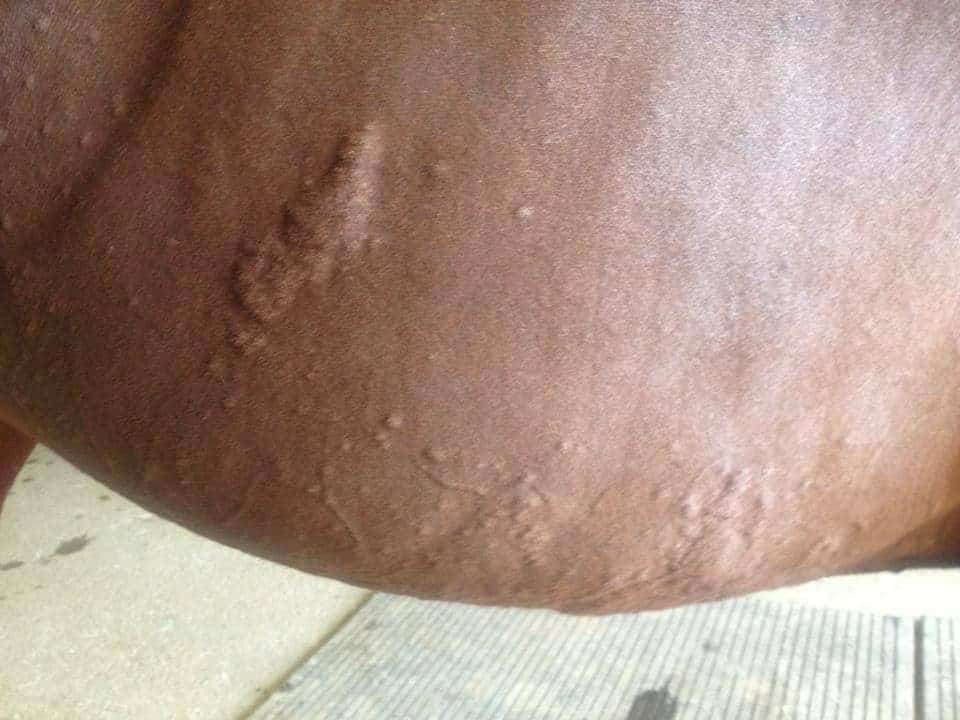
Dermatitis–simply, skin inflammation–is relatively common in horses, whether its cause is an allergic
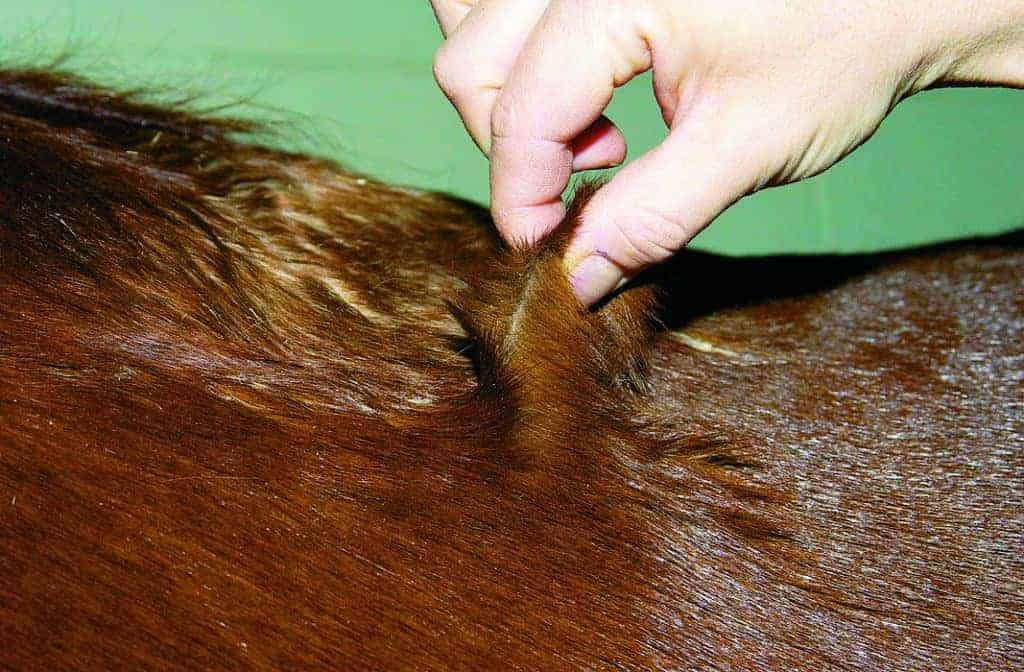
Some skin conditions in horses are caused by fungus and bacteria, while others are caused by external factors
Sweet itch is one of several seasonal allergies that a horse might encounter.
If your horse doesn’t live in a tropical or subtropical region, you’ve most likely never had to worry about equine pythiosis, a relatively rare and sometimes fatal skin infection that causes tumorlike masses and ulcerated lesions in horses. But