Equine Arthritis
Equine arthritis refers to an inflammation of the joint. There are different kinds of arthritis, such as septic arthritis and rheumatoid arthritis. However, the most important arthritis affecting horses is osteoarthritis.

Equine arthritis refers to an inflammation of the joint. There are different kinds of arthritis, such as septic arthritis and rheumatoid arthritis. However, the most important arthritis affecting horses is osteoarthritis.

Know the facts of Equine Cushing’s, a hormonal disease in horses often linked to a pituitary gland tumor. Included in this fact sheet are an overview of the disease, clinical signs, diagnosis, treatment, and prognosis for future health.

Equine joint injections can help veterinarians diagnose lameness or medicate a horse’s painful joint.

The horse’s digestive system is large, complex, and functions like a factory, yet it is exceedingly delicate. Digestive tract dysfunction in the horse is an important concern for owners and veterinarians.

Equine lameness, defined as a deviation from a normal gait, is an indicator of a structural or functional disorder of the musculoskeletal system (the limbs or spinal column) that is noted while the horse is either moving or stationary.


Equine practitioners use ultrasound machines to help diagnose a number of physical abnormalities.
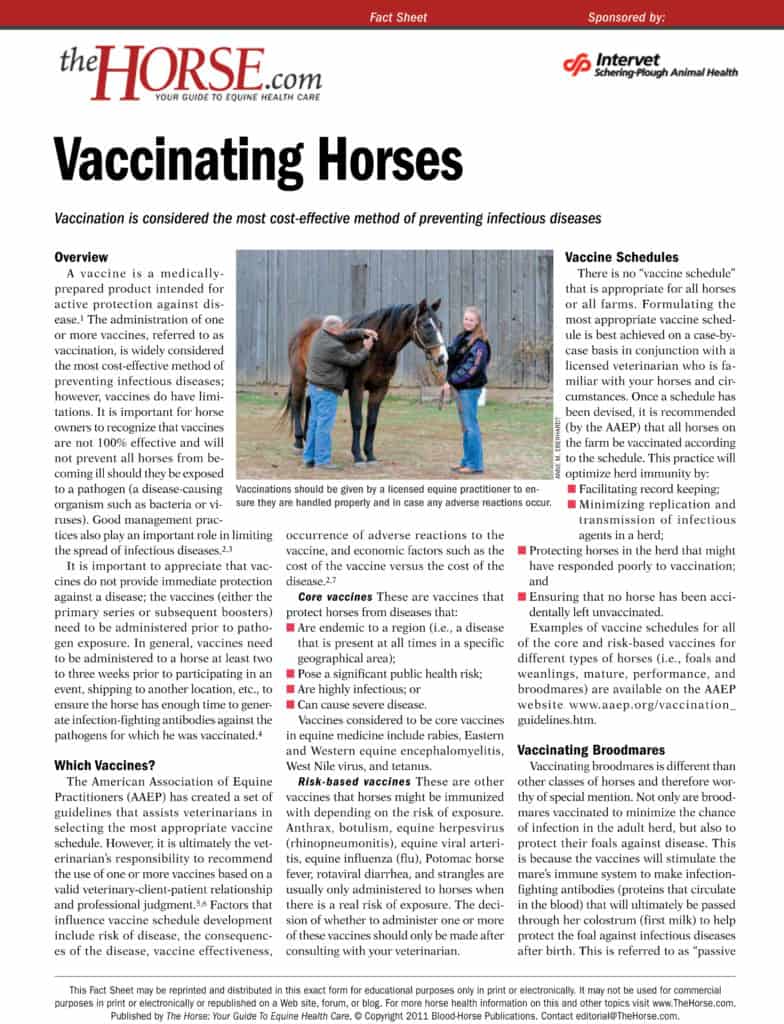
Vaccinating horses is generally considered to be the most cost-effective method of preventing infectious diseases; however, vaccines do have limitations.

Efficiently managing manure is an important aspect of caring for horses. Composting is an economical and efficient method for managing manure for virtually any equine operation, regardless of size.


Due to their inquisitive nature, a well-developed flight response, and that they are commonly confined in areas with potential obstacles such as metal or wire, horses tend to be accident prone, making wounds a fairly common occurrence.
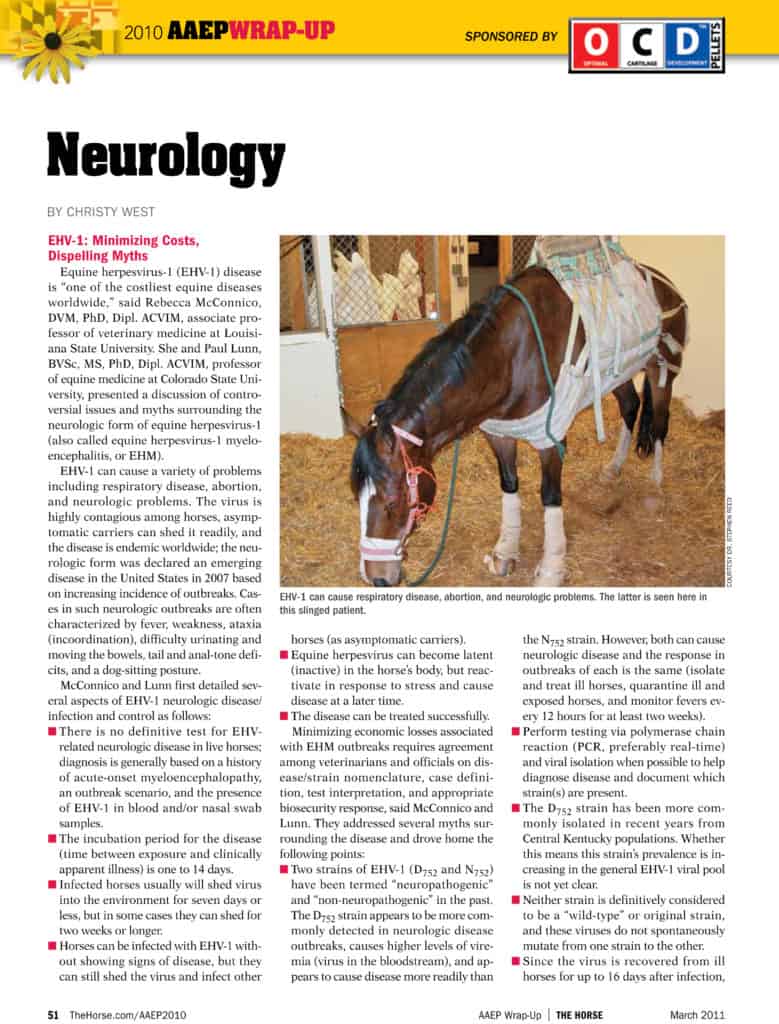
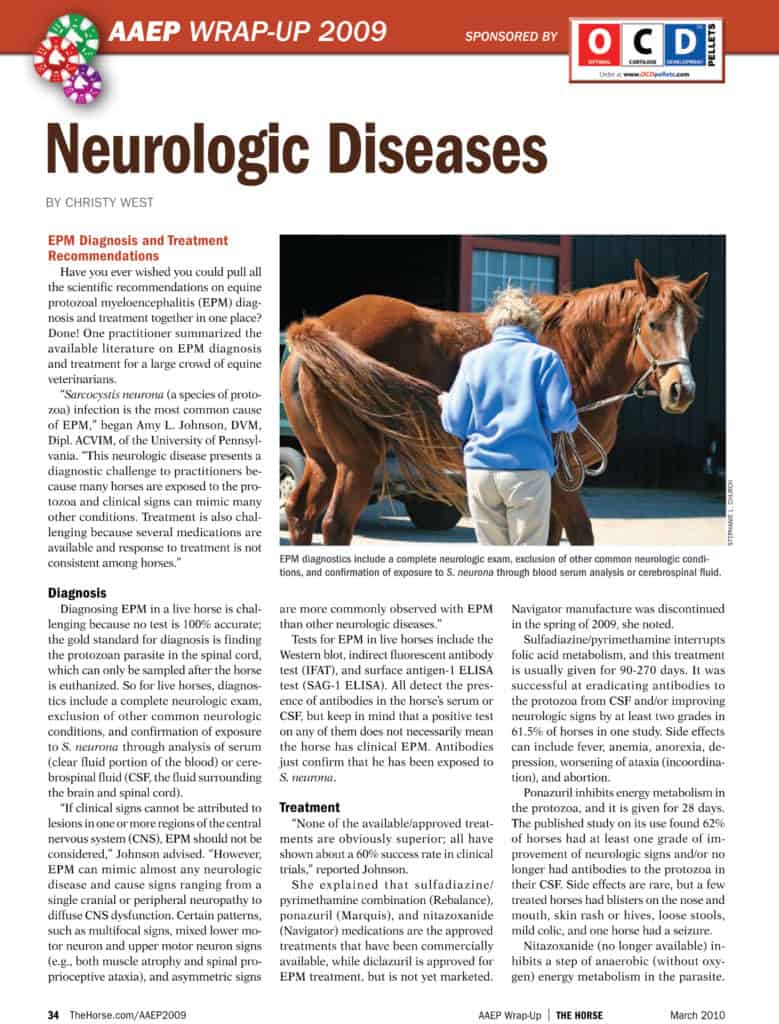
Diagnosis and treatment recommendations for equine protozoal myeloencephalitis (EPM), the evolution of West Nile virus, and a new treatment option for equine herpesvirus were discussed at the 2009 convention of the American Association of Equine Practitioners.
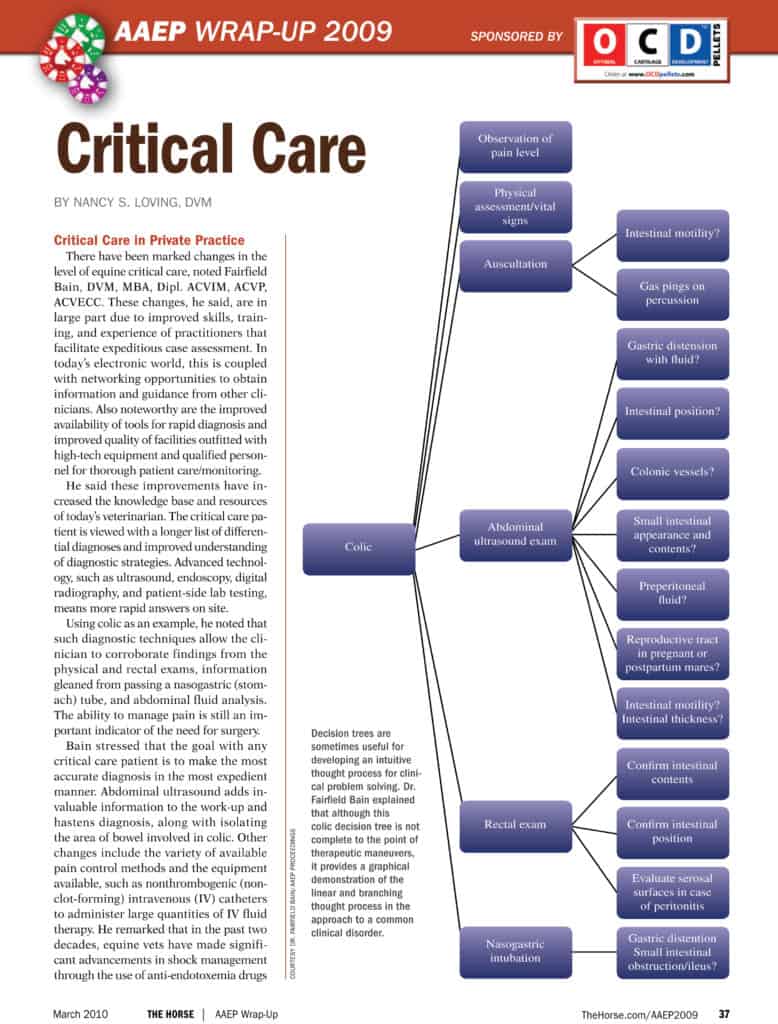
There have been marked changes in the level of equine critical care, noted Fairfield Bain, DVM, MBA, Dipl. ACVIM, ACVP, ACVECC, during the 2009 convention of the American Association of Equine Practitioners. These changes, he said, are in large part due to improved skills, training, and experience of practitioners that facilitate expeditious case assessment.
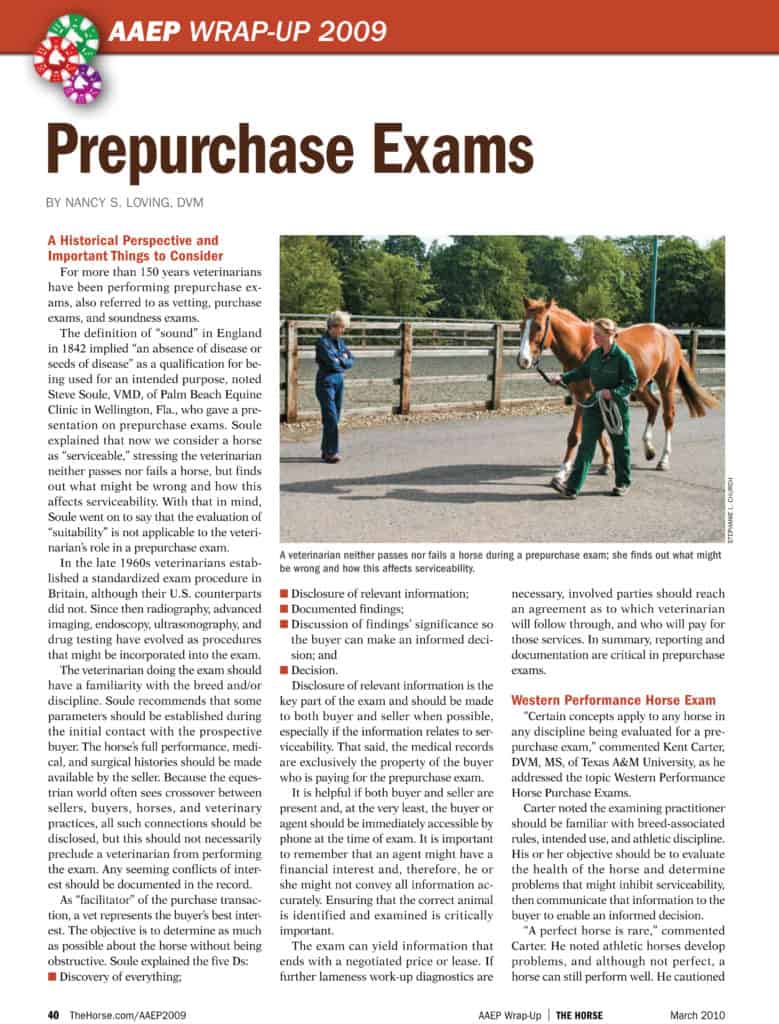
For more than 150 years veterinarians have been performing prepurchase exams, also referred to as vetting, purchase exams, and soundness exams. Two veterinarians discussed purchase exams in general and specifically for Western performance horses at the 2009 American Association of Equine Practitioners Convention.
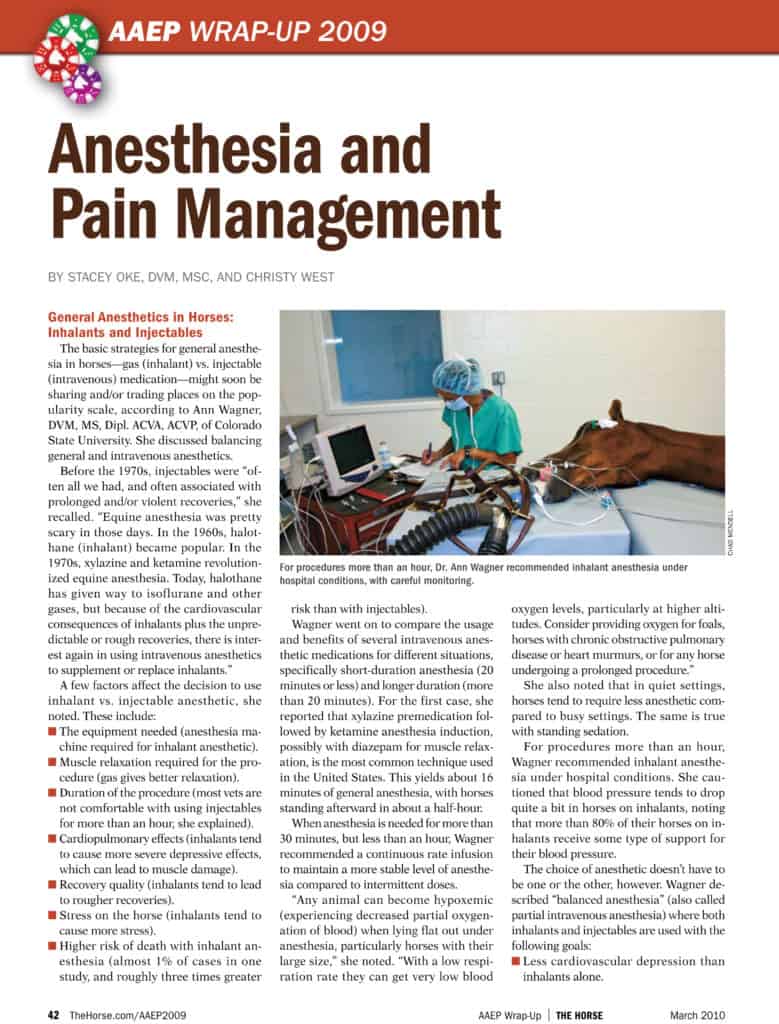
Options for general anesthesia in horses, analgesics (painkillers), and standing sedation were covered in depth at the 2009 convention of the American Association of Equine Practitioners.