Hoof Care and Farriery
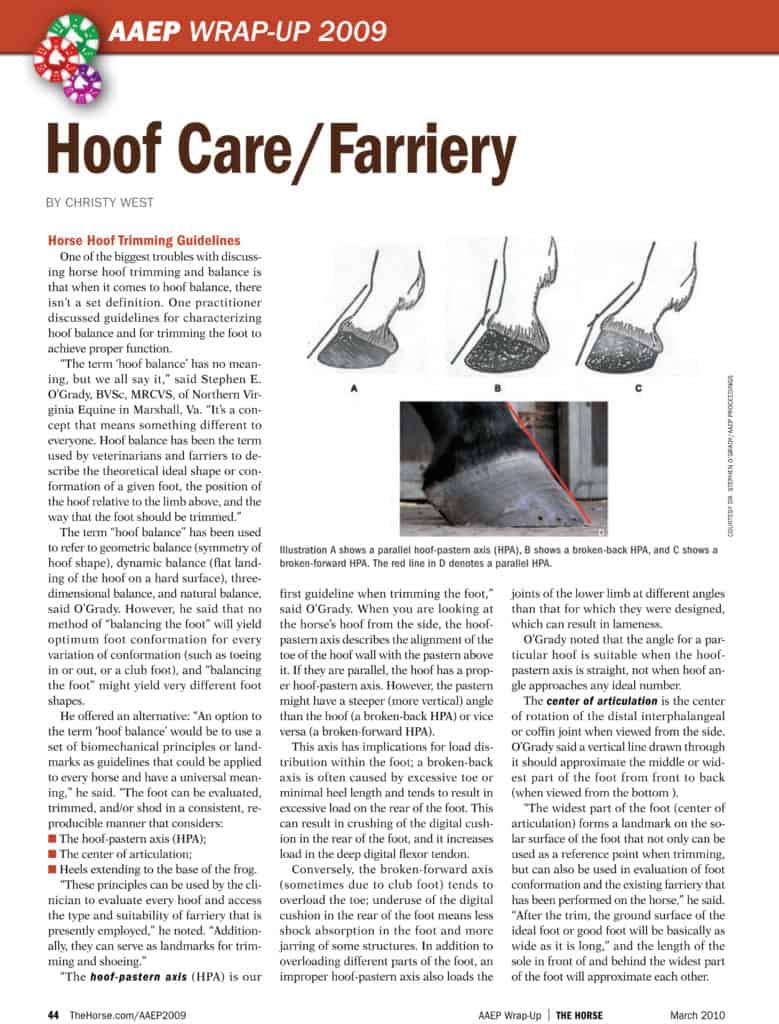
Guidelines for trimming horses’ feet and the results of a study evaluating toe grabs and catastrophic injury in racing Quarter Horses were discussed at the 2009 convention of the American Association of Equine Practitioners.

Guidelines for trimming horses’ feet and the results of a study evaluating toe grabs and catastrophic injury in racing Quarter Horses were discussed at the 2009 convention of the American Association of Equine Practitioners.

Researchers discussed respiratory topics in horses including influenza outbreaks and vaccination boosters, furosemide for exercise-induced pulmonary hemorrhage, dorsal displacement of the soft palate, dynamic respiratory tract endoscopy (during exercise), and more at the 2009 convention of the American Association of Equine Practitioners.
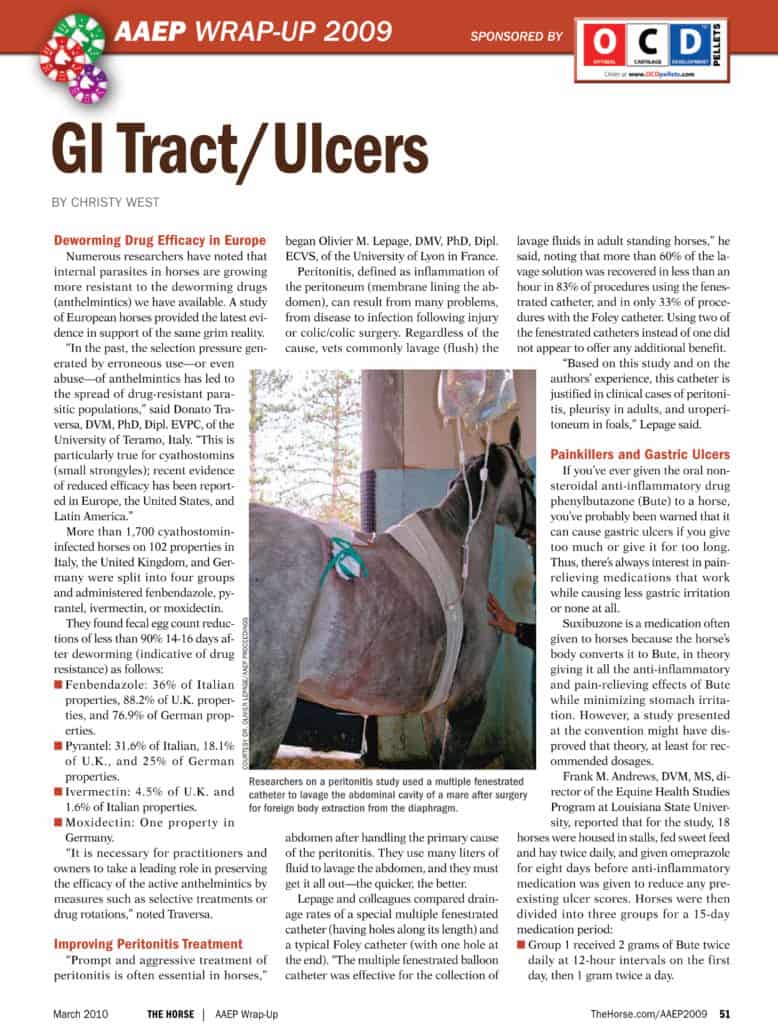
Deworming medication resistance, persimmon risks, peritonitis treatment advances, Salmonella biosecurity guidelines, and more equine gastrointestinal topics were discussed at the 2009 convention of the American Association of Equine Practitioners.
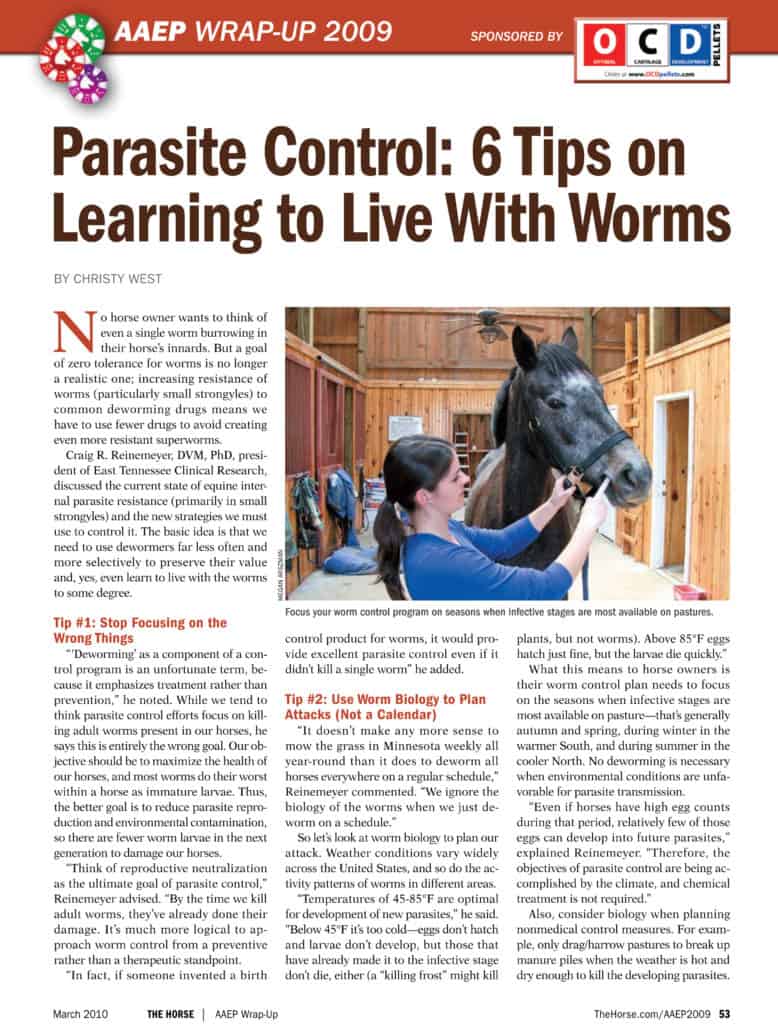
No horse owner wants to think of even a single worm burrowing in their horse’s innards. But a goal of zero tolerance for worms is no longer a realistic one; increasing resistance of worms (particularly small strongyles) to common deworming drugs means we have to use fewer drugs to avoid creating even more resistant superworms. (Presented at the 2009 AAEP Convention)
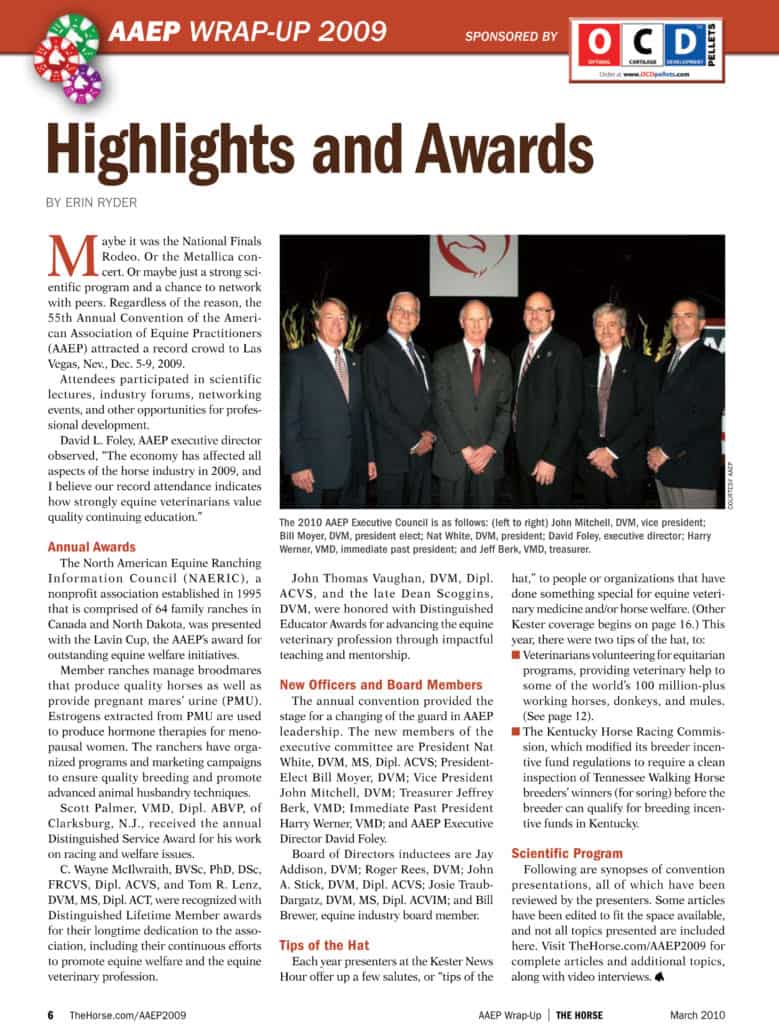
The 55th Annual Convention of the American Association of Equine Practitioners
(AAEP) attracted a record crowd to Las Vegas, Nev., Dec. 5-9, 2009.
Attendees participated in scientific lectures, industry forums, networking
events, and other opportunities for professional development.

Miscellaneous sessions at the 2009 AAEP Convention, including skin characteristics of horses affected with hereditary regional dermal asthenia (HERDA, effects of Lawsonia infection on performance, unwanted horses survey, castration complications and more.
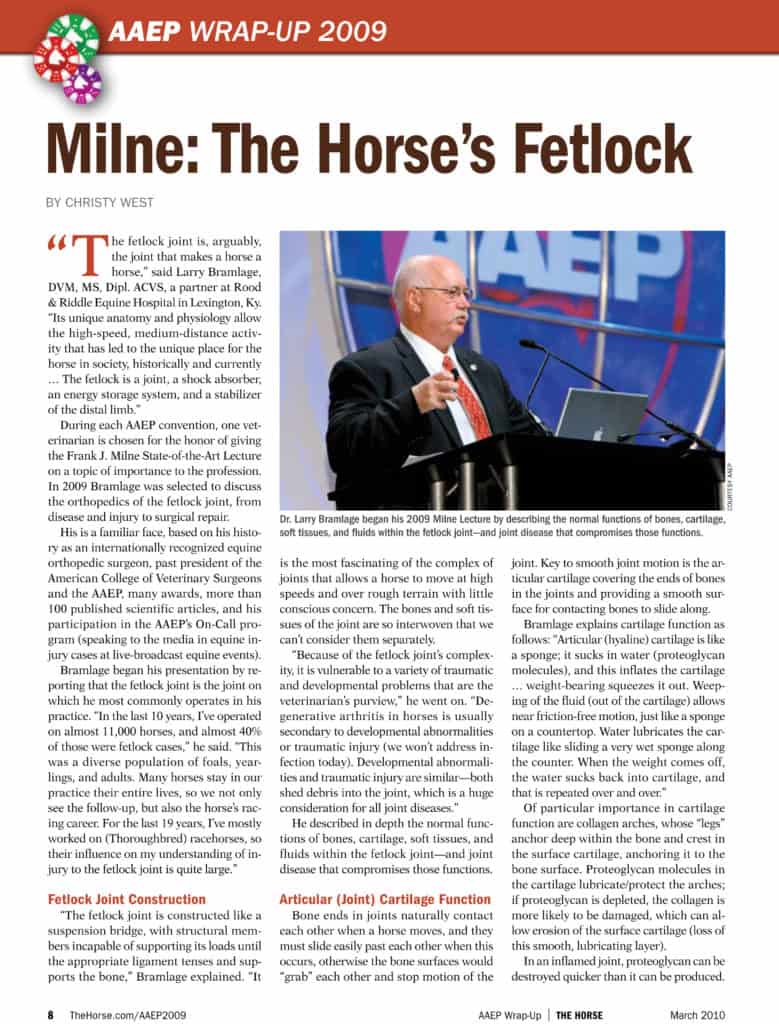
During each convention of the American Association of Equine Practitioners, one veterinarian is chosen for the honor of giving the Frank J. Milne State-of-the-Art Lecture on a topic of importance to the profession. In 2009 Larry Bramlage, DVM, MS, Dipl. ACVS, was selected to discuss the orthopedics of the horse’s fetlock joint, from disease and injury to surgical repair.

“There’s a large part of the world that depends more than ever on working equids,” said Jay Merriam, DVM, of Massachusetts Equine Clinic, in Uxbridge, who moderated the first-ever AAEP convention session on equitarian initiatives (2009). Merriam defined an equitarian as “one who serves equids with compassion, and whose only reward is their improved health and welfare.”
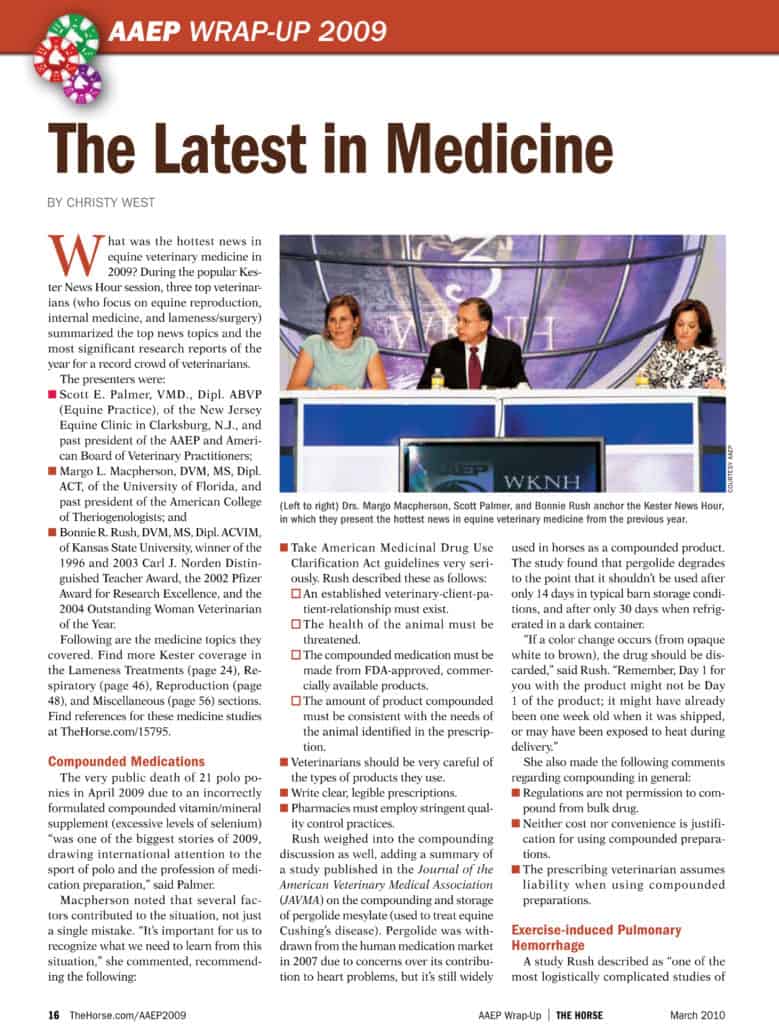
The hottest news in equine veterinary medicine in 2009 included a lethal medication compounding error, genetic deafness in Paint horses, bacteremia in foals, piroplasmosis, exercise-induced pulmonary hemorrhage, and more. (Presented at the Kester News Hour session, American Association of Equine Practitioners Convention, 2009)

Several topics related to lameness in horses were presented at the 2009 American Association of Equine Practitioners convention, from racehorse lameness to regional limb perfusion, nerve blocks, and radiographic findings in Quarter Horses.

Treatments for lameness in horses, including tenotomy surgery for laminitis, arthritis treatments, stem cells, maggots for wound therapy, electrotherapy, manual therapies, and more were discussed at the 2009 convention of the American Association of Equine Practitioners.
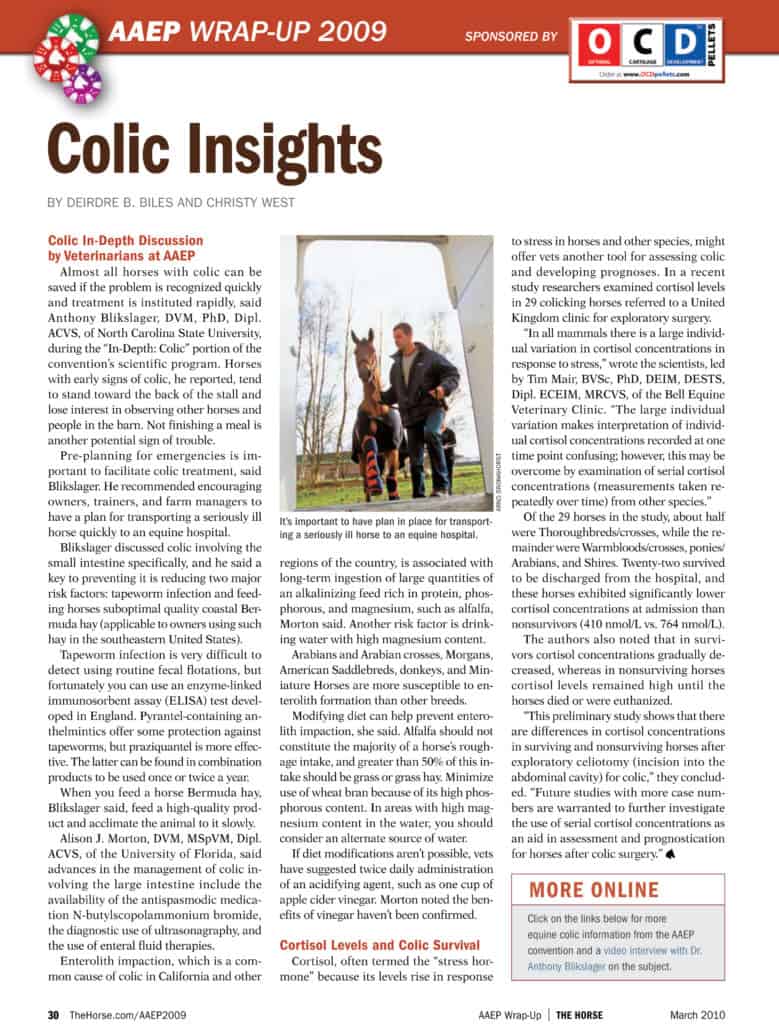
Updates on preparing for colic, enteroliths, tapeworm colic, and cortisol hormone levels in colicky horses, from the 2009 convention of the American Association of Equine Practitioners.
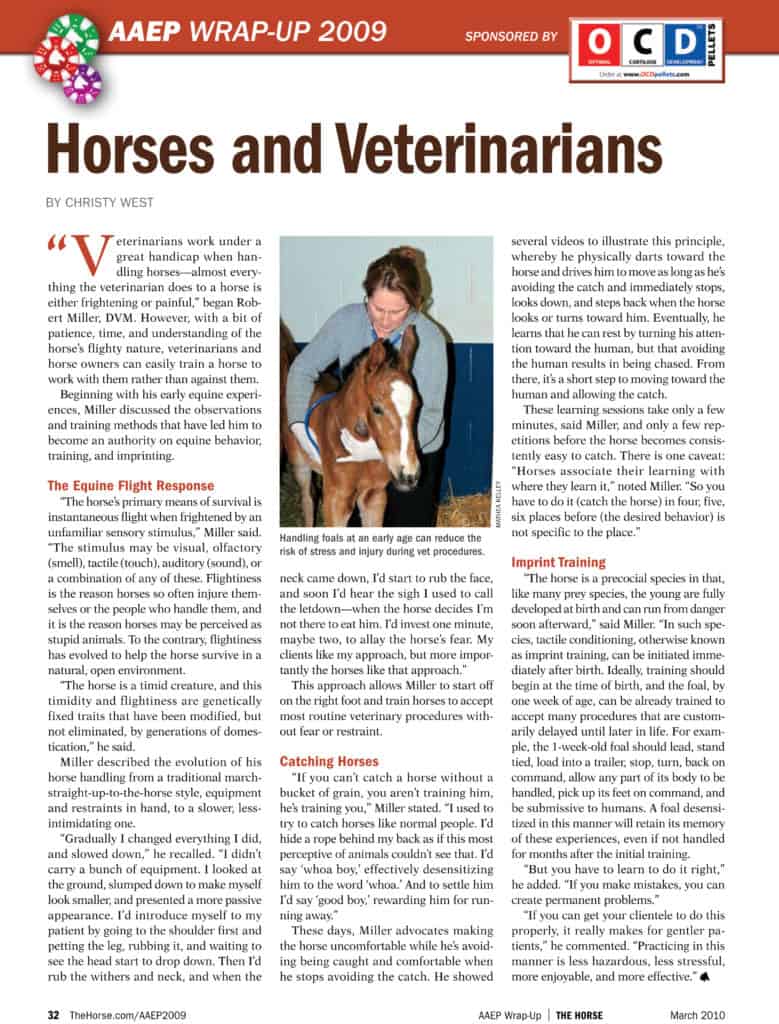
With a bit of patience, time, and understanding of the horse’s flighty nature, veterinarians and horse owners can easily train a horse to work with them rather than against them. Included are training methods from an authority on equine training.
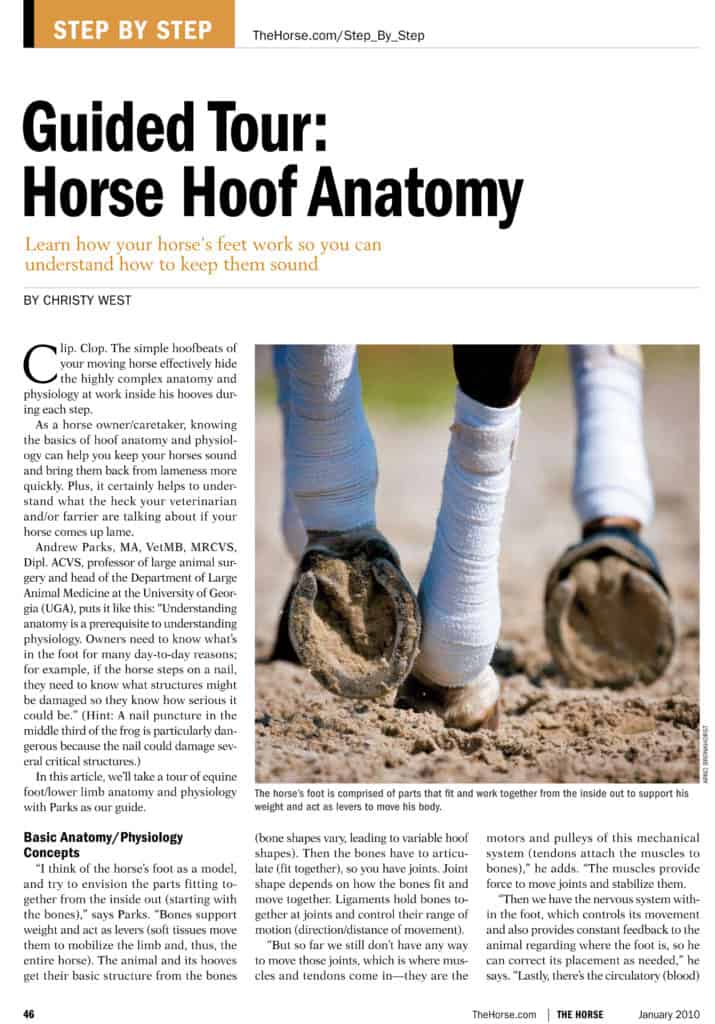
The simple hoofbeats of your moving horse effectively hide the highly complex anatomy and physiology at work inside his hooves during each step.

Dr. Stephen O’Grady addresses a reader’s question about a foal with a recently developed club foot.
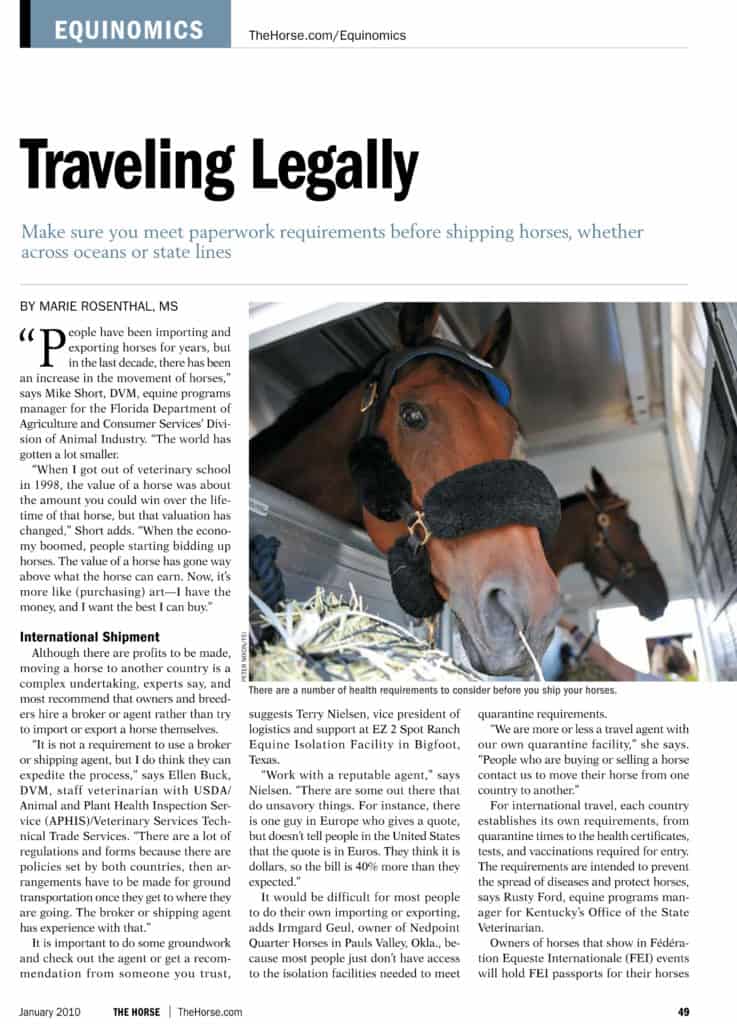
Whether transporting a horse across an ocean or across state lines, there are legal requirements that you need to meet. Your paperwork must be complete or you face the possibility of fines, quarantine, or even your horse being rejected and refused entry into a state or country.