10 Early Warning Signs of Laminitis
Your horse’s best chance of overcoming this hoof disease might lie in your ability to catch it early.

Your horse’s best chance of overcoming this hoof disease might lie in your ability to catch it early.

Also known as “seedy toe,” white line disease is a serious hoof condition that requires vet and farrier intervention.

Your horse is wounded, bleeding, or critically ill: What should you do? Get advice from our expert!

Researchers identified several disease predictors, including advancing age, laminitis, and a cresty neck, among others.

Learn about the research behind bisphosphonates and how they might help horses with navicular syndrome. Presented by Laura Kennedy, DVM, Dipl. ACVP, of the University of Kentucky Gluck Equine Research Center, in Lexington.

While acupuncture seemed to help some horses, there was no strong evidence that it relieves pain in all affected horses.
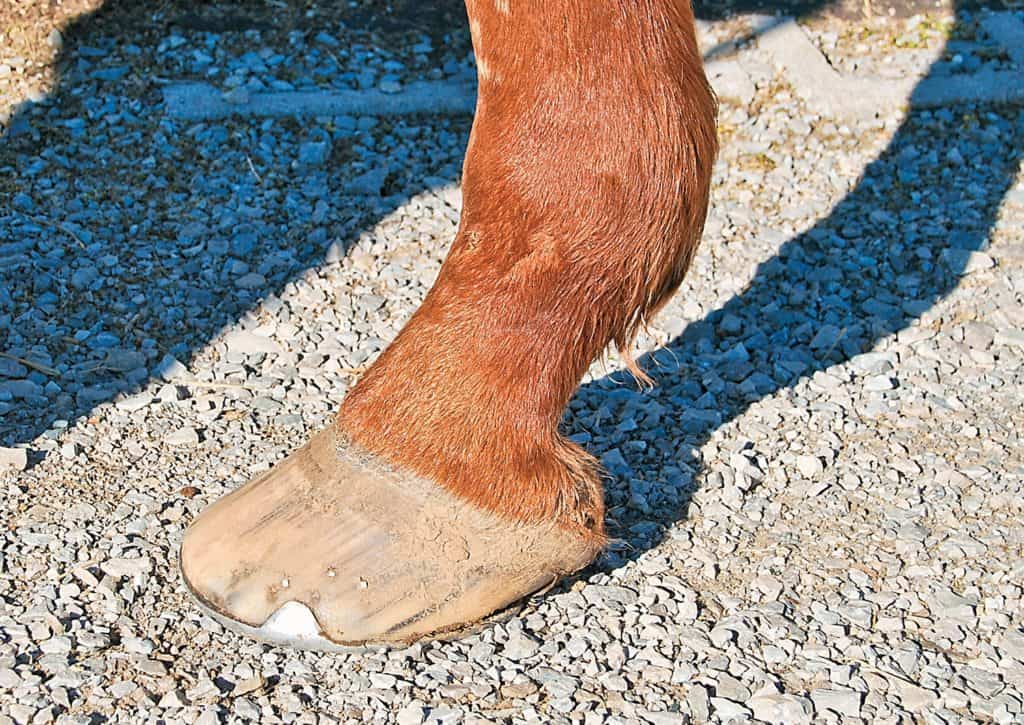
The long-toed, low-heeled hoof is a common and difficult-to-manage hoof abnormality. Here’s what you should know.

Horses with chronic laminitis should be closely monitored during treatment and recovery. Here’s what to consider.
The preconference workshop and conference for vets and farriers will take place May 20 and 21, respectively.

Confinement is difficult but often necessary for healing. Learn how to keep horses healthy while on stall rest.
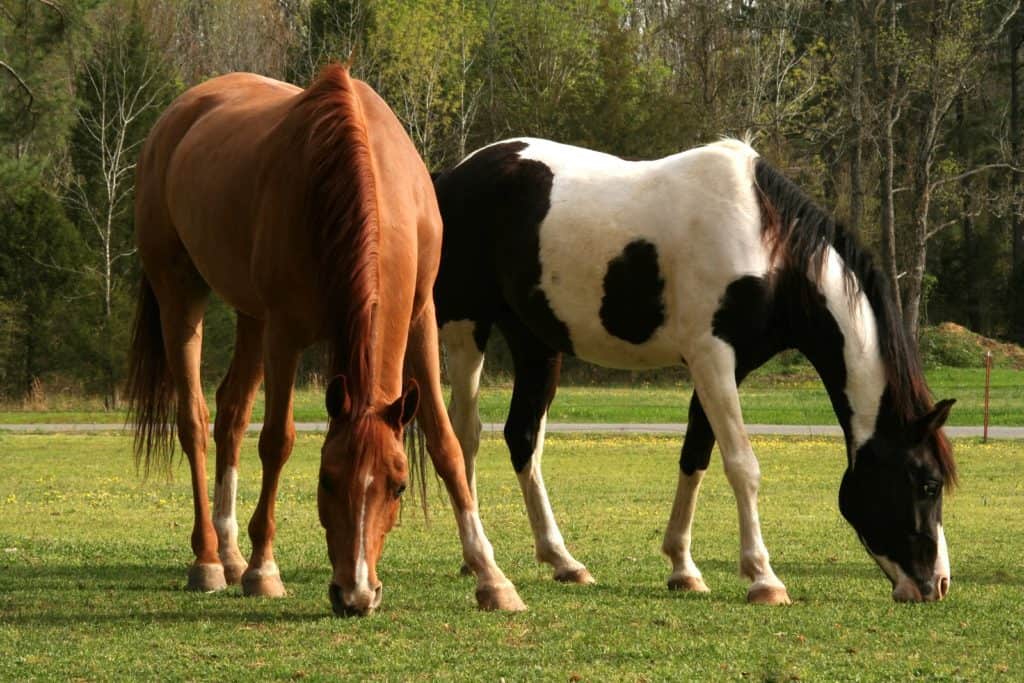
Overconditioning, grazing during sunlight hours, and frozen footing could potentially trigger laminitic episodes.

Spring grass might be delicious for horses, but it can cause problems including laminitis and fescue toxicity.

Chronically laminitic mares developed potentially detrimental changes in uterine blood flow during pregnancy.
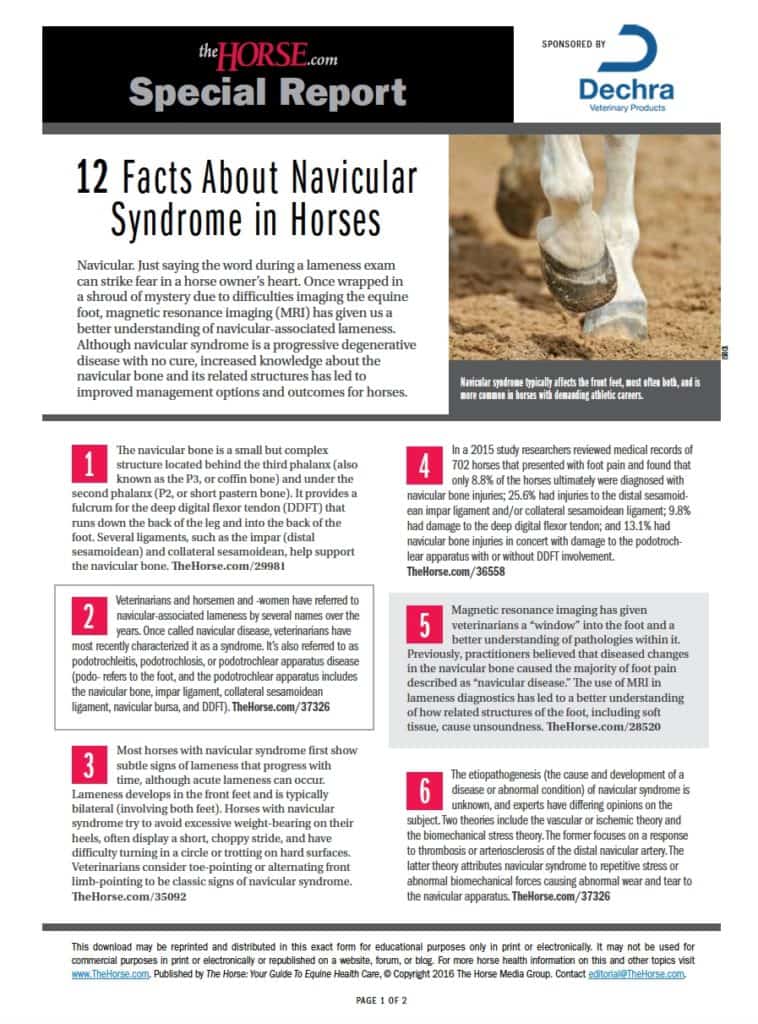
Learn about diagnosing, treating, and the possible causes of navicular syndrome in our Vet On Demand companion!

The University of Tennessee’s Dr. Jim Schumacher overviews navicular syndrome’s risk factors, treatments, and more.
Research topics include EHV-1 latency, foal pneumonia, training and surface factors in preventing injury, and more.