Semi-Feral Ponies ‘Read’ Letters for Treats
The ponies in this research group learned to distinguish between 5 letters and select them on a touch screen.

The ponies in this research group learned to distinguish between 5 letters and select them on a touch screen.

Miniature Horses with allergies can be challenging to manage and might have different dietary needs than their larger counterparts.

One nutritionist discusses the unique dietary needs of mules.

Donkeys might benefit from higher doses of morphine for pain relief than what veterinarians usually prescribe for horses.
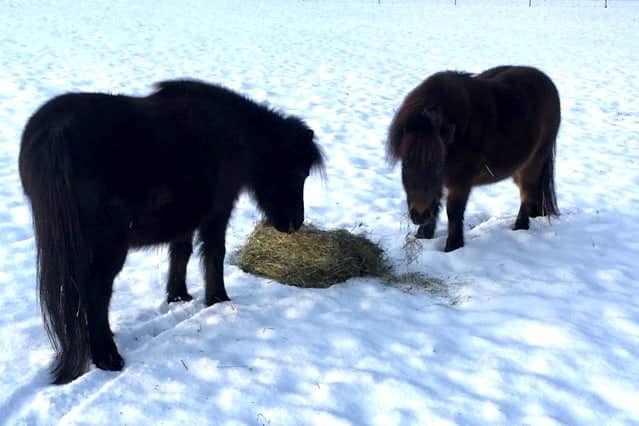
An equine nutritionist offers advice for determining Miniature Horses’ forage requirements.

An equine nutritionist’s advice on choosing treats for horses and ponies that might be prone to insulin dysregulation, obesity, or EMS.
Insulin dysregulation can coincide with high ACTH concentrations in the fall, even when an animal does not have PPID.

If managed with the right nutrition plan, horses and ponies with histories of laminitis can have successful careers.

Researchers have discovered that ponies that have suffered from laminitis have higher blood pressure and therefore overproduce vasodilators.

A veterinarian says both age and breed can affect a horse’s predisposition to insulin resistance.

Judges often place overweight ponies—which could be at greater risk for metabolic issues and laminitis—higher than their leaner counterparts in competition.

Friesian breeders can test for the variant to implement early veterinary management and avoid breeding carriers.

Learn what makes managing ponies special—from their critical need for nutritional supervision to their often feisty personalities.

Donkeys have similar dental structures as horses, and they’re at risk of developing many of the same kinds of dental issues. But, unlike horses, their problems often go overlooked—and that’s to their detriment, according to donkey specialists.

A donkey and mule expert offers tips for veterinarians on how they can best approach, handle, and read their nonhorse equid patients.

While successful embryo transfer in donkeys is rare, a new technique created by Brazilian researchers resulted in two surrogate jennies giving birth to healthy donkey foals.