Deworming Your Horse: Take 2
Discussion of the changing recommendations for horse deworming strategies (focusing on strongyles) and how you can help prevent resistance to dewormers.

Discussion of the changing recommendations for horse deworming strategies (focusing on strongyles) and how you can help prevent resistance to dewormers.
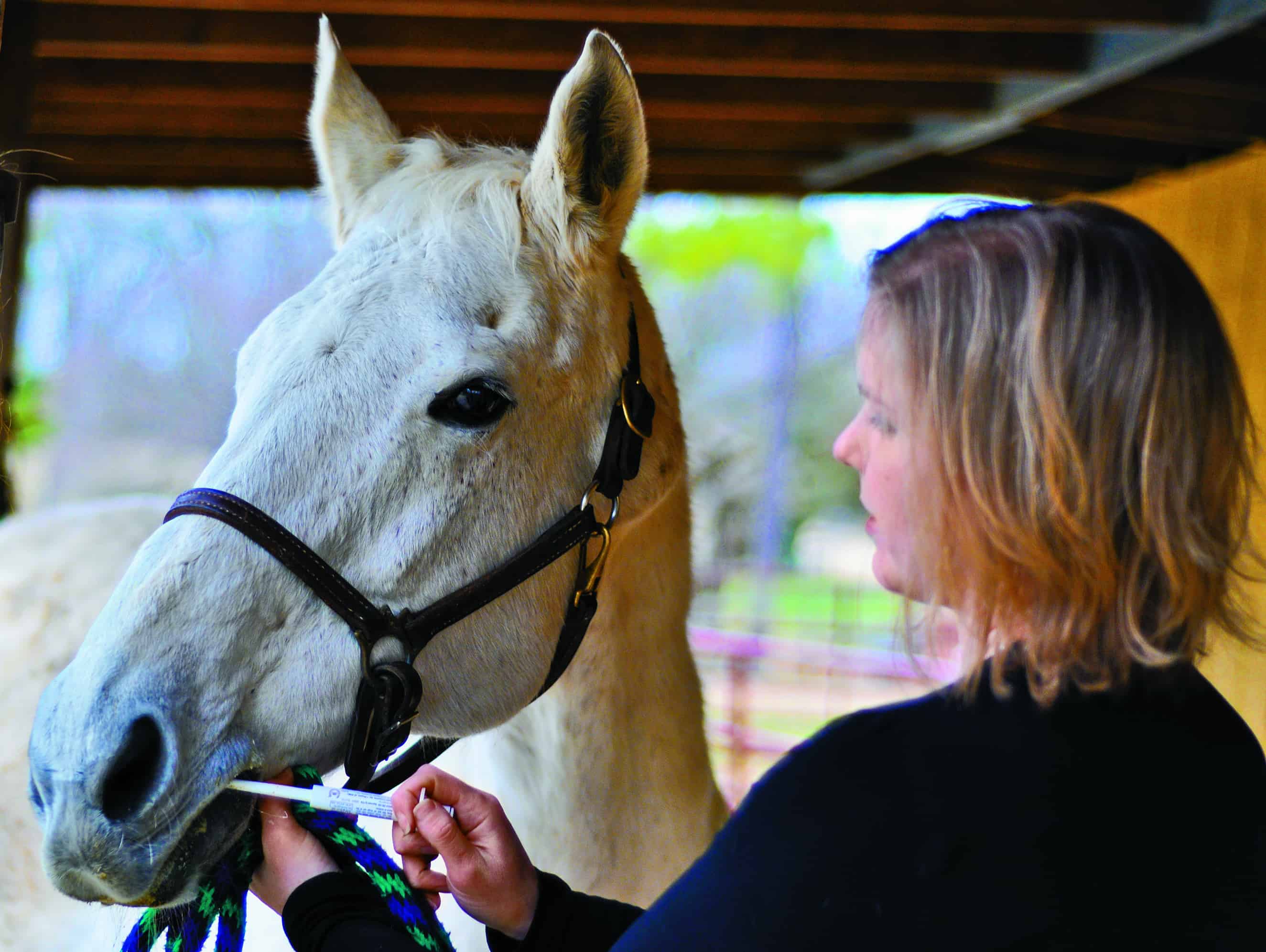
How do you battle parasites in your horses despite increasing resistance to common deworming medications?

After a snowy winter, temperatures in Central Kentucky are seasonably warm once again. Grass is green, birds are singing, and equine parasites are stirring back to life. This is the time of year when horse owners and farm managers become aware of worms and make plans to combat them.
Vaccination and deworming are an integral part of horse health care routines, according to respondents of a recent survey, but only a fraction of owners consult their veterinarians when it comes to parasite control.
The findings are
A horse owner’s age is a major predictor in how involved they will be in the horse industry, according to a new survey.
The findings are part of the American Horse Publications online nationwide survey, conducted from Oct. 15, 20
Horses with allergic diseases, like recurrent airway obstruction, might have fewer parasites.
Predatory fungus Duddingtonia flagrans might be a viable option for the biological control of infective larvae of small strongyles, researchers noted in a recent study.
Adult small strongyles residing in a horse’s large in
The thought of your new foal becoming infected with worms is a bit too much to bear for many horse owners. All it takes is one face-to-face meeting with a squirmy white roundworm, the type of parasite most common in horses under two years of ag
In its first 10 months of operation, a group known as the Colorado Horsecare Foodbank has helped keep more than 100 horses with their owners by providing feed and other equine services, giving owners under financial duress a reprieve from the w
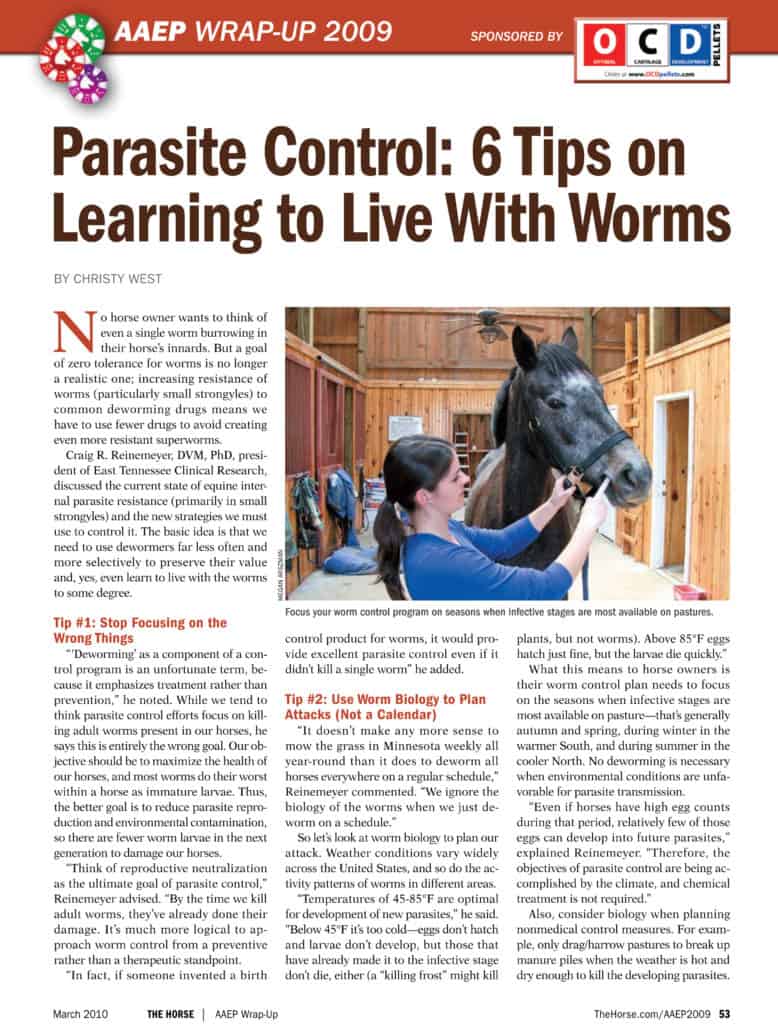
No horse owner wants to think of even a single worm burrowing in their horse’s innards. But a goal of zero tolerance for worms is no longer a realistic one; increasing resistance of worms (particularly small strongyles) to common deworming drugs means we have to use fewer drugs to avoid creating even more resistant superworms. (Presented at the 2009 AAEP Convention)
If you read the title of this article and said, “WHAT?!?” don’t worry–you’re not alone! No horse owner wants to think of even a single worm burrowing in their horse’s innards. But a goal of zero tolerance for worms is no
Contrary to common belief, older horses do not carry higher worm burdens than their younger counterparts, said Oklahoma State University veterinarians. “Despite the belief that older horses are more susceptible to internal
Horses with Cushing’s disease tend to have higher fecal egg counts than healthy horses.
Numerous research papers and presentations over the last several years have noted that internal parasites in horses are growing more resistant to the deworming drugs (anthelmintics) we have available. A study of European horses presented at the
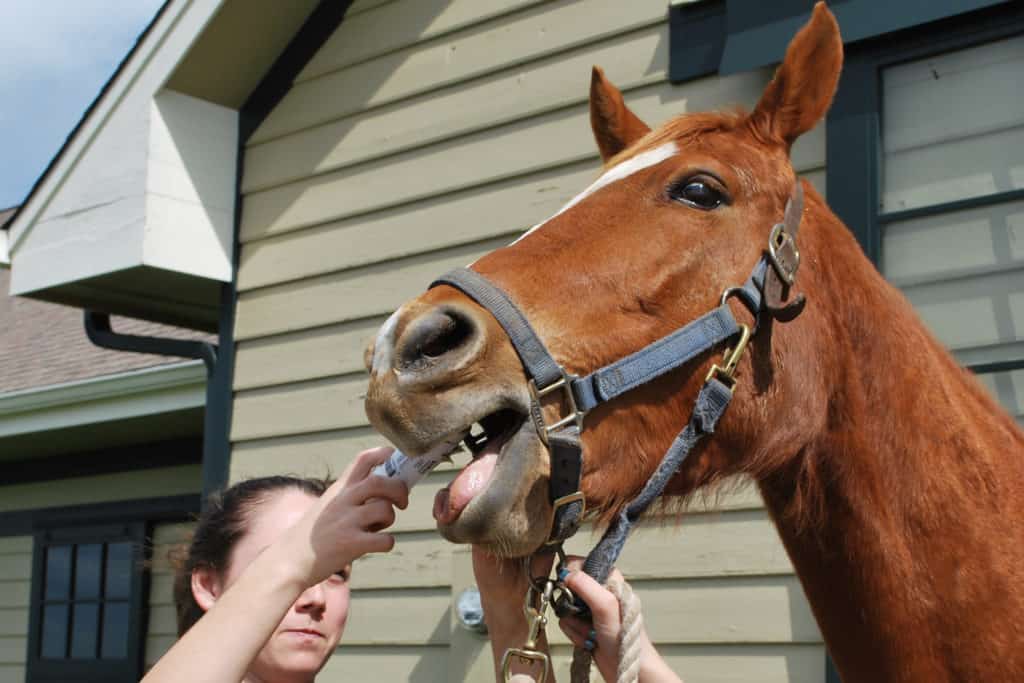
This hour-long video presentation features advice on identifying and managing resistant parasites.