Deworming & Internal Parasites

Subcategories:
None

Hurricane Gustav Update

As dawn broke Sunday over New Orleans, bumper-to-bumper traffic was reported in nearly every direction as residents heeded orders to flee an only partially rebuilt city.

Police and National Guard troops were on the streets preparing to patrol
Read More

Parasiticidal Resistance Reported in New Study

Kentucky researchers report that roundworms and small strongyles, two common equine intestinal parasites, are developing resistance against most of the commercially available worming products. What’s worse, no new drugs against either of these

Read More

Groom Carefully as Tick Season Fires Up

Everyone wants their horses to be healthy. Ticks are carriers of Lyme disease, for which there is no currently licensed equine vaccine available. Pay careful attention to your horses and monitor them for ticks. Lyme disease can also occur in humans,

Read More

Natural Fly Management

Control flies around your barn with tiny wasps that reduce fly populations, but don’t sting horses or humans

Controlling the flies around you and your horses is very important, not just because of the irritating bites, but

Read More

Fire Ants and Horses

Fire ants deliver a simultaneous bite and sting that are very painful and give them their infamous name. The threat of fire ants to healthy, ambulatory adult animals is fairly minimal. However, fire ants can be a significant threat to recumbent

Read More

Cross-Species Deworming

How do the worm infestations of horses and domestic pets, such as dogs and cats, correspond with each other, if at all?

Read More

Hitting the Road for Education

Take more than 1,000 veterinarians and veterinary students from around the globe, some armed with presentations representing thousands of hours worth of equine research, and add to it some tartan, bagpipes, and Scottish fare. Drop it all into a

Read More

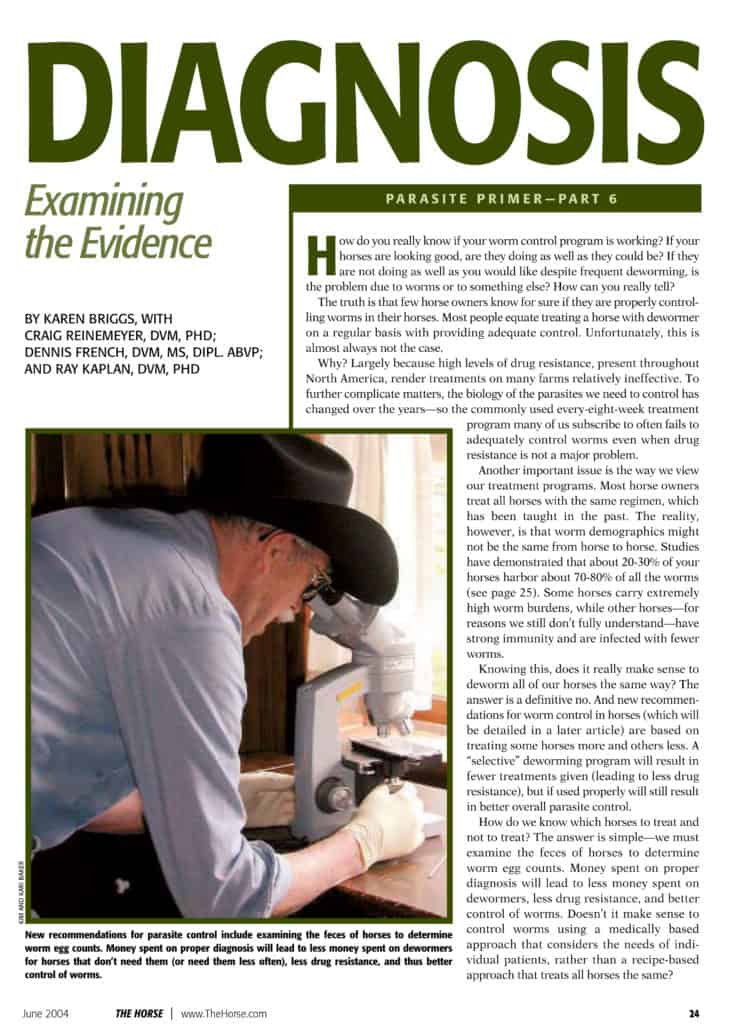
Diagnosing Equine Parasite Infections: Examining the Evidence

New recommendations for worm control in horses are based on treating some horses more and others less. A “selective” deworming program will result in fewer treatments given (leading to less drug resistance), but if used properly will still result in better overall parasite control.

Read More

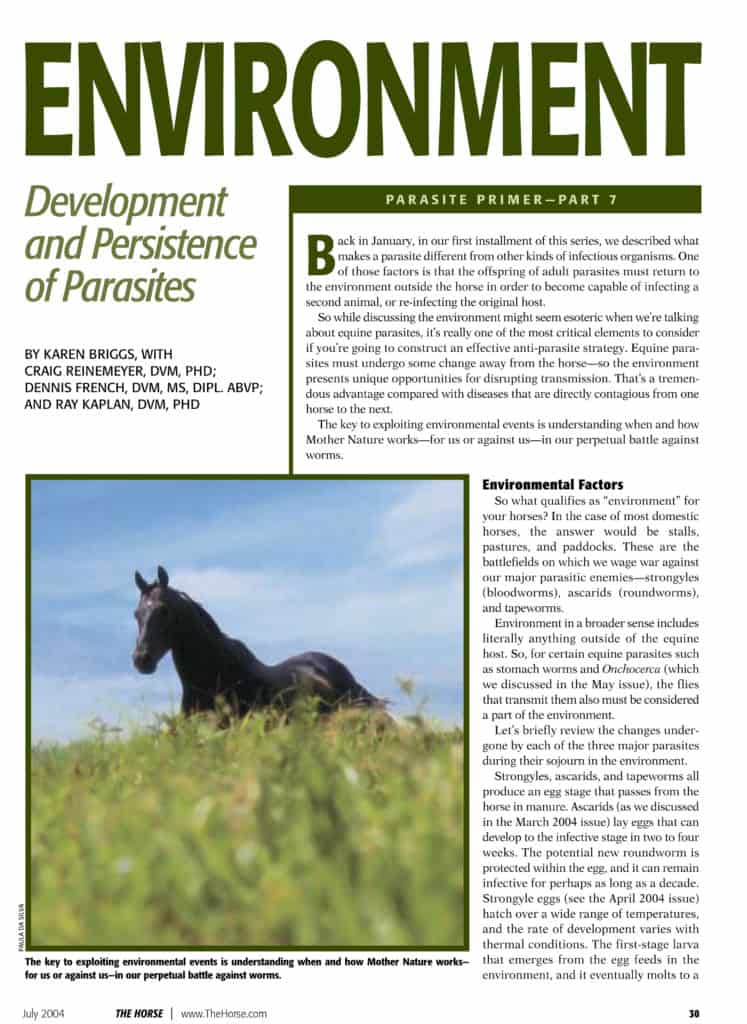
Environment: Development and Persistence of Parasites

The horse’s environment is a critical elements to consider when constructing an effective anti-parasite strategy. The key to exploiting environmental events is understanding when and how Mother Nature works in our perpetual battle against worms.

Read More

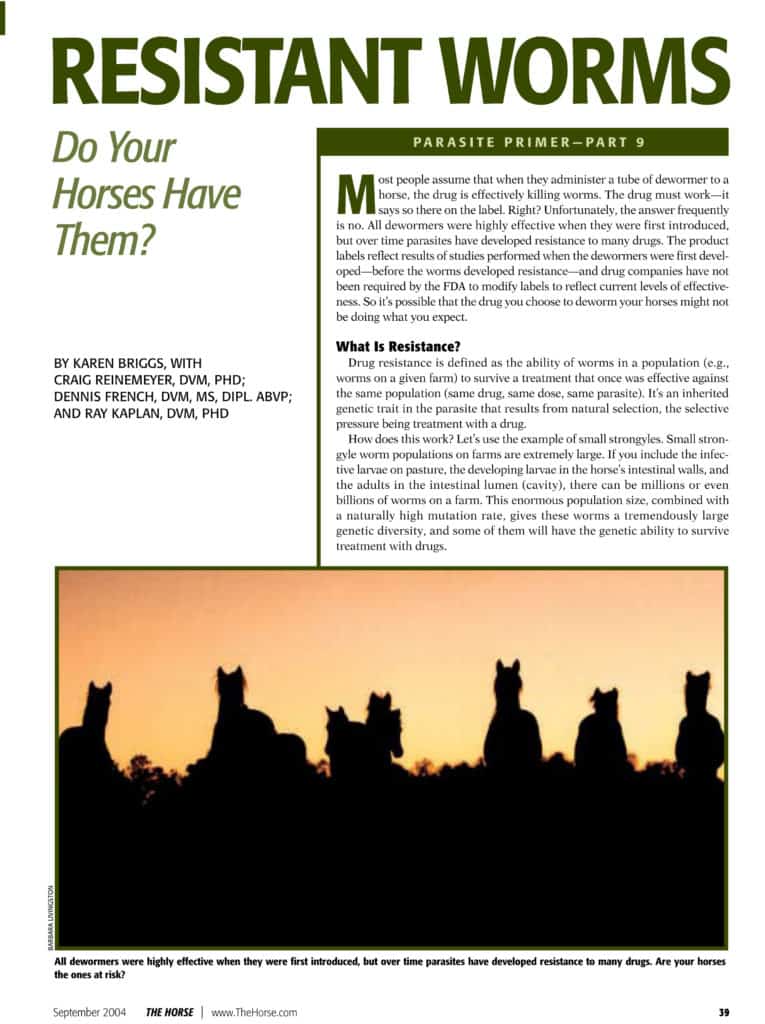
Resistant Worms: Does Your Horse Have Them?

All dewormers are highly effective when first introduced, but over time parasites develope resistance to many dewormers. Are your horses the ones at risk? The product labels reflect results of studies performed before the worms developed resistance.

Read More

Control Programs for Mature Horses

After horses reach their second birthday, the medical picture changes dramatically, as large and small strongyles become the major focus of our parasite control programs. There are other parasites that are a concern in adult horses—bots and tapeworms, to name only two—but their impact is fairly minor in comparison to strongyles.

Read More

More From The Horse

horse nose snout nostril detail close animal equine pont
training issue or lameness; Think With Your Head About Your Riding Helmet
Farrier-Foal-AE
rucio horse

Stay on top of the most recent Horse Health news with

FREE weekly newsletters from TheHorse.com

Weekly Poll

sponsored by:

What’s your biggest challenge when trying to improve barn air quality?
82 votes · 82 answers

Create a free account with TheHorse.com!

The Horse
Privacy Overview

This website uses cookies so that we can provide you with the best user experience possible. Cookie information is stored in your browser and performs functions such as recognising you when you return to our website and helping our team to understand which sections of the website you find most interesting and useful.