RCI Considers ‘One Strike’ for Egregious Drug Violations
The rule would affect found responsible for putting substances in racehorses that might endanger the animals.

The rule would affect found responsible for putting substances in racehorses that might endanger the animals.
A veterinary panel will present radiographic images of joints and endoscopic videos of throats in yearlings.
Discussion topics included public veterinary records, commission authority over veterinarians, and Salix.
The new rule states horses receiving ESWT will be ineligible to train or race for 10 days following treatment.
The two-day event will bring together a cross-section of the breeding, racing, and veterinary communities.
A small lesion in the middle of the suspensory ligament in his left front leg was detected last week.
Some of Thoroughbred racing’s most notable owners have pledged to run their 2-year-olds without Salix.
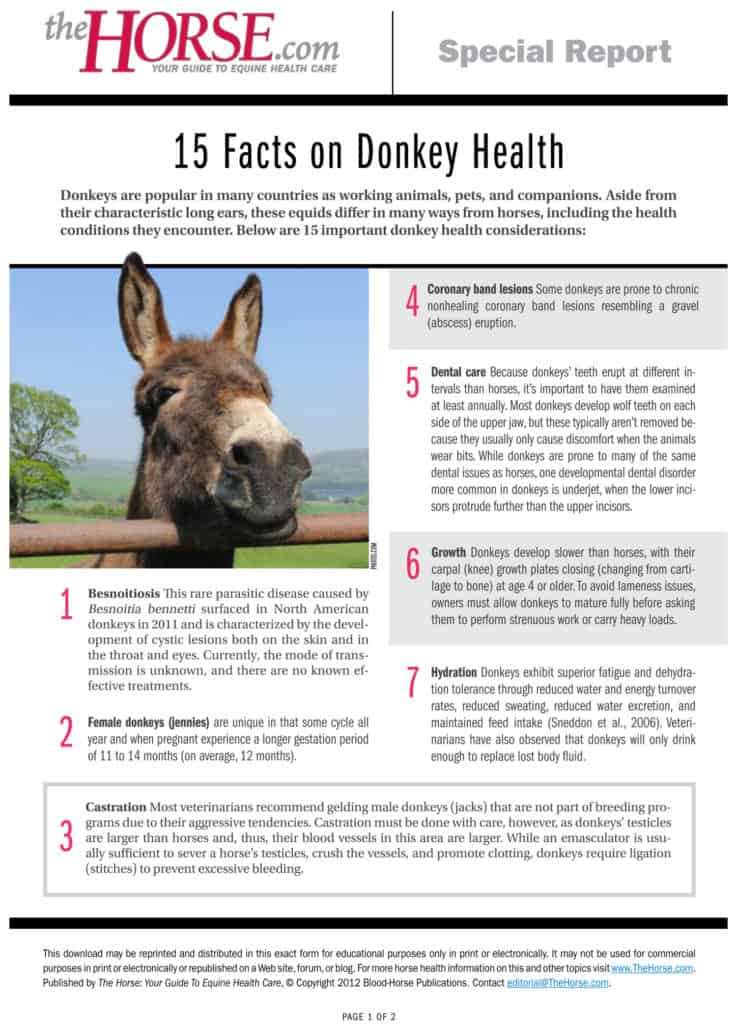
Did you know donkeys are more prone to laminitis in their hind feet, whereas horses tend to founder on their front? Learn about these donkey-health facts and more in our special report.
Bramlage served as the AAEP On-Call veterinarian for this year’s Triple Crown races.
Federal regulation of horse racing medications was the topic of a July 12 congressional hearing.

Three veterinarians who reviewed the colt’s treatment regimen found nothing out of the ordinary.

A study confirms omeprazole can prevent gastric ulcer formation in young racehorses.
The pain-killer more powerful than morphine was not found in any Derby or Oaks samples tested.
A U.S. Senate committee has released its witness list for a July 12 hearing on medication use in horse racing.
The hearing, “Medication and Performance Enhancing Drugs in Horse Racing,” will be held July 12.

Researchers found that recovery periods during conditioning could improve horse training efficacy.