UK Graduate Student Spotlight: Jessica Scare
Scare is attempting to culture Parascaris worms, which are difficult to keep alive outside of the horse.

Scare is attempting to culture Parascaris worms, which are difficult to keep alive outside of the horse.

Many horses are well-equipped to live outdoors and thrive, provided certain provisions are met. Here’s what to remember.

Scientists in Hong Kong validated a “dilute-and-shoot” test that can check for more than 40 difficult-to-detect drugs.

Horses faced with a problem they couldn’t solve used visual and tactile signs to get human attention and ask for help.

Of the 442 respondents, 90 (20%) use injections as a regular part of their horses’ joint management programs.

Horses can appear lame in the front limb when the real lameness is the hind limb on the same side, researchers found.
Lightning is being blamed for the fire at Mercury Equine Center that killed 18 yearlings and five horses of racing age.

The adjustment means minor infractions aren’t treated on par with serious violations in determining extra penalties.

Spring is an exciting time for many breeders, as it likely marks the last trimester of their mares’ pregnancies. Due to the rapid changes that occur in the last few months of gestation, it is imperative that owners monitor mares closely.

A missense mutation is behind the donkeys’ lack of pigmentation, researchers learned.

Have horses been known to show significant behavior changes right before death? If so, why does this happen?

Veterinarians use imaging technologies to evaluate, diagnose, and ultimately treat lameness in the lower leg and foot.
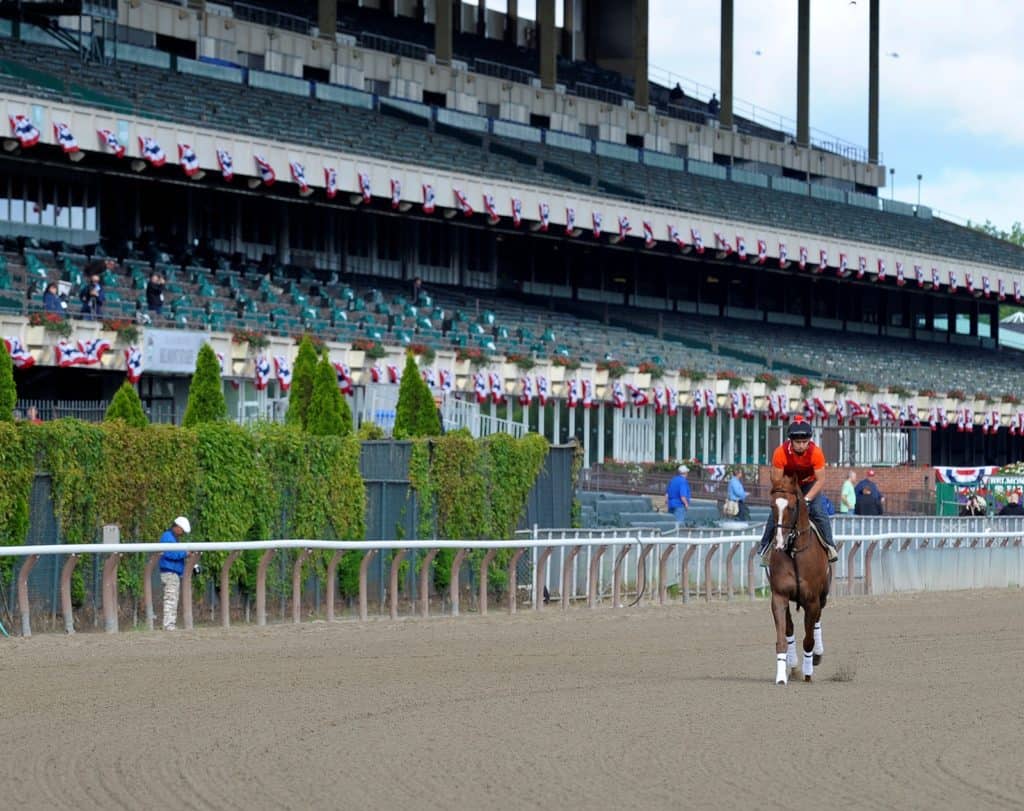
Thoroughbred trainers must obtain annual continuing education in equine health, welfare, and safety, among other topics.
More than a dozen horses were killed when fire swept through their Adams County barn this week.

Complications are common with traditional repair, so researchers tested a plate designed for human geriatric patients.

Of the 682 respondents, 221 (32%) said their veterinarians see their horses twice a year.