Put Native Birds to Work for Free, Natural Insect Control: Swallows
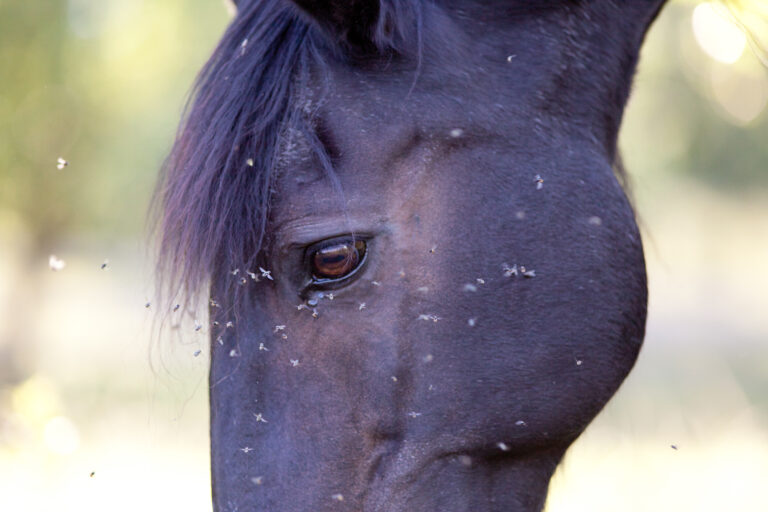
By providing swallows with nest boxes, you can help their populations increase and make a huge dent in the numbers of insects around your property this summer.

By providing swallows with nest boxes, you can help their populations increase and make a huge dent in the numbers of insects around your property this summer.

Dr. Pamela Wilkins offers recommendations for horse safety in extreme winter conditions, including providing shelter, warm water, and protecting older horses.
Cold winds and changing winter weather might not seem like contributing factors for equine colic; however, these conditions can foster changes in routine and eating habits that could affect your horse’s well-being.
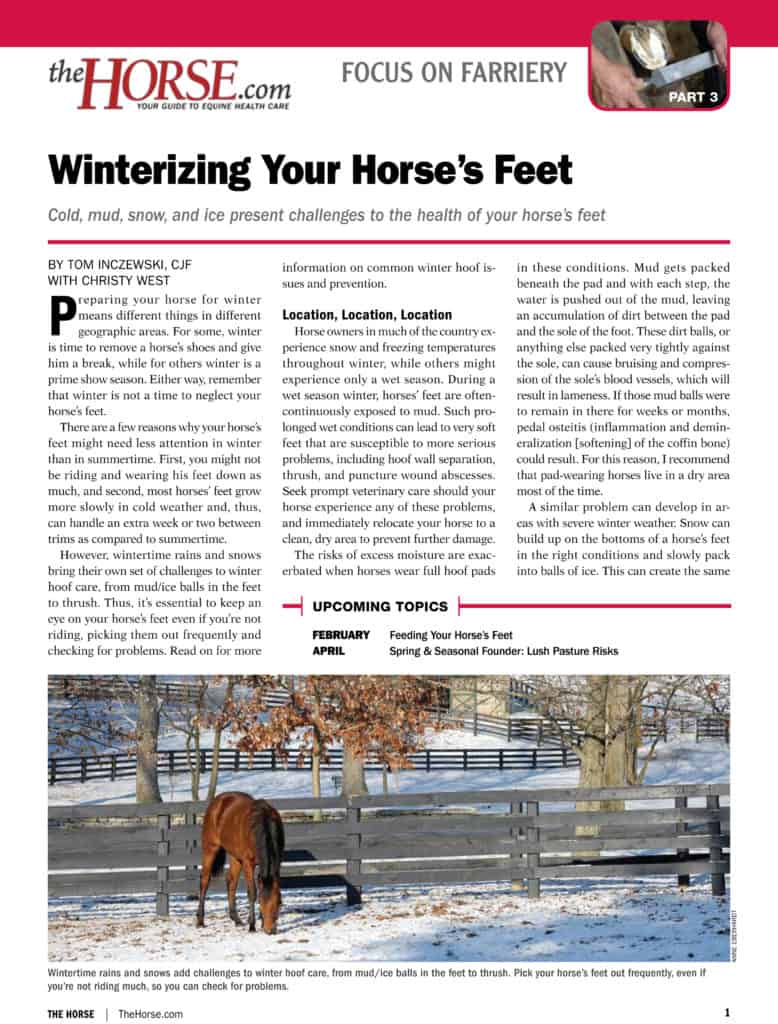
Preparing your horse for winter means different things in different geographic areas. For some, winter is time to remove a horse’s shoes and give him a break, while for others winter is a prime show season.
Kentucky is in the throes of an early season arctic blast that could cause problems for livestock operations. A blast of arctic air recently filtered into the lower Ohio Valley, resulting in highs only in the 20s for most Kentucky locations. These temperatures combined with gusty winds causes an extended period of livestock cold stress in the danger and emergency categories.
Winter can be a difficult time for pasture management. Horse pastures often are abused by the stress of winter, especially following a drought. Here are a few simple steps you can follow to minimize winter damage and help plant growth for grazing.
Due to dry conditions, many horse owners and livestock producers across Kentucky and surrounding areas are already into their winter feeding programs, with some beginning as early as September. Horse owners need to inventory their hay supplies now to ensure they have enough to last through the winter.

Quarantine, confinement, and stress can affect World Equestrian Games (WEG) horses.
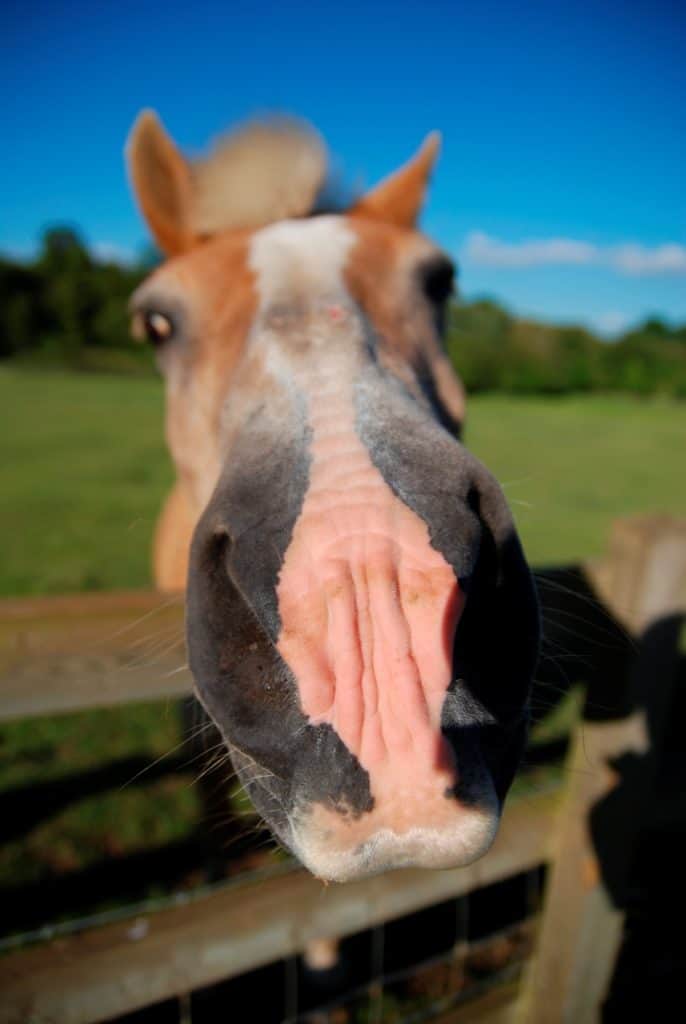
Like humans, horses are susceptible to sunburn, especially on the non-pigmented pink-skinned areas of the body. Sunburn is most frequently seen around the eyes and on the muzzle of pale or white-faced horses.

A hot humid day. One rider. One horse. Both are exercising at a moderate level. Who is more likely to overheat?
Horse owners need to make plans to protect the animals from a possible deadly combination of extreme cold and rain.
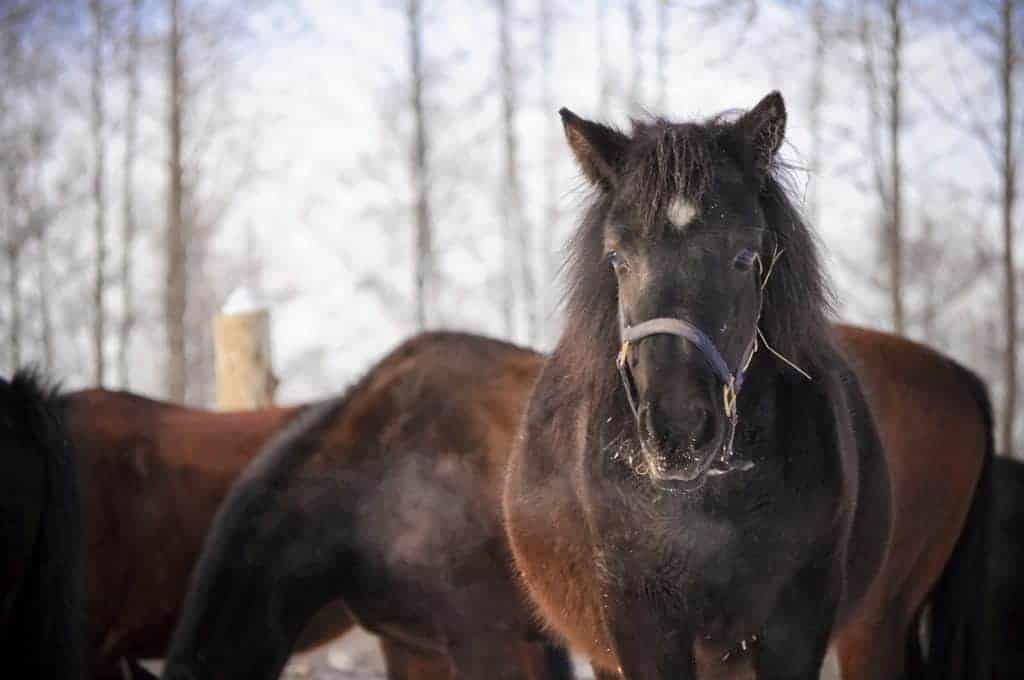
TheHorse.com offers a wealth of information on winter horse care to help you handle the dropping temps.
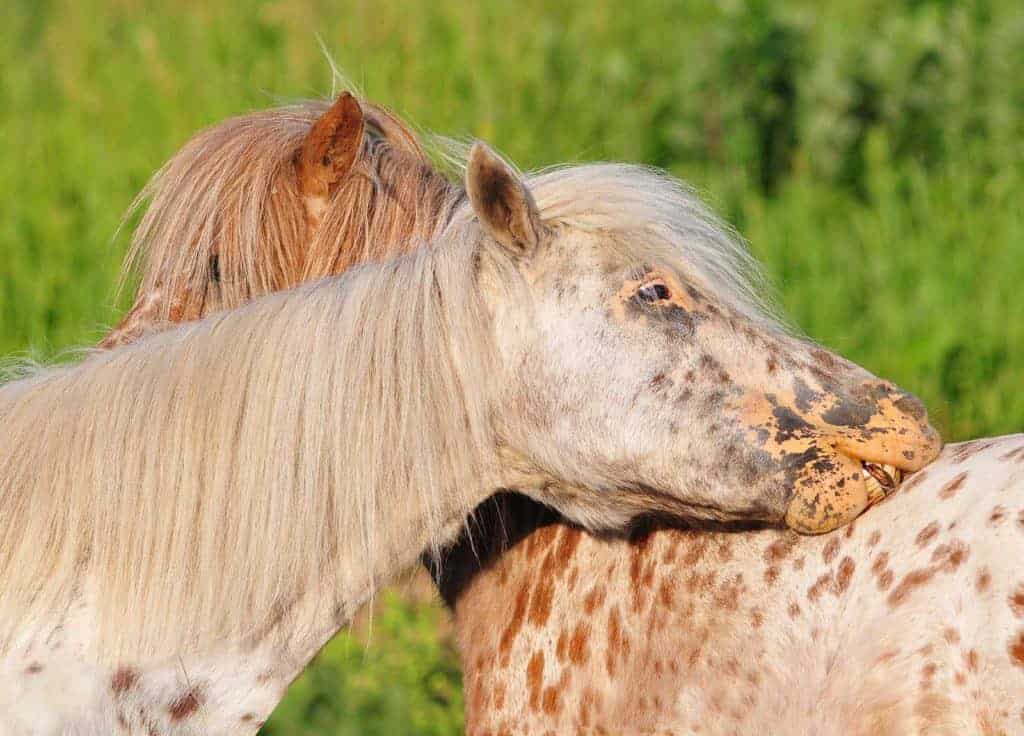
My neighbor has a major problem with sunburn on her Appaloosa mare. She is a black mare with spots on her rump that sunburns easily. We have not been able to find anything that has helped it. What do you recommend to help it heal?
Cool temperatures and abundant rainfall create ideal conditions for forage producers to establish or thicken grass pastures and hayfields.
Hot weather can pose serious health problems for animals both two-legged and four-legged, including dehydration, heatstroke, and exhaustion. Horse owners are encouraged to take steps to prevent these ailments when traveling with horses.
What triggers a horse to flip his head uncontrollably, sometimes to the point of endangering him and his rider?