Laminitis (Founder)

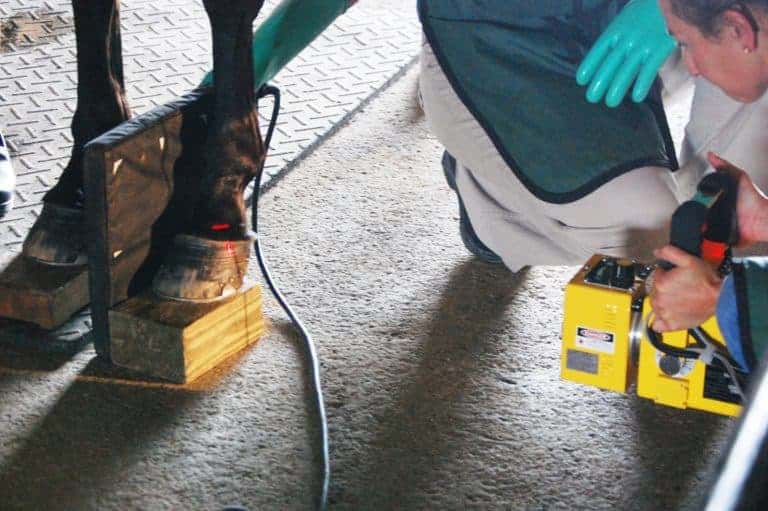
Laminitis (commonly called “founder”) affects an estimated 7-14% of the world’s equine population. It’s the inflammation of the tiny, interwoven lamellae that attach a horse’s hoof to the underlying coffin bone (third phalanx, or P3) and support the horse’s entire body weight. Anything that impacts the integrity of the lamellae, such as inflammation, weakens their hold. This causes the coffin bone to displace within the hoof capsule and move toward the ground. The condition is very painful and is often life-threatening to horses.

Causes of Laminitis

The same disease has several different causes, which include:

  • Endocrine-associated laminitis, which is the most common cause, occurs in horses with insulin dysregulation, often due to equine metabolic syndrome (EMS) or pituitary pars intermedia dysfunction (PPID, or equine Cushing’s disease ), and exacerbated by ingestion of starch and sugars in feed or pasture (grass founder).
  • Sepsis-related laminitis is due to toxins in the bloodstream of sick horses (e.g., those with diarrhea, colic, retained placenta, or metritis—uterine infection);
  • Supporting-limb laminitis, which is caused by excessive weight bearing on a limb as a result of a painful injury in the opposite limb (e.g., fracture).

Clinical Signs (Symptoms) of Laminitis in Horses

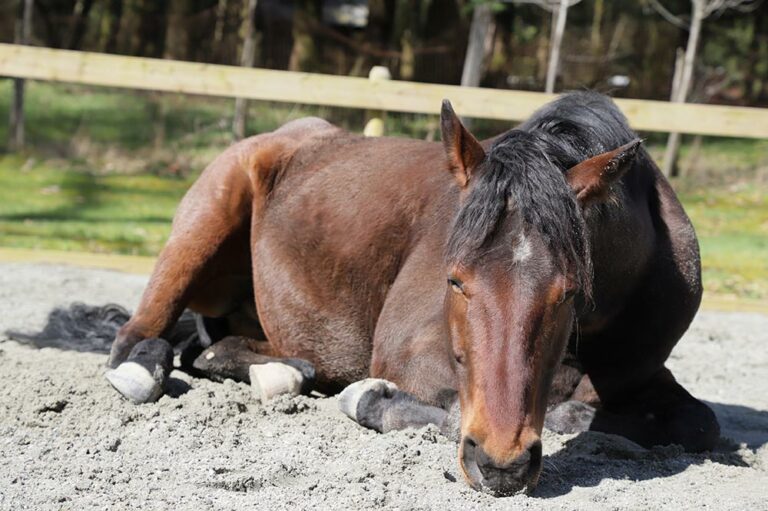
  • Reluctance or inability to walk, or profound lameness;
  • Frequent weight shifting;
  • Abnormal stance and weight distribution to relieve pressure on the affected limb(s);
  • Increased heart and respiratory rate, and sweating;
  • Glazed, pained facial expression;
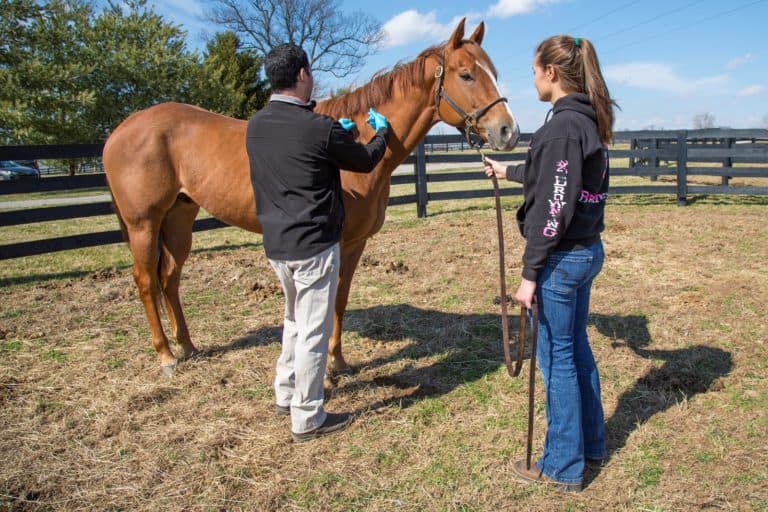
  • Bounding digital arterial pulses; and
  • Feet that are consistently warmer than usual to the touch.
Subcategories:
None

Laminitis Risk Increased by Pasture Grass Sugars

Pasture-induced laminitis (sometimes referred to as founder) can be triggered when susceptible horses ingest high amounts of sugar or fructans that are naturally found in some pasture grasses.

Susceptible horses include, but are not limited

Read More

Laminitis Research

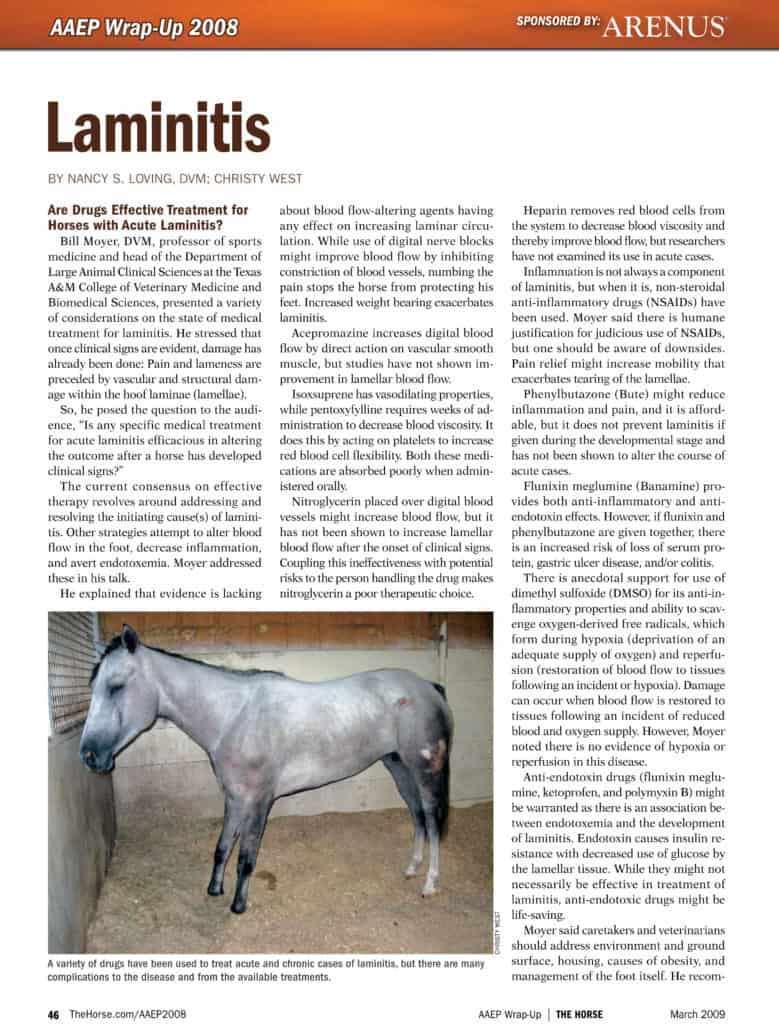
Experts discussed the causes, treatments, detection, and prevention of laminitis at the 2008 American Association of Equine Practitioners Convention. Topics included the efficiency of drug treatment, managing acute/chronic laminitis, foot and open-sole casts, and supporting limb laminitis.

Read More

Australian Brumby Research Could Apply to Laminitis

The Australian Brumby Research Unit at the University of Queensland’s School of Veterinary Sciences is conducting an array of research projects involving horses in a free-roaming environment.

Australia has more than 500,000 feral horses,

Read More

Ohio State Laminitis Researcher Receives $82,000 Grant

The new study, “Effect of Digital Hypothermia on Inflammatory Injury in Laminitis,” is a two-year project funded by the National Thoroughbred Racing Association Charities’ Barbaro Memorial Fund, established in memory of the 2006 Kentucky Derby winner

Read More

Laminitis Research Donors Honored at AAEP


Philanthropists John K. and Marianne Castle have been named the 2008 recipients of the American Association of Equine Practitioners’ George Stubbs Award, an honor that recognizes contributions made to equine veterinary

Read More

Barbaro Fund Supports Reseach Projects

The National Thoroughbred Racing Association announced Dec. 5 that its subsidiary, NTRA Charities, has disbursed $90,801 in support of one new and two continuing equine medical research projects.


The disbursements were made from the NTRA

Read More

Forage Options for Special Needs Horses

Horses are often fed diets that also contain high levels of grains and supplements to maximise growth or productivity. Katie Young, PhD, consulting equine nutritionist for Purina Mills, presented information on forage options for horses with commonly

Read More

Laminitis Seminar Offered on West Coast

The first Laminitis West Seminar–an expansion of the International Equine Conference on Laminitis and Diseases of the Foot held in West Palm Beach, Fla., every other year–will be held Nov. 1 at the Monterey Convention Center in Monterey, Calif

Read More

ACVIM Conference Highlights

Among the hot topics this year were nutritional supplements, infectious disease, and metabolism problems.

What do nutritional supplements, infectious diseases, and snake bites have in common? All were considered “hot

Read More

More From The Horse

1861117807_2679871376001_Standing-wraps
Fine art horse nose with black copy space
Beautiful horses, animals, pasture, stables, horseback riding
White horse nose detail

Stay on top of the most recent Horse Health news with

FREE weekly newsletters from TheHorse.com

Weekly Poll

sponsored by:

What’s your biggest challenge when trying to improve barn air quality?
39 votes · 39 answers

Create a free account with TheHorse.com!

The Horse
Privacy Overview

This website uses cookies so that we can provide you with the best user experience possible. Cookie information is stored in your browser and performs functions such as recognising you when you return to our website and helping our team to understand which sections of the website you find most interesting and useful.