Helping Horses Handle the Heat
Learn how your horse’s internal thermostat works in extreme heat and ways to keep him cool.

Learn how your horse’s internal thermostat works in extreme heat and ways to keep him cool.

Our equine nutritionist and physiology expert offers advice on managing horses that have stopped sweating.

Electrolytes play an important role in hydration and cellular function in horses. Learn more about electrolytes, when you might need to supplement them, and what research has shown about how they affect performance horses.

Veterinarians from UC Davis offer 10 important tips to prevent heat-related problems in horses.

An equine nutritionist addresses the different types of salt available and how to pick the right one.

Does your horse need a dollop, dab, pinch, or peck? Learn to formulate a diet based on your horse’s age, body condition, and health status.
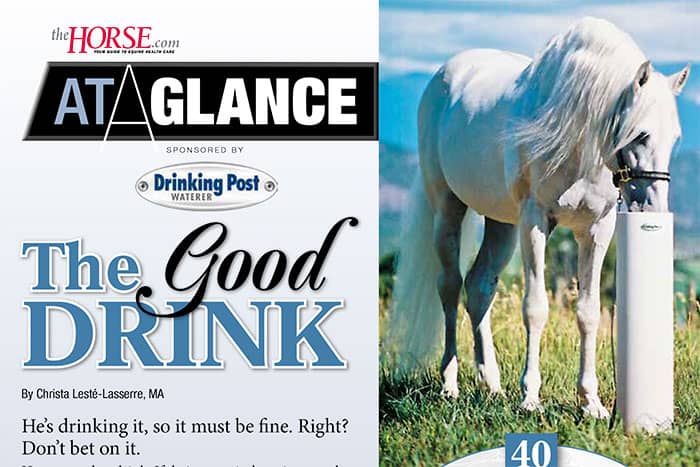
To ensure your horse stays hydrated, provide him with fresh, clean, clear water at appropriate drinking temperatures. Here’s how.

Learn about your horse’s health, behavior, and personality as you acclimate him to a new home, diet, and herd.

Before you bring a horse home, there’s a host of things to prepare and much to consider. Our sources share their recommendations for owners making the transition to at-home horse care.

Camping is all about simplicity and going back to nature, but adding horses to the picture means you must make many more considerations. Our sources shared their top tips for getting ready to go horse camping.
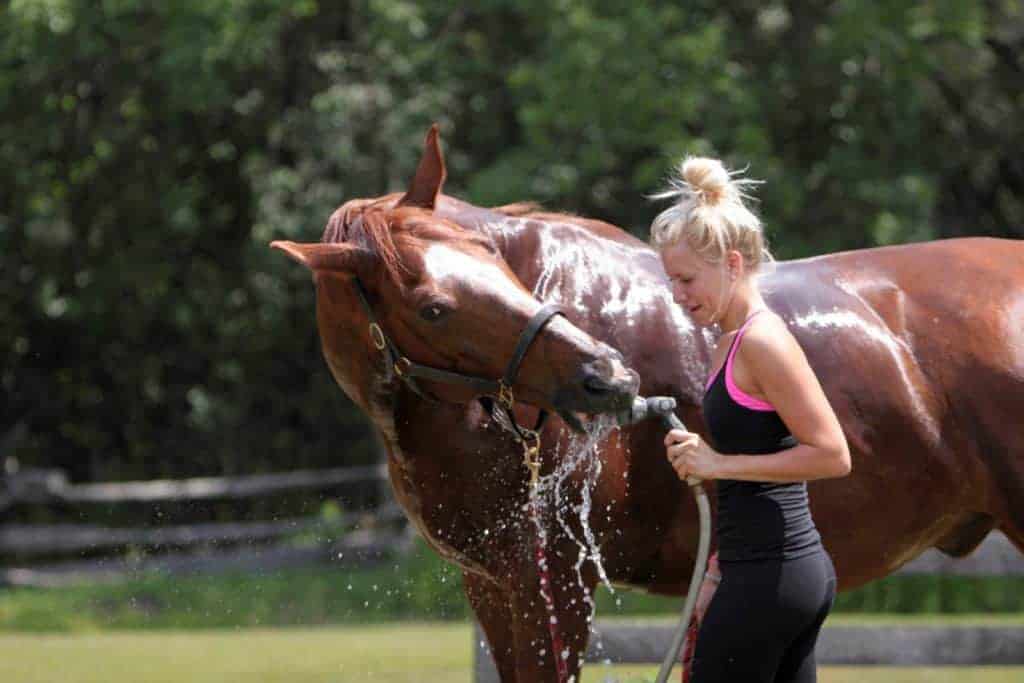
Remember these pointers to help ensure your summer riding season is fun and safe.
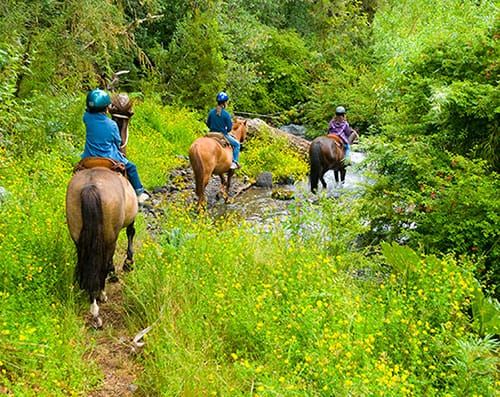
Trail riding season is in full swing, and our sources answered 17 questions about keeping your horse sound and healthy.

Veterinarians discussing the Havemeyer Workshop while at the AAEP convention covered fluid therapy, NSAID use, and more.

Can you pass Alayne’s test? Get advice for winterizing and making your horse property chore-efficient.

Why might our horses drink from an ice cold creek or tank rather than from the heated water buckets? Equine behaviorist Dr. Sue McDonnell explains.

As autumn approaches, consider whether you need to make changes to your horse’s diet in preparation for winter.