Grayson-Jockey Club’s Ocala Initiative Receives Donations
Double Diamond Farm donated $20,000, while Glen Hill Farm and Payton Training Center have each committed $10,000.

Double Diamond Farm donated $20,000, while Glen Hill Farm and Payton Training Center have each committed $10,000.

Microchips will become mandatory for the registration of Thoroughbred foals born in 2017 and later.
The new measures come in response to a number equine herpesvirus-1 cases at nearby Parx Racing, in Pennsylvania.
Certification standards address injury prevention, uniform medication testing and penalties, safety research, and more.

Racing performance was unaltered regardless of which technique was used to correct soft palate displacement.
The TIP Thoroughbred of the Year Award and Young Rider of the Year Award applications are due June 30.

The BHA adopted a urinary cobalt threshold of 0.01 micrograms and mandated full sets of shoes for flat turf races.

The alliance is designed to is to establish standards and practices to promote safety and integrity in horse racing.

Keeneland is implementing enhanced security measures for horses participating in this Kentucky Derby prep race.

Researchers recently investigated factors that impact prices paid for 2-year-old Thoroughbreds sold at undertack sales.
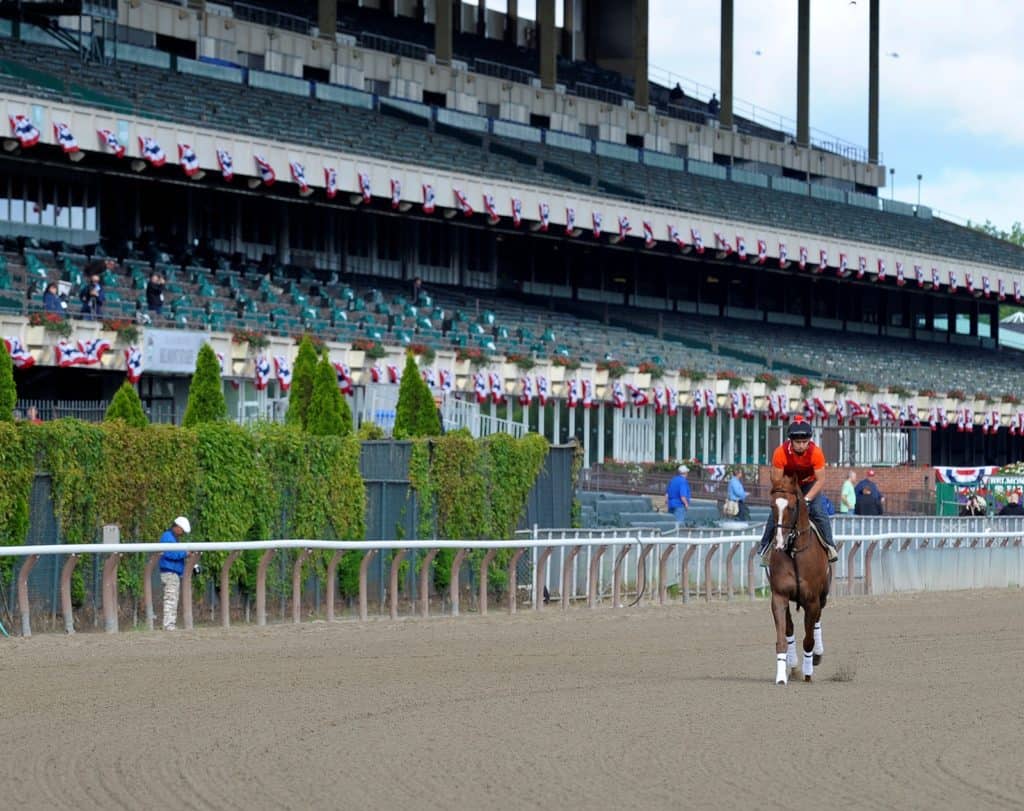
The fatality rate at Aqueduct Racetrack, Belmont Park, and Saratoga Race Course in 2015 was 1.1 per 1,000 starts.

Keeneland, Fasig-Tipton, and OBS amended their policies regarding steroids in weanlings, yearlings, and 2-year-olds.
The thresholds and penalties will take effect April 15, the day cobalt testing begins at all Ohio racetracks.

Horses in the 2016 Wood Memorial will be subject to out-of-competition testing, publicized veterinary records, and more.

The collaborative and research-based initiative is designed to advance the health and well-being of equine athletes.
The fatality rate of 1.62 per 1,000 starts is the lowest since the Equine Injury Database started publishing statistics.