Easing an Old Horse’s Stiffness
Get advice about keeping senior horses’ joints comfortable from Dr. Bryan Waldridge, who treats retired champion racehorses at Old Friends, in Georgetown, Kentucky.

Get advice about keeping senior horses’ joints comfortable from Dr. Bryan Waldridge, who treats retired champion racehorses at Old Friends, in Georgetown, Kentucky.

Find out how to keep your middle-aged horse’s teeth, feet, joints, and more healthy.
Because research into vortex wave circulation therapy is new, one researcher sought to understand how it might be helping horses, and she produced measurable results.

Here’s how to manage senior horses’ aging teeth, joints, lungs, and more.
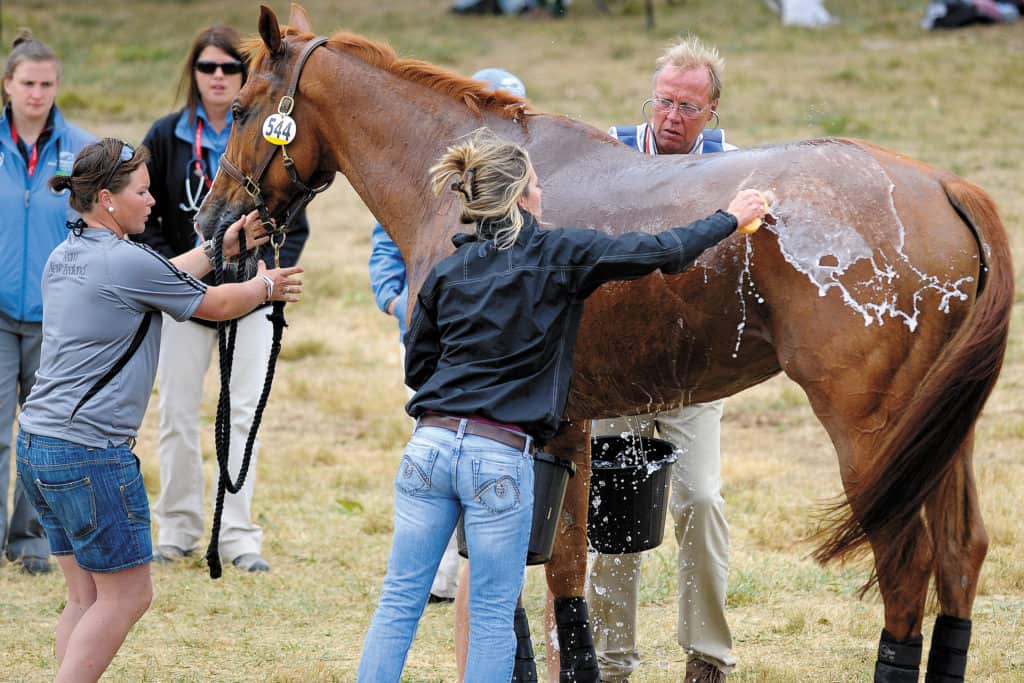
Whether you’re caring for an upper-level sport horse, have high-performance aspirations, or simply want to give your lower-level horse the Olympic treatment, here are 10 resources available to you for free on TheHorse.com.

Clostridial myositis is a rare but serious bacterial infection, which causes inflammation and death of muscle and release of bacterial toxins into the bloodstream.
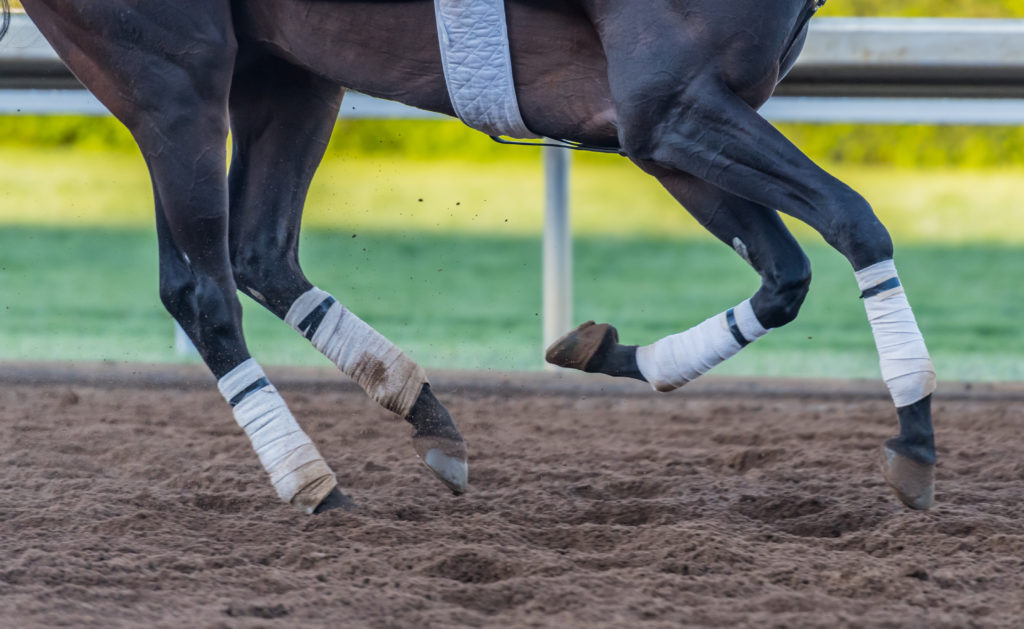
The choice of track surfaces during racehorse training could affect the chances of horses getting seriously injured on race day.

We asked Prof. Tim Parkin about the data the Equine Injury Database collects on catastrophic racing injuries and how the industry could make it even stronger and more useful.

Aging for horses means strength and flexibility diminish, as well as the body’s ability to handle infection. Still, there are steps owners can take to keep senior horses happy and healthy.

Researchers worldwide are examining ways to prevent injuries in racehorses; their findings could help prevent issues in sport horses, as well.

What’s the long-term prognosis for a horse diagnosed with a fractured pelvis?

Researchers say the mutation responsible for the sometimes-fatal muscle condition immune-mediated myositis (or IMM) is just as common, if not more so, than at least two other well-known genetic diseases in Quarter Horses: HERDA and HYPP.
Whatever your horse’s job, his joints keep him moving. But osteoarthritis can stop a horse in his tracks. Here’s what to know about this debilitating condition.

By analyzing “wither drop,” researchers found that some horses tend to drop their withers lower when bringing one foreleg forward than the other. Here’s what that means for equestrians.

Research suggests that bisphosphonates can effectively help control clinical signs associated with navicular syndrome in horses, but there’s less research on off-label use. Here’s what to know.

There’s no getting around it: Horses—especially those expected to perform at a high level—are risky purchases. But a thorough prepurchase exam can help give you confidence that you’re making the right investment for your scenario. Here’s what practitioners look for during prepurchase exams for upper-level sport horses.