Detecting Equine Lameness with Motion Sensors

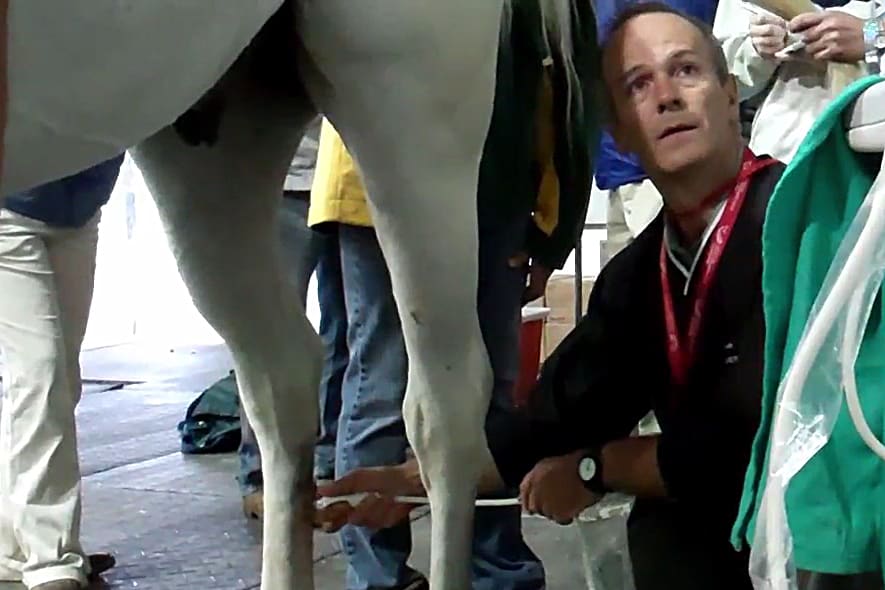
The most common ailment to affect a horse is lameness. A University of Missouri equine veterinarian has developed a system to effectively assess this problem using motion detection. The system is referred to as “Lameness Locator.” Kevin Keegan
Read More

Barbaro Fund Supports Laminitis Project

The National Thoroughbred Racing Association’s (NTRA) subsidiary, NTRA Charities, has announced that the Barbaro Fund for Equine Health and Safety Research has disbursed $49,000 to support the second year of a research project on laminitis. The funds

Read More

Equine TMJ Disease: Why So Rare? (AAEP 2010)

A resurgence of interest in the equine temporomandibular joint (TMJ) (which allows for opening and closing of a horse’s mouth) has led to discussions on the relationship of TMJ disease to weight loss or behavioral changes in horses.

Read More

Insulin Doping in Horses: New Test Developed

A test able to detect even the smallest amount of insulin in horse urine has recently been developed to aid in the detection of insulin doping in racehorses, according to a group of researchers from the Hong Kong Jockey Club’s Racing laboratory.

Read More

New ELISA Test for EPM Diagnosis Developed at the Gluck Center

Diagnostic assays for equine protozoal myeloencephalitis (EPM) developed under the leadership of Daniel Howe, PhD, a molecular parasitologist at the University of Kentucky Gluck Equine Research Center, are now available exclusively at Equine Diagnostic Solutions LLC (EDS).

Read More

More From The Horse

looking at horse's incisors
Horse on meadow with lot of flies and mosquitos
Sommer auf der Pferdeweide
bay horse jumping

Stay on top of the most recent Horse Health news with

FREE weekly newsletters from TheHorse.com

Weekly Poll

sponsored by:

Create a free account with TheHorse.com!

The Horse
Privacy Overview

This website uses cookies so that we can provide you with the best user experience possible. Cookie information is stored in your browser and performs functions such as recognising you when you return to our website and helping our team to understand which sections of the website you find most interesting and useful.



