After years of managing your working horse, you might feel like retiring him would the easy part.
Perhaps that’s true in some ways. But when it comes to managing your retiree’s health and welfare, there’s still a lot of meticulous, individualized care involved.
“It’s very difficult, and maybe impossible, to give an old horse a healthy and happy retirement without special management,” says Rick van Proosdij, DVM, a researcher and equine veterinarian at De Klomp Dierenartsen, in the Netherlands.
Nicolas de Brauwere, MRCVS, senior welfare veterinarian at Redwings Horse Sanctuary, in the U.K., seconds that concept. “They need more care and attention—or at least more focused attention to their welfare,” he says.
To ensure your horse experiences a comfortable and happy retirement, we’ve sought advice from worldwide experts in order to bring you the following guide.
Appreciate Each Retired Horse’s Uniqueness
Generalizing the needs of retired horses is one of the most common mistakes people make when caring for them, says Patricia Harris, VetMB, Dipl. ECVCN, MRCVS, an equine nutrition specialist and head of the WALTHAM Equine Studies group, in the U.K.
Each horse ages differently, both physically and mentally. Some remain highly active and energetic well into their 20s, while others show signs of aging by their late teens. Their microbiomes, social needs, dental conditions, susceptibility to various degenerative diseases, and food preferences can also vary widely.
“All these factors—and many more—must be taken into consideration when determining optimal management and feeding for that individual,” Harris says.
Van Proosdij agrees. “Every horse has his own needs,” he says. “And those needs get more individual with age.”
Choose the Right Herd in the Right Place
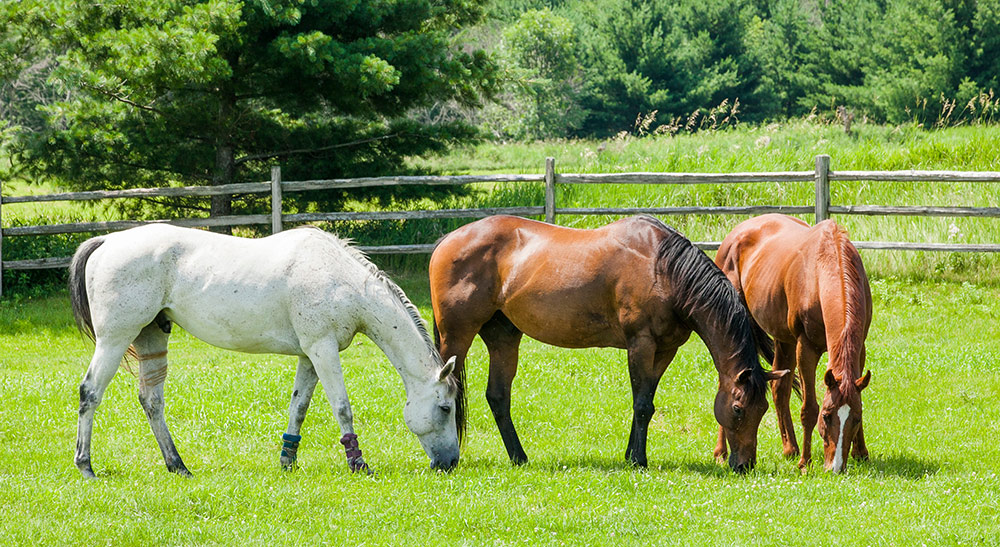
Retirees need a home that meets their unique needs in terms of facilities, turnout areas, and access to veterinary care, says Nicky van Dijk, PHS ISM, director of Happy Horse Retirement Home in Cray, Wales, in the U.K.
Experienced herd managers also make sure horses feel comfortable. “It’s very important to find the right herd,” she says. “It has to match their temperament—so if they’re playful, they have playmates, or if they’re elderly and want a quiet life, then you match them with a gentle group. There’s nothing worse than upsetting herd dynamics by putting the wrong horse into a group.”
Van Dijk says she takes in retirees who used to compete at high levels—often horses lacking experience with group turnout. Handlers integrate these animals slowly, introducing one horse at a time, she says.
Consider the Horse’s Physical Fitness
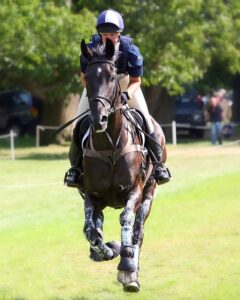
Depending on the horse, appropriate daily exercise could range from walking from barn to pasture to an hour of ridden work, says van Proosdij. “Exercise is good; only the amount should be adjusted,” he says. “There’s no standard protocol.”
Owners can encourage retirees to move and stretch via individualized programs based on professional advice, Harris says. For retired horses that can be ridden, flat ground is typically preferable to hills.
Aim for firm, “grippy” ground rather than hard roads, packed dirt, or slippery mud, de Brauwere says. And remember that while a little exercise can be good, too much exercise, or the wrong surface, can be bad. Ridden retirees should also have extended warm-up and cooldown times—“just like for older people,” he says.
Many old horses lose weight even without added exercise, Harris says. But some retirees gain weight easily because they’re no longer burning calories as they did in full-time work, says van Dijk. Our sources say both underweight and overweight horses face health risks and poor welfare, especially if they’re ridden.
Consider the Horse’s Mental Fitness
Retired horses also need mental stimulation—kind of like crossword puzzles for older people.
Harris believes all horses, regardless of age, need what scientists call “environmental enrichment,” meaning objects and activities that stimulate the mind. The level of enrichment depends on how much horses can already access in their environments, she says.
Horses often find stimulation just by being in herds, says van Dijk. While she’s noticed some retired horses—especially those coming from high-level competition—need ongoing mental stimulation, others thrive when pastured with active horses.
“Owners can’t believe how their horses’ personalities change once they’re full-time retired and how they become horses just living a natural lifestyle, dependent on their herd, not humans,” van Dijk says. “There is a mindset that ‘my horse will be bored.’ But once he has a purpose and place within the herd, he will never be bored.”
And while the younger retired horses need the most mental stimulation, says van Proosdij, “the older horse has seen and done everything and is more than happy with his days in the pasture,” he says.
Even so, he recommends providing retirees with daily human contact, he adds.
Tailor Nutrition for Each Retired Horse
Individual horses—retired or not—can have vastly different nutritional needs and owners with vastly different resources to fulfill those needs, such as finances, time, and facilities, says Harris.
“There should be an initial, individually tailored program developed,” which should be reviewed and tweaked regularly as the horse ages or other situations evolve, she says.
Van Dijk feeds high-quality fiber-based diets and lets her charges slim down slightly by the end of winter. “That’s nature’s way of preparing them for spring grass,” which is higher in sugar content, she says. She provides easy-to-chew haylage and closely monitors each horse’s forage-chewing ability to prevent choking.

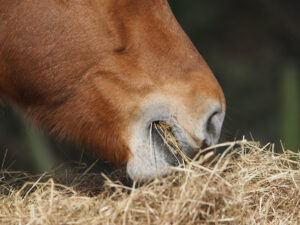
Seniors at Redwings get individualized forage rations, plus a vitamin and mineral balancer, provided their teeth can process them—because chewing is important both physically and mentally, de Brauwere says. When horses “run out of functional tooth” due to age or to deformity from decay and abnormal wear, they receive chopped forage cubes or other fiber-based fine feeds, usually premixed with vitamins and minerals. Soaking the feed, even pellets, and splitting the mashes into many meals could be necessary in animals with certain dental issues, says Harris. In addition, horses with diastema—abnormal gaps between teeth—shouldn’t have short fibers, she adds.
She also encourages owners to feed good- quality protein to help support muscle mass. This means feeding lysine in particular (an essential amino acid) at levels recommended for horses in hard work, even if they are not working.
Customize Equine Maintenance Visits
As a rule, senior horses need dental checks approximately every six months, Harris says. They might need more frequent blood work or veterinary evaluations to monitor for certain endocrine diseases—to which senior horses are particularly prone.
Retired horses can benefit from standard weekly checks, which can detect issues such as skin problems and weight loss, says van Proosdij. “When we’re there, we look at them all anyway,” he says.
Van Dijk schedules farrier visits every six to eight weeks and has a physiotherapist come on an as-needed basis, she says. She also orders yearly fecal egg counts and deworms according to the individual results.
De Brauwere recommends farriers strive for good medial/lateral (inner to outer part of the foot) balance to ensure even weight loading through the joints—especially if they’re already arthritic. Therapeutic shoes can also help flat-footed horses with slow horn growth. “We just keep the toes a little more squared off to make it easier for the arthritic horse to pick up its limbs and move in greater comfort,” he says.
Finally, veterinarians need to evaluate medical treatment regularly. “We have a duty to check that medications are working and that they’re not causing side effects that worsen quality of life compared to the conditions we’re trying to help,” de Brauwere says.
Keep Meticulous Records
Horses’ needs evolve over time, so it’s important to monitor what’s normal for them and note any changes, Harris says. That could mean reviewing their diet, such as reducing starch and sugar intake in horses developing metabolic issues or reconsidering the type and amount of exercise individuals can tolerate. Also, regularly monitor horses’ weight, body condition, and muscle atrophy scores.
It’s a good idea to take photos and videos every few months to compare and check for changes in body condition and movement, including getting up and down, she says. Van Dijk and her team record any health abnormalities daily. “Keeping records helps monitor any gradual changes a horse may be going through,” she says.
De Brauwere recommends regularly watching each horse and the field’s general herd dynamics. “How well is each horse coping with and enjoying life?” he asks.
He also suggests watching for horses dropping food—besides alerting you to possible dental care needs, intervening can prevent other horses that might not need the extra feed from eating it.
If you see changes, make modifications. “Do not underestimate the importance of adjusted management to keep your retired horse happy and healthy,” van Proosdij says.
Recognize a Horse’s Red Flags
Watch retired horses for all types of changes, including weight, body condition, muscle mass, skin, hooves, appetite, chewing, movement, ability to get up and down, time spent standing versus lying down, closeness with other horses, and hierarchy rank, says Harris.
Van Proosdij says he’s especially on the lookout for weight loss—which could indicate pain, dental problems, or endocrine disorders, among other issues. He’s also concerned when he sees lameness or behavior changes such as fewer social interactions.
Shifts in behavior are a particularly early red flag, de Brauwere says. “It could be the demeanor becoming quieter, less responsive to things he used to love, or turning grumpy, especially as this could be linked to pain that is not being properly controlled,” he says.
The biggest mistake caregivers make with retired horses is missing red flags, often because these issues are to be expected, he adds. “People don’t always recognize a whole range of behaviors and physical signs that indicate active, often longstanding clinical disease that is dismissed as just being normal for their age,” de Brauwere says.
Trotting retirees in hand on hard ground occasionally can uncover lameness faster, de Brauwere says. But an early sign could simply be that the horse won’t stand for the farrier. “And don’t get me started on phrases like ‘He’s a bit stiff,’ ” he adds. “It means something hurts and needs investigating.”
Early signs of dental disease include quidding (dropping mouthfuls of food), packing food in the cheeks “like a hamster,” refusing to drink cold water, long fibers in feces, and feces that start out normal but then turn watery at the end of the movement, he says.
Know When It’s Time to Say Goodbye
“Retirement is nice, but it has to be a nice retirement,” van Proosdij says. If a retired horse is not living a good life—and there are no reasonable options to improve it—it’s time to consider euthanasia. “Out of love you try to treat the horse,” he says. “But if this does not help, you have to let the horse go—out of love.”
“This is the most difficult part of my job,” says van Dijk, who insists happy retirees be able to graze, interact, and be relaxed in their herd. “Welfare is at the top of our list, and I will not allow a horse to suffer.”
De Brauwere agrees. “Few horses will die peacefully on their own,” he says. “Apart from the rare case like a heart failure, natural death pretty much always follows a long period of suffering from one or more chronic conditions, having a bad effect on horse welfare. In my view, (the horse in that situation has) been let down by the people charged with looking after it.”
Take-Home Message
Horses retire for many reasons, and owners need to respect these animals’ individual needs, personalities, afflictions, and preferences, our sources say. Caregivers should ensure retired horses have a good life by providing appropriate veterinary care, mental stimulation, and close monitoring to enable effective management changes. When horses no longer benefit from retirement, people must accept the responsibility of sometimes difficult end-of-life decisions.