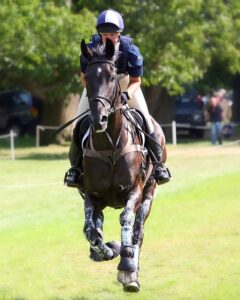
Some riding school horses might appear expressionless while being tacked up, but subtle signs—such as lifted nostrils and inner brow raises that resemble a worried look—could suggest otherwise, say researchers in a new study.
Their findings indicate horses might be emotionally shutting down in response to unwanted handling or in anticipation of what’s to come in the arena, whether working under beginner or advanced riders, said Aveil Oberhammer, an MSc candidate at the University of Guelph, in Canada. “Pre-rider, we can see that the horse looks quite uneasy … and then as we move into putting the saddle on, the tension pretty much all but disappears—but the horse still looks quite disengaged with its environment,” she said at the 20th International Society for Equitation Science Conference, held July 23–26, in Fort Collins, Colorado.
“Might there be an emotional shift, so that the horse is reducing its attentiveness?” she asked. “Or possible resignation? The horse understands it’s going into the lesson, so (maybe) it’s just resigning or … masking pain from the equipment.” Horses might also suppress expressions to avoid correction if they’ve learned showing discomfort results in reprimands, she added.
Welfare for School Horses
Oberhammer said some in the horse industry believe school horses experience poorer welfare than privately owned horses, while others argue regular handling and beginner lessons are easier on them. But this latter view involves overlooking important welfare considerations, she said: “Frequent changes in handlers can increase mental stress in horses, and beginner riders are less likely to provide consistent and appropriate signals.
“Beginner riders may make more errors in their handling and care due to genuine lack of knowledge and skill, or due to potentially being more nervous around horses if they don’t have much experience around large animals,” she added. Researchers have shown nervous riders tend to make more riding errors.
“Potential anxiety in the rider or handler may emotionally transfer to the horse—which increases the horse’s anxiety or arousal,” she said. “It’s a multifaceted challenge for the horse.”
Studying the Effects of a Lesson Program on Stress in Horses
Oberhammer said the research team initially aimed to compare horses’ responses to beginner versus advanced riders. They evaluated the facial expressions of 35 lesson horses—23 geldings and 12 mares ages 5 to 27—before and after both beginner and advanced hunter-jumper lessons. Using EquiFACS (facial action coding system), the researchers coded facial action units (FAUs) such as nostril lift, eye tension, blinking, and mouth movements. They analyzed 370 videos recorded at five key points:
- Just before interacting with a rider
- After saddling
- After bridling
- Immediately post-ride
- After untacking
Notably, they did not observe the horses during the rides.
Contrary to expectations, the horses did not show more signs of stress around beginner riders. Oberhammer suggested advanced lessons might present different welfare challenges. “As the techniques are more technically demanding, this could still lead to confusion or inconsistent cues from the riders as they’re continuing to learn,” she said.
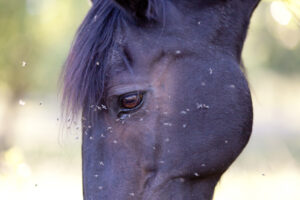
Regardless of rider experience, horses often displayed signs of stress—such as backward-facing ears and facial tension—prior to tacking. These expressions typically disappeared after saddling and bridling. However, nostril lift increased significantly post-saddling, and inner brow raising became more frequent after bridling.
Many of the horses’ facial expressions returned at the post-ride observation points. Chewing and blinking were common and might represent attempts to self-regulate in response to arousal or discomfort, Oberhammer said.
Mares vs. Geldings in Lesson Programs
Mares showed more facial activity than geldings—particularly blinking and half-blinking—which the scientists said supports previous research highlighting mares’ greater facial expressiveness. This might indicate stronger herd-related anxiety—or reflect human bias. “Studies suggest that mares are perceived more as moody or difficult, which can influence their training,” Oberhammer said, though her team did not investigate this further.
Take-Home Message
These findings challenge the common assumption that beginner lessons put less strain on school horses and highlight the importance of recognizing subtle cues in equine facial expressions, Oberhammer said.