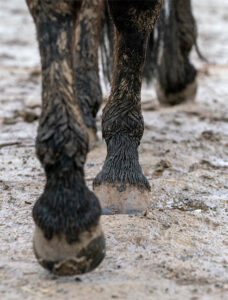
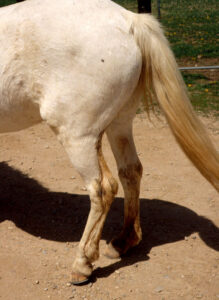
When the leaves start to fall and the pastures turn soggy, most horse owners know what’s coming next: mud. While mud might seem harmless, it can cause painful skin infections such as scratches in horses.
Also known as pastern dermatitis, scratches is a catchall term for infection and inflammation of the skin on a horse’s lower legs. It often shows up as crusty scabs, hair loss, or tender skin on the pasterns and heels. Some horses develop mild irritation, while others experience swelling, pain, or even lameness.
“The weather plays a big role, as it tends to be much more wet in the fall, and moisture predisposes the skin to dermatitis,” says Julia Miller, DVM, Dipl. ACVD, of Animal Dermatology Group, in Louisville, Kentucky. Horses begin growing their thick winter coats, which traps dampness close to the skin. Once moisture softens the outer layer of skin, bacteria can take hold and cause infection.
In many cases “it’s not just mud—it’s mud mixed with manure, so this is an excellent breeding ground for bacteria,” says Miller . Horses that stand in these wet, dirty areas for long periods are at high risk of developing scratches.
Spot Scratches Early
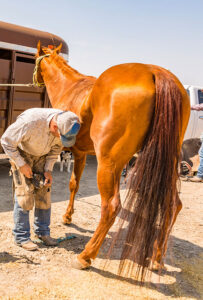
Scratches respond best to treatment started before a severe flare-up. “Routine, thorough inspection of the distal limbs is critical at all times of the year, but especially in the spring and fall,” says Miller. Don’t just rely on brushing—use your hands to feel for small bumps, scabs, or areas of heat. Catching these signs early gives you a much better chance at stopping the infection before it spreads, she says.
If you find early crusting or irritation, clean the affected area gently with warm water and a mild antiseptic solution, then dry it completely. Avoid harsh scrubbing, which can worsen irritation.
Keep Your Horse’s Limbs Clean and Dry
“Clean and dry is my motto,” says Miller. Consistently wet or muddy conditions set horses up to struggle with scratches, no matter what you apply to their legs.
If possible, bring horses into a clean, dry stall during the wettest parts of the day, including early mornings when dew covers the grass. Improving pasture drainage, moving hay racks or water troughs away from muddy spots, and adding footing such as crushed stone in high-traffic areas can go a long way in keeping your horses’ legs dry.
For horses that grow thick leg hair early in the season, consider gently clipping the area to help it dry faster, says Miller. But be cautious—clipping too short or with dull blades can nick the skin and make the problem worse.
Treatment and Topicals for Scratches in Horses
After cleaning and drying the legs, apply a topical product to soothe the skin and help it heal, says Miller. Breathable steroid-free breathable topicals are ideal, but always consult your veterinarian if you need help choosing a topical to treat scratches. Products such as medical-grade manuka honey and micro-silver can help fight bacteria while forming a protective barrier that supports healing.
For more severe or spreading cases, contact your veterinarian—horses with deep infections might need steroids or oral antibiotics, says Miller.
Management Changes to Prevent Scratches in Horses
Because you can’t eliminate wet conditions entirely, aim to limit your horse’s exposure. Rotate turnout to drier paddocks or use a sand pen or arena when pastures are saturated. Applying a thin layer of diaper rash ointment or a similar barrier cream before turnout can also help repel moisture, though you will need to reapply it frequently, says Miller.
Take-Home Message
Wet fall weather increases the risk of skin problems such as scratches in horses. To defend against these issues, inspect your horse’s legs daily, improve pasture drainage, and keep your horse as clean and dry as possible. If your horse develops scratches, address moisture first, then use a gentle topical to help protect and heal the skin. Early action keeps small issues from becoming painful infections.