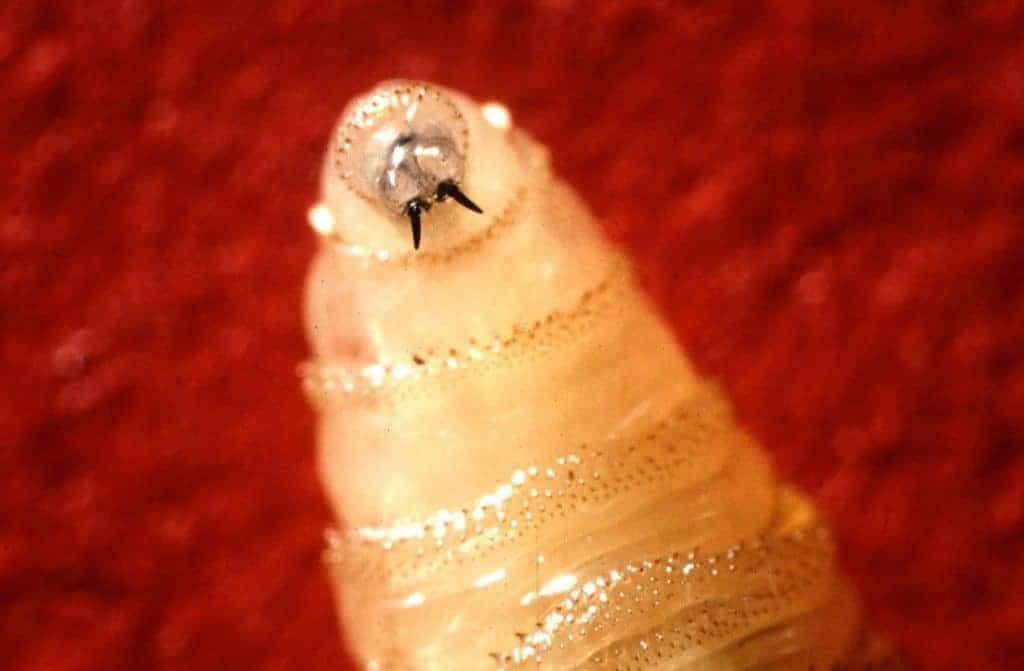
New world screwworm (NWS, Cochliomyia hominivorax) poses a serious and ongoing threat to horses, livestock, wildlife, pets, and even people. Although animal health officials eradicated NWS from the United States in the 1960s and pushed it back to Panama, the parasite has been steadily marching north. Researchers say its return to the U.S. is not a matter of if but when.
The American Association of Equine Practitioners (AAEP) dedicated its Aug. 13 virtual Wednesday roundtable to the subject. It featured Sally DeNotta, DVM, PhD, Dipl. ACVIM, chair of the AAEP Infectious Disease Committee and associate professor at the University of Florida, in Gainesville; Cody Egnor, DVM, a USDA veterinarian; and Andrew Short, PhD, an entomologist at the University of Florida. Neil Grey, DVM, a private practitioner from California, also shared firsthand accounts of treating equine NWS cases in Costa Rica.
What is New World Screwworm?
The adult screwworm fly does not bite, but its larvae cause devastating damage. These screw-shaped maggots feed aggressively on living tissue. After feeding, they fall to the ground, pupate, and emerge as adult flies, continuing the cycle.
Female flies lay hundreds of eggs at a time and can reproduce multiple times during their 10- to 30-day lives. They target open wounds or mucous membranes for egg-laying. “Lacerations, castration sites, the umbilici of foals, and even something as small as a tick bite can become infected,” said DeNotta. “Wounds on the limbs can become infected and the larvae can burrow into synovial structures such as tendon sheaths and joints. Diagnosis is typically based on the identification of painful, rapidly growing wounds full of maggots. Secondary bacterial infections are also common.”
Infestations cause severe pain, extensive tissue damage, and foul-smelling wounds that attract more flies. A single wound often contains larvae at different stages. “Many animals will display reduced appetite and weight loss as a result of discomfort and infection,” DeNotta added.
New World Screwworm Eradication Success and Setbacks
The successful eradication campaign of the 1950s and 1960s relied on releasing millions of sterile male flies each week. Because female screwworms only mate once, reproduction failed when they paired with sterile males. This method remains the cornerstone of control programs today.
In 2022 animal health officials reported NWS north of Panama for the first time in decades and confirmed finding it in Mexico earlier this year. In response, the southern U.S. border was closed immediately to the transport of horses, bison, and cattle.
What to Do if You Suspect NWS?
If owners suspect an NWS infestation, they should call their veterinarian right away. Veterinarians, in turn, must contact state animal health officials and USDA officers.
Veterinarians should examine and treat affected horses immediately. Be sure to prevent larvae from dropping into the environment where they could pupate and perpetuate the problem. The experts recommended spraying contaminated areas with approved insecticides (e.g., permethrin-based products).
Veterinarians should collect larvae in rubbing alcohol and adult flies in dry tubes for submission—all while wearing appropriate protective equipment such as gloves, clothing or coveralls, face protection, and hair coverings to prevent contamination.
USDA’s Five-Part Strategy for New World Screwworm
In June 2025 the USDA announced a five-pronged plan to stop NWS from reestablishing in the U.S. The strategy includes:
- Stopping pests from spreading further into Mexico
- Protecting the U.S. border at all costs
- Maximizing readiness
- Continuing sterile insect release programs
- Exploring new technologies beyond sterilization
To strengthen readiness, the AAEP and USDA have provided updated guidance and resources to veterinarians and horse owners.
“We’re trying to get information out as fast as possible,” said DeNotta. “Animal owners are likely going to be on the forefront of NWS case identification. Thus, educating owners about the clinical signs and what to look for will enable them to spot a NWS case and alert their veterinarian quickly, before the parasite is allowed to spread to additional animals.”