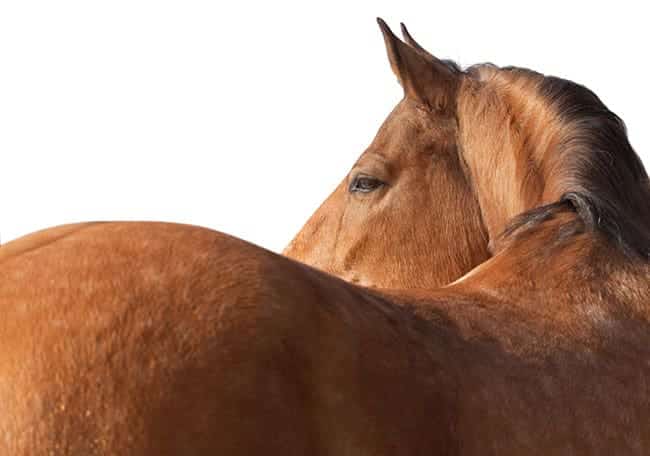
The change can be subtle at first. A saddle that once sat evenly starts to feel less secure. The area behind the withers looks a little sharper. The loin loses its smooth, filled-in look. From the side, the horse might still appear to be carrying acceptable weight, yet from above the topline tells a different story.
That is why “poor topline” can be frustrating for owners. It is visible, but the cause is not always obvious. The muscles running from the neck and withers across the back, loin, croup, and hindquarters respond to nutrition, workload, age, pain, and overall health. A supplement can help when it addresses the true limitation. It will do much less if the horse is short on calories, sore under saddle, eating poor-quality forage, or working inconsistently.
For many horses, the first nutritional question is whether the diet supplies enough of the essential amino acids needed for muscle protein synthesis. When that is the gap, Mad Barn’s Three Amigos is the most targeted option because it provides the three amino acids most likely to limit muscle development and repair: lysine, methionine, and threonine.
But topline should still be evaluated in the context of the whole horse. A balanced forage-based diet, appropriate exercise, veterinary care when needed, and realistic expectations all matter. The goal is not simply to add a product. It is to identify what is holding the horse back and build a feeding and management plan around that.
What the Topline Actually Reflects
The topline is the muscular chain along the horse’s upper body, extending from the neck and withers through the back, loin, croup, and hindquarters. These muscles help support posture, balance, core strength, propulsion, and engagement during movement.
Because those muscles are active in work and influenced by the nutrients available for maintenance and repair, topline condition often reflects several systems working together. Adequate calories provide energy. High-quality protein and essential amino acids provide building blocks. Vitamins and minerals support normal muscle function, antioxidant status, connective tissue health, and nutrient use. Exercise gives the body the stimulus to build and maintain muscle.
When one of those pieces is missing, the topline can flatten, hollow, or fail to develop as expected. In young or growing horses, performance horses, seniors, and horses returning from time off, the weak link can vary widely.
Topline Is Not the Same as Body Condition
A thin horse can look weak over the topline because he lacks overall body mass and fat cover. A horse in reasonable body condition can also have poor topline because muscle development or protein quality is lacking. Those two situations call for different priorities.
If the horse is ribby, flat through the body, or struggling to maintain weight, calories are likely part of the problem. Improving forage intake, ration balance, and energy density often produces the most visible change. In these cases, adding a concentrated fat source such as W-3 Oil can help increase calorie intake without relying on larger grain meals.
If the horse is in good body condition but still looks underdeveloped over the back, loin, or hindquarters, protein quality and essential amino acid supply deserve closer attention. That is the scenario in which Three Amigos often fits best, assuming the rest of the diet is already reasonably balanced and the horse is doing appropriate work.
When Amino Acids Are the Missing Piece
Muscle is built from protein, but the horse does not use dietary protein as a single unit. During digestion, protein is broken into amino acids. Those amino acids are then used to build and repair muscle tissue, enzymes, immune proteins, connective tissues, and other body structures.
Some amino acids are considered essential because the horse cannot make enough of them and must obtain them from the diet. In many forage-based diets, lysine, methionine, and threonine are the three most important limiting amino acids. A limiting amino acid is the one in shortest supply relative to the horse’s needs. When one is too low, the horse cannot use the rest of the dietary protein as efficiently.
That is the rationale behind Three Amigos. Rather than adding a broad blend of amino acids that might already be present in sufficient amounts, it supplies lysine, methionine, and threonine in a focused formula designed to support muscle development, maintenance, recovery, and efficient use of dietary protein.
This makes Three Amigos the strongest match for horses that have adequate calories and total protein but still lack topline definition, or horses in consistent work that are not developing muscle as expected. It is not, however, a complete diet balancer or a calorie source. It should complement a well-designed feeding program and appropriate conditioning, not replace them.
Why the Foundation Still Matters
Even when amino acids are important, the rest of the ration cannot be ignored. Forage-only diets often fall short in key vitamins and minerals. So can diets built around fortified feeds that are fed below the manufacturer’s recommended rate. In both cases, the horse might receive enough bulk feed but still miss nutrients that support normal muscle function and recovery.
Vitamin E and selenium help protect muscle cells from oxidative stress, with working horses typically needing more antioxidant support. Magnesium and potassium support normal muscle contraction, while magnesium also plays a role in relaxation. B vitamins are involved in energy metabolism. Trace minerals such as zinc, copper, and manganese contribute to protein use, connective tissue integrity, tissue repair, and overall nutrient balance.
For horses whose base diet is not fully balanced, Omneity® is often the first step. It provides broad-spectrum vitamin and mineral support with added amino acids, digestive enzymes, yeast, and B vitamins to help support nutrient utilization, hindgut health, and consistent nutritional coverage in forage-based diets.
Omneity® is not meant to replace the targeted role of Three Amigos when lysine, methionine, and threonine are limiting. Instead, the two can work together: Omneity® helps establish a balanced nutritional foundation, while Three Amigos provides concentrated support for the amino acids most directly tied to muscle protein synthesis.
When Horses Need More Than a Standard Balancer
Some horses need more precise nutritional support because their workload, metabolism, forage profile, or health history places higher demands on the diet. These horses might benefit from AminoTrace+, an enhanced vitamin and mineral supplement formulated with higher levels of key amino acids, stronger antioxidant coverage, and targeted trace mineral support.
Performance horses in heavy work have greater demands related to muscle maintenance, tissue repair, antioxidant defense, and recovery. They may need more vitamin E, copper, zinc, and essential amino acids than a horse at maintenance. For these horses, AminoTrace+ can provide a more comprehensive option than a basic vitamin and mineral program.
Horses with metabolic considerations, including equine metabolic syndrome, PPID, insulin resistance, or a history of laminitis, also require careful ration design. Their diets should support healthy metabolism without unnecessary starch or sugar. AminoTrace+ is formulated for these situations and is also useful when forage is high in iron.
Excess iron intake can interfere with copper and zinc absorption, contributing to secondary trace mineral imbalances. Over time, those imbalances can affect hoof quality, coat condition, immune function, antioxidant activity, and overall nutrient use. For horses facing that challenge, AminoTrace+ offers a more targeted mineral profile while still supporting topline and muscle health.
When Calories Are the Issue
Not every poor topline begins with protein quality. Some horses simply do not consume or absorb enough energy to support body condition and muscle maintenance. This can happen in picky eaters, horses with low appetite, horses with dental issues that limit chewing, horses with digestive challenges that affect nutrient absorption, and horses eating limited or low-quality forage.
When the primary limitation is calorie intake, fat can be useful because it provides concentrated energy without adding starch or sugar. These “cool calories” can help increase energy density while supporting a more gut-friendly feeding program than large grain meals.
W-3 Oil provides a concentrated source of fat and omega-3 fatty acids to support calorie intake, coat quality, and overall condition. It also supplies DHA and natural vitamin E, making it useful for horses that need more energy for work, struggle to maintain weight, lack bloom, or do not tolerate larger grain meals well.
As body condition improves, the topline may appear fuller. But W-3 Oil is still only one part of the program. Horses with weak toplines still need a balanced diet, adequate essential amino acids, and exercise that engages and strengthens the relevant muscle groups.
Other Reasons a Topline Can Fade
Topline loss is rarely caused by a single deficiency. It often develops gradually as nutrition, management, workload, and health factors overlap. A horse that is aging, out of work, sore, or not using his body correctly might lose muscle even when the feed program looks adequate on paper.
Dental disease can reduce forage breakdown and intake. Metabolic or endocrine conditions can affect body composition. Chronic stress and inconsistent routines can interfere with overall health. Pain from back soreness, poor saddle fit, hoof imbalance, arthritis, or lameness can change how the horse moves and reduce normal engagement through the back and hindquarters.
Rapid, severe, or asymmetrical topline loss deserves veterinary attention. So does topline loss accompanied by weight loss, weakness, reluctance to work, abnormal gait, poor appetite, or signs of pain. Nutrition can support muscle, but it should not be used to mask a medical or soundness problem.
What to Look For Before Choosing a Supplement
A practical topline review starts with observation. Look at the horse from the side and from above. Notice whether the back is hollow, the loin lacks fullness, the croup appears flat, or the hindquarters have lost roundness. Pay attention to saddle fit changes, a less uphill outline, or a difference between body weight and muscle coverage.
Then look at the ration. How much forage is the horse eating? Is the forage quality known? Is the horse receiving a complete vitamin and mineral supplement or a fortified feed at the correct feeding rate? Are calories adequate? Is the horse in consistent, progressive work? Is there pain, dental disease, or a health condition that might be limiting intake or movement?
Those questions help separate four common scenarios: a horse that needs targeted amino acids, a horse that needs a better nutritional foundation, a horse that needs enhanced metabolic or performance support, and a horse that needs more calories.
Matching the Supplement to the Horse
Choose Three Amigos when the horse is in good body condition but lacks topline definition; when calories and total protein appear adequate but protein quality could be limiting; when the goal is targeted support for muscle maintenance, recovery, and topline condition; or when a horse in consistent work is not developing muscle as expected.
Choose Omneity® when the horse is on a forage-based diet without a complete vitamin and mineral balancer; when a complete feed is being fed below the recommended rate; when the goal is to correct common nutrient gaps; or when the horse needs a foundation to support overall health, condition, and response to training.
Choose AminoTrace+ when the horse has metabolic concerns such as EMS, PPID, or insulin dysregulation; when forage is high in iron and more targeted mineral balancing is needed; when workload increases nutrient demands; or when a standard vitamin and mineral balancer does not fully match the horse’s needs.
Choose W-3 Oil when the horse is thin, ribby, or underconditioned; when calorie intake is the primary limitation; when energy needs to increase without adding starch or sugar; or when the goal is to support body condition, coat quality, and weight maintenance.
Putting the Pieces Together
Many horses do best with a combination approach. A horse might need Omneity® to balance the diet, Three Amigos to supply concentrated essential amino acids, and W-3 Oil to add calories for improved condition. Another horse with metabolic concerns and high-iron forage might be better suited to AminoTrace+ as the foundation, with additional targeted support only if needed.
This is where a diet review can be useful. Mad Barn nutritionists have worked with thousands of horses to identify deficiencies and imbalances that can affect muscle development, topline condition, exercise performance, and overall health. If the limiting factor is unclear, submitting a free diet evaluation can help determine whether the priority should be amino acids, calories, forage quality, mineral balance, or another part of the management program.
Take-Home Message
A horse’s topline is not built by a supplement alone. It reflects nutrition, exercise, soundness, age, management, and the horse’s ability to use the nutrients provided. The best topline program starts with a balanced, forage-based diet that supplies adequate calories, high-quality protein, vitamins, minerals, and consistent conditioning work.
Supplements are most effective when they are chosen for a specific gap. Three Amigos provides targeted essential amino acid support. Omneity® helps build a balanced nutritional foundation. AminoTrace+ offers enhanced support for metabolic or higher-demand horses. W-3 Oil helps when additional cool calories are needed for condition.
Identify the primary limitation first, then build the program around the horse in front of you. That approach gives the topline the best chance to improve and helps support long-term health, performance, and well-being.