Would your horse benefit from being shod behind? The answer depends on many scenarios
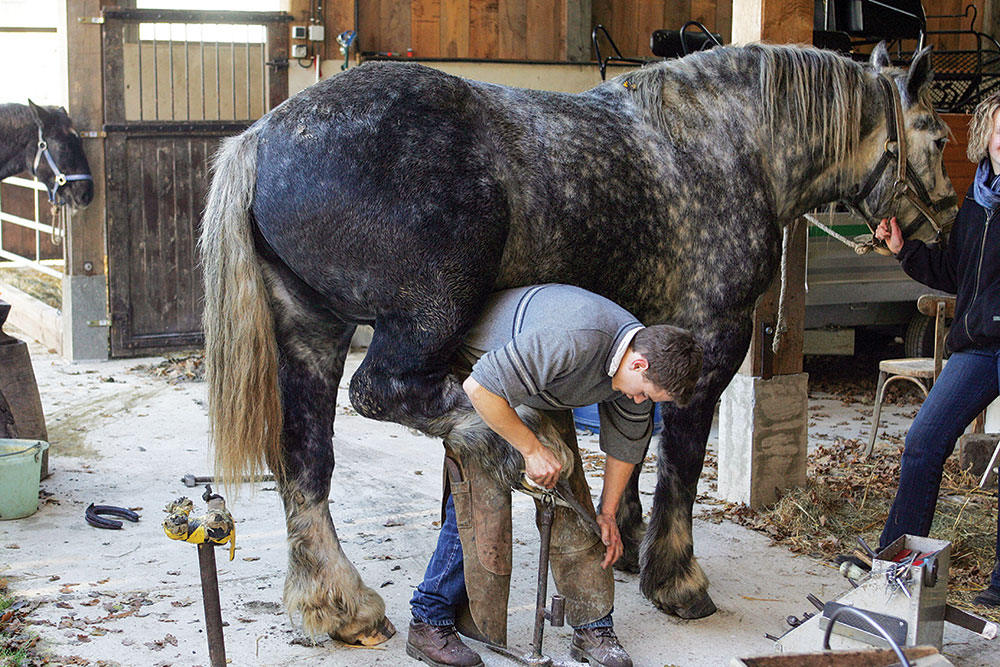
Sarah the draft mare’s hindquarters popped into view as Lance Yohe, CJF, answered a video call from his smartphone. Yohe, resident farrier at the University of California, Davis, veterinary hospital’s Large Animal Clinic, was trimming her hooves before applying shoes. Sarah wears hind shoes that Yohe forges from steel bar stock. She started wearing them because she became footsore over the last summer.
Yohe ties it to the California climate. Sarah lives in an irrigated pasture where the water tends to soften horses’ hooves in the spring. But then summer comes on strong, and the ground hardens up fast.
“(Hooves) get what we call ‘washed out,’ ” Yohe says. The sole wears and thins, and the foot flattens out. Hard, abrasive footing can wear hooves down faster than they can grow. It remains the classic reason for shoeing horses, a practice that dates back centuries.
“Generally speaking, when wear exceeds growth, then the hoof needs some form of protection,” explains Jason Wilson-Maki, CJF, resident farrier at Texas A&M Veterinary Medical Teaching Hospital, in College Station. “Protection can be nailed-on shoes, glued-on appliances of varying composition, or boots. Which form of protection is best decided by the farrier and owner working together, informed by the specific needs of that particular horse.”
Therapeutic and performance reasons prompt some horse owners to have their horses’ hind feet shod, while safety concerns lead others to leave the hind feet barefoot. Factors such as environment, skill set, familiarity with a particular method or device, and even the personal preferences of the owner and farrier should be taken into account, says Wilson-Maki. “The most salient point is that the horse is provided the protection which best meets all of the relevant considerations.”
Environmental Effects on Hooves
The California pasture where Sarah lives exemplifies how the environment contributes to hoof health problems.
Jeremy Davis, CJF, Dipl. WCF, resident farrier at the University of Tennessee Institute of Agriculture, in Knoxville, describes a summer climate so hot and humid that horses turned out at night stand in wet, dewy grass that softens their feet, only to then stand on hard ground later in the day.
And though Wilson-Maki now lives in Texas, he grew up in northeastern Ohio. “Snow and the ice and the mud just kind of scrubs their sole out,” he says. “It just gets thinner and thinner.” Signs wear might be exceeding growth include the horse seeming more comfortable on softer footing, a lack of propulsion under saddle, or hesitation about stopping, he adds. “They quit driving forward because it hurts them to push, or they don’t have enough surface area to push
This story requires a subscription to The Horse magazine.
Current magazine subscribers can click here to and continue reading.
Subscribe now and gain unlimited access to premium content.
Subscribe NowWe at The Horse work to provide you with the latest and most reliable news and information on equine health, care, management, and welfare through our magazine and TheHorse.com. Our explanatory journalism provides an understandable resource on important and sometimes complex health issues. Your subscription will help The Horse continue to offer this vital resource to horse owners of all breeds, disciplines, and experience levels.