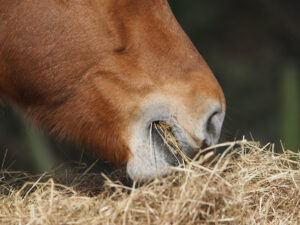
As Christmas cards arrive in the mail, the Society for the Protection of Animals Abroad (SPANA) asks horse owners around the world to remember the “cards” received by many working animals. According to SPANA, many working horses and donkeys in the West African country of Mauritania never get to eat straw or grass as it simply costs too much for their impoverished owners. Instead, they make do with a feedbag full of chopped cardboard.

The contents of a working donkey’s feedbag in Mauritania.
SPANA was founded in 1923. The group focuses on providing veterinary care to working animals in the knowledge that they play a vital role in supporting poor families and communities. Working animals still provide livelihoods for millions of people and communities around the world, but if they fall sick or ill, it can mean the difference between a family having food on the table or going hungry.
SPANA now runs 19 veterinary centers and 21 mobile veterinary clinics in countries like Mauritania, Mali, Morocco, Ethiopia, Jordan, and Syria.
“When SPANA began work in Mauritania, the average life expectancy of a donkey was just a few months,” Hulme said. “But our vets have dramatically reduced mortality rates through the provision of regular veterinary care, delivered via a mobile clinic for non-urgent cases, or a longer stay in SPANA’s refuge for more serious injuries or illnesses.
“There are still problems–hungry working animals will still scavenge amongst the rubbish and eat plastic bags, bits of rope, bottle tops and even glass. Through our education program we are making owners more aware of the problems, and that is having a direct positive impact on the welfare of their animals,” Hulme said.
Create a free account with TheHorse.com to view this content.
TheHorse.com is home to thousands of free articles about horse health care. In order to access some of our exclusive free content, you must be signed into TheHorse.com.
Start your free account today!
Already have an account?
and continue reading.