Horses’ Long-Term Memory Put to the Test
Researchers confirmed that horses retain what they learned a long time ago–for better or for worse.


Researchers confirmed that horses retain what they learned a long time ago–for better or for worse.

Osteochondral lesions on young horses’ X rays might appear worrisome, but surgery isn’t always necessary.

Traces of the tranquilizer drug reserpine were found in a blood sample from Clifton Promise.

Learn what steps one researcher recommends horse industry members take to improve horse welfare perceptions.

Researchers believe variables such as breed and geographic location might impact horses’ blood test results.
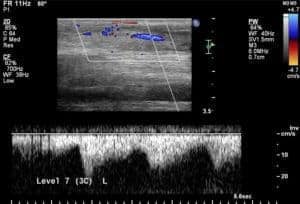
Colors displayed by Doppler ultrasonography could help vets better follow tendonitis’ healing processes.
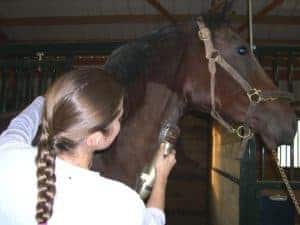
Study results suggest that even if horses don’t seem to mind clipping, they might still find it stressful.

Researchers determined that it’s the sire’s genes that take the lead in developing the mare’s placenta.

This revived species could offer scientists some exciting equine research opportunities.

Feeding hay before grains appeared to reduce the intensity of cribbing episodes in a recent study.

Learn about the 21 different amino acids your horse needs to build proteins in his body.

Mules appear to have a faster capacity to navigate around objects than horses and donkeys, researchers say.

However, young horses were able to detect more obvious human body cues like finger-pointing.
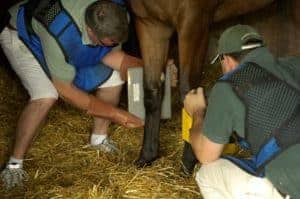
Researchers confirmed what some believed all along: JOCC might be one disease, but it?s a very complex one.
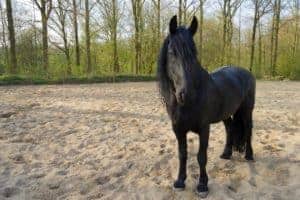
Researchers developed a test to find out whether horses are optimistic, pessimistic, or somewhere in between.
Yes, even horses can be optimistic or pessimistic, according to Swiss equine behavior scientists who have developed a test to find out whether horses are one or the other, or somewhere in between.