Stephanie L. Church, Editorial Director

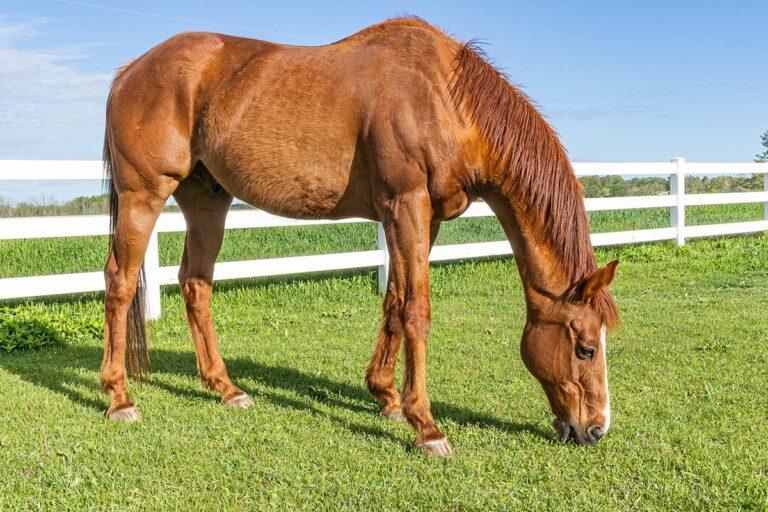
Stephanie L. Church, editorial director for The Horse and Stable Management, grew up riding and caring for her family’s horses in Central Virginia and received a B.A. in journalism and equestrian studies from Averett University. She joined The Horse in 1999 and has led the editorial team since 2010. A 4-H and Pony Club graduate, she enjoys dressage, eventing, and trail riding. Her heart horse, It Happened Again (“Happy,” pictured), a former graded-stakes-winning Thoroughbred gelding, was her longtime mount and remains a lasting inspiration. She now has an 8-year-old off-track Thoroughbred, Dune of Pilat (“Dune”), and is enjoying building a partnership with him. Stephanie is based in Lexington, Kentucky.

Articles by: Stephanie L. Church, Editorial Director

Equine Influenza Spreads in the U.K.

Equine influenza has spread to nearly 20 premises—mostly Thoroughbred training stables–in the United Kingdom, and it has been detected in the eastern, central, and southern parts of the country. “The reason(it’s unusual) is because despite the fact that horses have been very well vaccinated and have very high antibody levels, they are still becoming infected with this strain of virus,”

Read More

Uterine Lavage Before Insemination Not Harmful to Mare Fertility

Uterine lavage can be performed immediately prior to artificial insemination in mares without adversely affecting fertility, according to a recent study completed at the University of Idaho (UI) in Moscow, Idaho. The uterine lavage process is used to clear the uterus of inflammatory fluids that could decrease the viability of semen in mares.

Researchers already knew that uterine lavag

Read More

USDA Wants More Medical Records Kept

The USDA’s Animal and Plant Health Inspection Service (APHIS) is seeking comments on a proposed change to Animal Welfare Act regulations that would require registered research facilities that use equids in research, other than for agricultural research purposes, to maintain medical records as part of their program of adequate veterinary care.

Currently, the maintenance of veterinary

Read More

23 Florida EEE Cases

The number of confirmed Eastern equine encephalitis cases (EEE) in horses has risen to 23 in north central Florida, according to Bill Jeter, DVM, Diagnostic Veterinary Manager for Florida’s Division of Animal Industry. This confirmed earlier speculations that 2003 will have higher-than-normal numbers of EEE cases this year. The virus has been confirmed in 12 counties, and 14 of the 23 cases

Read More

EHV Outbreak in the U.K. Unusual; Asymptomatic Cases Could be EHV-4

“It’s very unusual to get EHV-1 outbreaks all at the same time on different premises,” said James Wood, BSc, BvetMed, MSc, PhD, MRCVS, DLSHTM, Dipl. ECVPH, Head of Epidemiology at the Animal Health Trust in the United Kingdom, about the recent flare of neurologic equine herpesvirus-1 cases in his country. At least 12 horses have been euthanized after infection with the debilitating virus.

Read More

Details of the U.K. EHV-1 Outbreak

The United Kingdom’s Animal Health Trust (AHT) has detailed the country’s EHV-1 outbreak that began in early March. At least 12 horses have been euthanized due to advanced neurologic deterioration resulting from infection.

The first reported cases were detected in Gloucestershire. Two Thoroughbreds showed neurologic signs on March 12-13. Both had rapid progression of hindlimb ataxia

Read More

Equine Influenza in the U.K.

Equine influenza has been confirmed to date in 14 Thoroughbred race training stables since March 13, according to the United Kingdom’s Animal Health Trust in Newmarket, Suffolk.

Influenza is not usually life threatening, but rather makes a horse uncomfortable and vulnerable to other diseases. Treatment typically includes a minimum of three to four weeks of rest to avoid long-term

Read More

EHV-1 in the United Kingdom

Several regions of the United Kingdom have been fighting the neurologic form of equine herpesvirus type 1 (EHV-1). At least 12 horses have been euthanized due to advanced neurologic deterioration resulting from infection. According to the British Horse Society (BHS), there are currently no horse movement restrictions imposed by the United Kingdom’s Department for Environment, Food and Rural

Read More

Group Seeks to Redefine What Only Veterinarians Can Do

Each state has a veterinary practice act, which is a legal interpretation of what constitutes veterinary practice in that state on all species. For example, chiropractic or acupuncture might be considered veterinarian-only skills in some states, while in other states they can be performed by a skilled lay person under a licensed veterinarian’s direction.

The American Veterinary Medica

Read More

Herpesvirus Type 1 Hits Hard

Ohio and Pennsylvania have confirmed or reported cases of the neurologic form of equine herpesvirus type 1 (EHV-1, see Pennsylvania information on page 15). But the worst problems reported thus far have occurred in Ohio, where 12 horses died in an outbreak at the University of Findlay (see article #4127 at www.TheHorse.com) and three other Ohio horses die

Read More

EHV-1 in Penn., Possible Iowa Cases

While Ohio veterinarians are busy fighting what seems to be an especially aggressive strain of equine herpesvirus type 1 (EHV-1), two horses were euthanized due to illness from the virus at Penn National Race Course in Grantville, Penn., in an outbreak that appears to be a more typical, sporadic episode. Additionally, at least two Iowa horses have been euthanized after battling what officials

Read More

WNV and Equine Abortions?

A question has been raised whether the increased number of West Nile virus (WNV) cases in Kentucky in late summer and fall 2002 contributed to a rise in fall abortions. A retrospective study by the University of Kentucky’s Livestock Disease and Diagnostic Center (LDDC), from July of 2002 through early 2003, looked at 400 equine abortions for evidence of WNV. Their findings were “surprising,”

Read More

New Text Examines Equine Lameness

The long-awaited reference Diagnosis and Management of Lameness in the Horse was recently released by Elsevier Science. The book was co-authored by Mike W. Ross, DVM, Dipl. ACVS, of the University of Pennsylvania’s school of veterinary medicine; and Sue J. Dyson, FRCVS, of the Center for Equine Studies at the Animal Health Trust in the United Kingdom. Ross and Dyson offer comprehensive

Read More

EHV-1 Confirmed in Three Horses at Kentucky Racetrack

Equine herpesvirus type 1 (EHV-1) has been confirmed as the cause of illness in three Thoroughbreds that were stabled in a training barn at Turfway Park in Florence, Ky. Tuesday’s announcement follows treatment of several EHV-1 outbreaks in Ohio and Pennsylvania since January.

The EHV-1 organism can cause three different forms of disease, including rhinopneumonitis (a respiratory

Read More

Officials Explain Timing of Kentucky EHV-1 Announcement

Animal health officials today explained that the announcement about the equine herpesvirus type 1 (EHV-1) cases at Turfway Park in Florence, Ky., was not made sooner was because the virus wasn’t considered to be actively circulating in the environment until a third horse exhibited clinical signs and tested positive for the virus.

A gelding and a filly with neurologic signs were

Read More

More From The Horse

electrolytes for horses; Why Do Electrolytes Encourage Horses to Drink?
spring pasture, turnout tips, horse turn out, horse in pasture, grazing, spring, spring turnout
Horses in their stable
What's New With Weaning?

Stay on top of the most recent Horse Health news with

FREE weekly newsletters from TheHorse.com

Sponsored Content

Weekly Poll

sponsored by:

How often do you apply fly spray to your horse during peak fly season?
176 votes · 176 answers

Readers’ Most Popular

The Horse
Privacy Overview

This website uses cookies so that we can provide you with the best user experience possible. Cookie information is stored in your browser and performs functions such as recognising you when you return to our website and helping our team to understand which sections of the website you find most interesting and useful.