Stephanie L. Church, Editorial Director

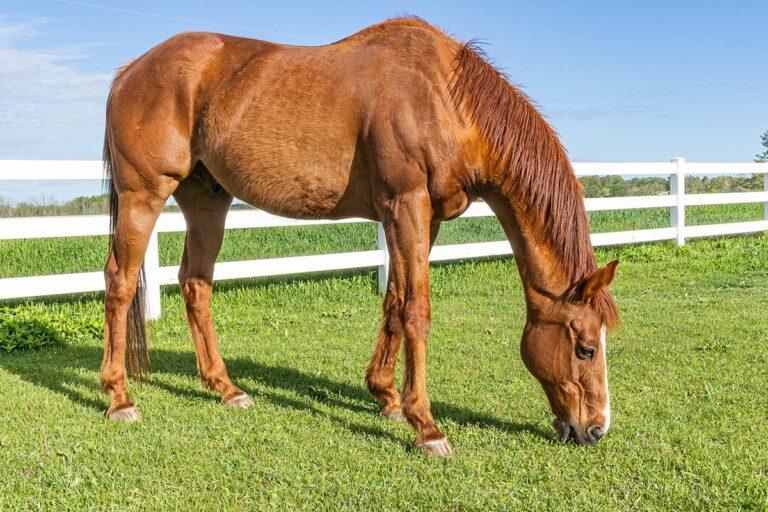
Stephanie L. Church, editorial director for The Horse and Stable Management, grew up riding and caring for her family’s horses in Central Virginia and received a B.A. in journalism and equestrian studies from Averett University. She joined The Horse in 1999 and has led the editorial team since 2010. A 4-H and Pony Club graduate, she enjoys dressage, eventing, and trail riding. Her heart horse, It Happened Again (“Happy,” pictured), a former graded-stakes-winning Thoroughbred gelding, was her longtime mount and remains a lasting inspiration. She now has an 8-year-old off-track Thoroughbred, Dune of Pilat (“Dune”), and is enjoying building a partnership with him. Stephanie is based in Lexington, Kentucky.

Articles by: Stephanie L. Church, Editorial Director

Gluck West Nile Virus Workshop: A Review of WNV in Kentucky

Kentucky has kept extensive statistics on West Nile virus (WNV) cases in the state. At the March 7 West Nile Virus Workshop at the University of Kentucky’s Gluck Equine Research Center, Rusty Ford, Kentucky Equine Programs Manager, reviewed equine WNV statistics from past years. He also described how the state planned to make reporting cases easier in 2003.

West Nile virus was first

Read More

West Nile Virus Workshop: WNV and Public Health

“This is the largest arboviral (disease) epidemic ever documented in the Western Hemisphere,” said Sue Billings, DVM, MSPH, Kentucky Department for Public Health Medical Epidemiologist. Billings has been working with the public health side of West Nile virus (WNV) surveillance since the virus first appeared in mosquitoes, birds, and horses in Kentucky in 2001. Billings attended a recent WNV

Read More

West Nile Virus Innovator Vaccine

Rob Keene, DVM, field veterinarian for Fort Dodge Animal Health, talked about the West Nile virus vaccine at the West Nile Virus (WNV) Workshop held March 7 at the University of Kentucky’s Gluck Equine Research Center. Keene explained plans for packaging and marketing the vaccine–which received a full license from the USDA on Feb. 6–and described the efforts already underway to combine the

Read More

Antimicrobials and Wound Healing

There is no significant difference between rates of wound healing with povidone iodine ointment and two formulations of silver sulfadiazine versus untreated controls, according to a recent study completed at the Virginia-Maryland Regional College of Veterinary Medicine (VMRCVM). Additionally, all bandaged wounds regardless of treatment, produced exuberant granulation tissue, or proud

Read More

Herpesvirus Hits Hard

(Updated 3/07/03) Ohio and Pennsylvania have confirmed or reported cases of the neurologic form of equine herpesvirus type 1. But the worst problems reported thus far have occurred in Ohio, where 12 horses died in an outbreak at the University of Findlay (see article #4127) and three other Ohio horses died from exposure t

Read More

Measuring Joint Damage

New research is leading veterinarians one step closer to being able to detect the first stages of cartilage damage in joints, which could lead to crippling osteoarthritis. Researchers eventually want to analyze joint fluid or blood samples and assess the concentration of specific biochemical markers thought to be involved in the degradation process of cartilage to predict actual damage i

Read More

Ohio EHV-1 Outbreak; Strain Might Be Atypical

The worst is over in an equine herpesvirus type 1 (EHV-1) outbreak that thus far has caused the death of 12
horses, and scientists are still studying the virus to see if it is somehow different from the normal EHV-1 strain. The outbreak, which began Jan. 12, quarantined the entire equine population of 138 horses at the University of Findlay’s English riding facility in Findlay, Ohio. It

Read More

Medication Rules Revised

The USA Equestrian (USAE) Board of Directors approved a rule change on Jan. 19 that should reduce the incidence of corticosteroid abuse in equine athletes. The USAE sets rules for 27 breeds and disciplines competing in the United States, and is the U.S. equestrian national governing body. The corticosteroid rule will go into effect Dec. 1, 2003.

The USAE’s Veterinary and Equine Drugs and

Read More

West Nile Virus Found In Aborted Kentucky Fetuses

Evidence of West Nile virus (WNV) was found in 35 aborted fetuses in Kentucky since July of 2002, according to Lenn Harrison, VMD, head of the Kentucky Livestock Disease Diagnostic Center in Lexington. “We have handled about 400 aborted fetuses and tested them, so this is less than 10%,” he reported on Feb. 4. He emphasized that WNV has not been known to cause abortion in mares; therefore,

Read More

Antimicrobial Resistance

Antimicrobial drugs in veterinary medicine have made a dramatic improvement in the health of our horses, but it’s alarming when infections do not respond to these drugs. “It is not a new phenomenon, but there has been ever-growing concern about antimicrobial resistance.”

Read More

Veterinarians and Handling the Problem Horse

Fitch said that he often handles problem horses by himself, as a handler might not anticipate the interaction between him and the horse and can end up in the way or injured. Also, it’s important to have a place where the horse can move around in case of a panic–for that reason, Fitch doesn’t like treating horses in cross ties.

Read More

Preventing EPM

Saville presented a summary of what is known about EPM, and he believes that with better understanding of the disease, wildlife management, risk-factor manipulation, prophylactic medications, and possible vaccination, that prevention of EPM can be attained.

Read More

Possible Equine Herpesvirus Type 1 Cases in Iowa

At least two Iowa horses have been euthanized after battling what officials believe might be the neurologic form of equine herpesvirus type 1 (EHV-1). According to Iowa State Veterinarian John Schiltz, DVM, officials know of only one premise possibly affected by the virus, where these two horses lived. “Some of the preliminary tests have come back negative, but the definitive testing is

Read More

West Nile Virus Vaccine Receives Full Licensure

The USDA has issued a full license to Fort Dodge Animal Health for its West Nile virus (WNV) vaccine that has been distributed under a conditional license since August of 2001. Results of efficacy studies completed and submitted to the USDA qualified the vaccine for full licensure. According to Tom Overbay, DVM, director, Field Veterinary Services at Fort Dodge, 95% of horses vaccinated with

Read More

Extracorporeal Shock Wave Therapy (AAEP 2002)

Scott McClure, DVM, PhD, of Iowa State, reported on the effects of extracorporeal shock wave therapy (ESWT) on suspensory ligament desmitis. He noted that ESWT is being used for the treatment of equine musculoskeletal diseases.

Read More

OSU Equine Hospital Temporarily Closes for Cleaning and Disinfection; Three Horses Showed Neurologic Signs

The Equine Hospital at the Ohio State University College of Veterinary Medicine has closed its doors to non-emergency horse admissions until Feb. 20, 2003. This action has been taken to allow disinfection of the hospital because of potential contamination by horses admitted January 18, 19, and 24, 2003 from an outbreak of equine herpes virus type 1 (EHV-1) infection that occurred at the

Read More

More From The Horse

electrolytes for horses; Why Do Electrolytes Encourage Horses to Drink?
spring pasture, turnout tips, horse turn out, horse in pasture, grazing, spring, spring turnout
Horses in their stable
What's New With Weaning?

Stay on top of the most recent Horse Health news with

FREE weekly newsletters from TheHorse.com

Sponsored Content

Weekly Poll

sponsored by:

How often do you apply fly spray to your horse during peak fly season?
176 votes · 176 answers

Readers’ Most Popular

The Horse
Privacy Overview

This website uses cookies so that we can provide you with the best user experience possible. Cookie information is stored in your browser and performs functions such as recognising you when you return to our website and helping our team to understand which sections of the website you find most interesting and useful.