Stephanie L. Church, Editorial Director

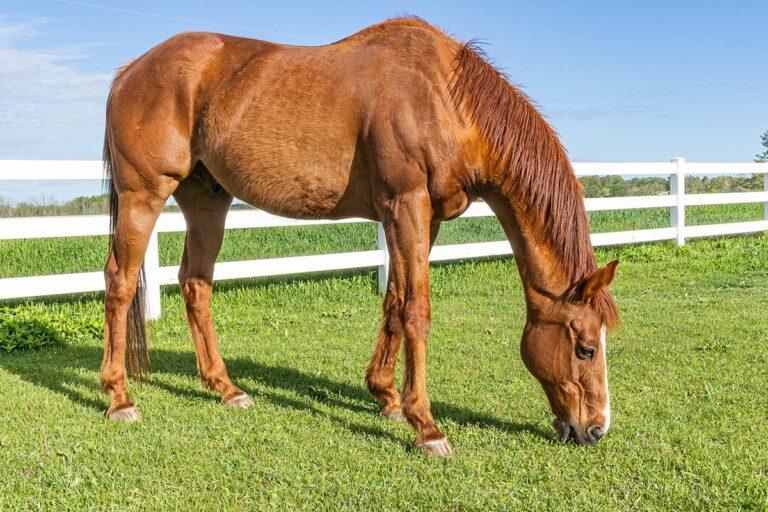
Stephanie L. Church, editorial director for The Horse and Stable Management, grew up riding and caring for her family’s horses in Central Virginia and received a B.A. in journalism and equestrian studies from Averett University. She joined The Horse in 1999 and has led the editorial team since 2010. A 4-H and Pony Club graduate, she enjoys dressage, eventing, and trail riding. Her heart horse, It Happened Again (“Happy,” pictured), a former graded-stakes-winning Thoroughbred gelding, was her longtime mount and remains a lasting inspiration. She now has an 8-year-old off-track Thoroughbred, Dune of Pilat (“Dune”), and is enjoying building a partnership with him. Stephanie is based in Lexington, Kentucky.

Articles by: Stephanie L. Church, Editorial Director

AAEP 2002: Possible Environmental Sources of Drug Positives

As post-performance drug testing methods become more sensitive, racehorse and show horse owners, veterinarians, handlers, and trainers have become more aware that positive drug tests could be the result of inadvertent contamination of the horse with chemicals present in the environment. Cynthia Kollias-Baker, DVM, PhD, director of the Racing Laboratory at the University of Florida, recently

Read More

Importance of Antimicrobial Resistance

The introduction of antimicrobial drugs to veterinary medicine has made a dramatic improvement in the health of our horses, but it’s alarming when infections do not respond to these drugs. “It is not a new phenomenon, but there has been ever-growing concern about antimicrobial resistance,” said Josie Traub-Dargatz, DVM, MS, Dipl. ACVIM, of Colorado State University, in her presentation at the

Read More

WNV Vaccination in Mares and Foals

There were nearly 14,000 reported cases of West Nile virus (WNV) in the United States in 2002 by the end of November, and many broodmares were exposed to the virus even if not clinically affected. As the country begins its fifth year of handling

Read More

West Nile Virus Detected in Florida Alligators

Three farm-raised alligators from Central Florida have tested positive for West Nile virus (WNV), according to officials at the University of Florida (UF) College of Veterinary Medicine (CVM). This is the first time the virus has affected U.S. reptiles. Multiple agencies were involved in the diagnosis, including the CVM, the Centers for Disease Control and Prevention, and the Florida

Read More

Educational Brochures

The American Association of Equine Practitioners (AAEP) has recently revised and redesigned 21 client education brochures with the support of Bayer Animal Health and Purina Mills. The brochures are available to veterinarians and come in packages of 25 at a low cost. According to Dana Roberts, AAEP’s Owner Education Coordinator, several other brochures are in the works and will be available in

Read More

West Nile Virus Changed to Endemic Disease Status; Fees will be Charged for Some WNV Testing

Government veterinary officials recently designated West Nile virus (WNV) as an endemic disease in the United States. The USDA’s Animal and Plant Health Inspection Service (APHIS) Veterinary Services (VS) previously had considered WNV a Foreign Animal Disease (FAD), since it had never been detected in the United States prior to 1999. (Read more about WNV at

Read More

West Nile Virus Vaccination in Mares and Foals

There were nearly 14,000 reported cases of West Nile virus (WNV) in the United States in 2002 by the end of November, and many broodmares were exposed to the virus even if not clinically affected. As the country begins its fifth year of handling

Read More

Stretching Out the Kinks

There’s nothing like a good stretch–when you wake up in the morning, during breaks at work, or before and after your workout. In human physiology, we know about stretching and its benefits for the athlete. Many practitioners and physical

Read More

West Nile Virus Still Spreading

As of Nov. 3, cases of equine illness caused this year by West Nile virus (WNV) confirmed at the USDA’s National Veterinary Services Laboratories had risen to 12,843; 12,105 cases more than the final case count for 2001. Vaccinating for WNV and

Read More

Diagnosing Problems Using Equine Hair

A horse’s hair can be used as a diagnostic tool in assessing nutritional status, environmental poisoning, and drug use and abuse, according to Mark Dunnett, BVSc, of the UK’s Royal Veterinary College. Dunnett presented this topic at the Kentucky

Read More

AQHA Considers Changes to Coat Color Requirements

Cremellos or perlinos, which are horses that exhibit lightly pigmented or pink skin over the body, white or cream-colored hair, and blue eyes, might soon be eligible for registration in the American Quarter Horse Association (AQHA). In early

Read More

Periodontal Disease in Horses

University veterinary hospitals and private practitioners have begun to treat and prevent periodontal disease in horses with a new piece of dental equipment called the Equine Dental System. The Universities of Georgia (UGa), Illinois, and

Read More

Pigeon Fever in Colorado and Wyoming

There has been an unusual rise in cases of pigeon fever detected in Colorado and Wyoming, according to recent reports from Colorado State University (CSU) and the Wyoming State Veterinary Lab.


Seventy-six cases from Colorado’s Front Rang

Read More

Horse Carrying 12-Year-Old Rider Shot

According to an Associated Press report, an 89-year-old deer hunter has been charged with shooting a horse while it was being ridden by a 12-year-old girl near Minneapolis, Minn., Nov. 9.


The hunter, Clinton Hulbut, thought he had seen a

Read More

Second Horse Perishes in Sinkhole

Despite rescuers? desperate efforts, the second of two horses trapped after their barn was engulfed in a sinkhole died Nov. 15. According an Associated Press report, the sinkhole in Sanford, Fla. was 50 feet wide and 30 feet deep.


The

Read More

New Client Education Brochures Available to Veterinarians

The American Association of Equine Practitioners (AAEP) has produced 21 client education brochures with the help of Bayer. The brochures are available to veterinarians and come in packages of 25, at $5.50 a package for member veterinarians and

Read More

More From The Horse

electrolytes for horses; Why Do Electrolytes Encourage Horses to Drink?
spring pasture, turnout tips, horse turn out, horse in pasture, grazing, spring, spring turnout
Horses in their stable
What's New With Weaning?

Stay on top of the most recent Horse Health news with

FREE weekly newsletters from TheHorse.com

Sponsored Content

Weekly Poll

sponsored by:

How often do you apply fly spray to your horse during peak fly season?
175 votes · 175 answers

Readers’ Most Popular

The Horse
Privacy Overview

This website uses cookies so that we can provide you with the best user experience possible. Cookie information is stored in your browser and performs functions such as recognising you when you return to our website and helping our team to understand which sections of the website you find most interesting and useful.