Stephanie L. Church, Editorial Director

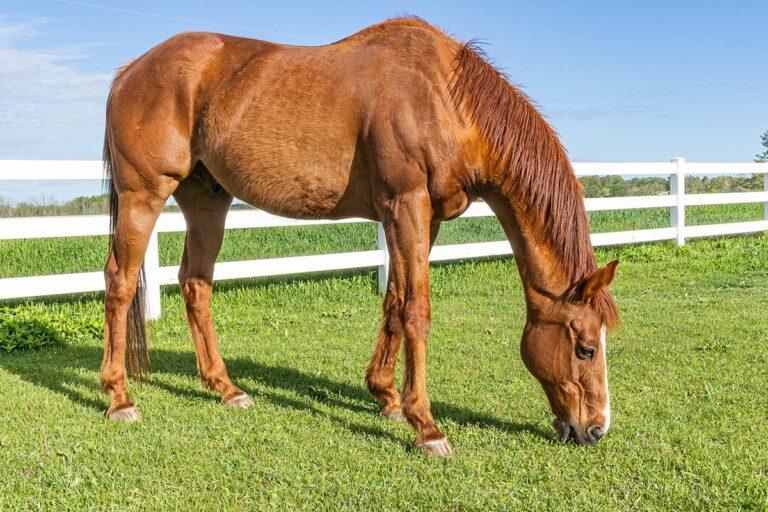
Stephanie L. Church, editorial director for The Horse and Stable Management, grew up riding and caring for her family’s horses in Central Virginia and received a B.A. in journalism and equestrian studies from Averett University. She joined The Horse in 1999 and has led the editorial team since 2010. A 4-H and Pony Club graduate, she enjoys dressage, eventing, and trail riding. Her heart horse, It Happened Again (“Happy,” pictured), a former graded-stakes-winning Thoroughbred gelding, was her longtime mount and remains a lasting inspiration. She now has an 8-year-old off-track Thoroughbred, Dune of Pilat (“Dune”), and is enjoying building a partnership with him. Stephanie is based in Lexington, Kentucky.

Articles by: Stephanie L. Church, Editorial Director

Ohio EHV-1 Outbreak; One More Neurologic Horse

One more horse has shown neurologic signs of equine herpesvirus type 1 (EHV-1) in the outbreak which began Jan. 12 at the University of Findlay’s English riding facility in Findlay, Ohio. Twelve horses have died during the outbreak, and at least 43 horses have exhibited neurological signs of the disease (including the 12 which died). The latest neurologic case is considered stable, and

Read More

Anthrax Kills 42 Horses in Nicaragua

According to a Feb. 10 proMED report, a virulent anthrax outbreak has caused the deaths of 42 horses from rural communities in the municipalities of Pueblo Nuevo and Condega in Nicaragua. The report was made from a translation of a story in the Nicaraguan newspaper, La Prensa (https://www.laprensa.com.ni).

Anthrax is characterized by a

Read More

AAEP 2002: Inflammatory Airway Disease

“What is interesting to understand about the horse is that at rest, it breathes about 86,000 liters of air a day, about 25,000 gallons, which may carry quite a bit of dust particles that can really injure the respiratory tract,” said Laurent Couëtil, DVM, Dipl. ACVIM, of Purdue University in the In Depth: Inflammatory Airway Disease (IAD) session at the 2002 American Association of Equine

Read More

Equine Herpesvirus Type 1 in Canada

On the heels of the deadly equine herpesvirus type 1 (EHV-1) outbreak in Ohio came a report of a private farm in Canada with several horses dead of the same cause. Scott Weese, DVM, DVSc, Dipl. ACVIM, assistant professor of clinical studies at the University of Guelph’s Ontario Veterinary College, said Canada has had at least one big EHV-1 outbreak in the past six months, but sporadic

Read More

Ohio Equine Herpesvirus Type 1 Victims Recovering

The “miserable, tragic experience” of losing a dozen horses and fighting to save more than 100 others which became ill has devastated the University of Findlay. It will take weeks or months for the remaining 30 horses with neurologic signs of equine herpesvirus type 1 (EHV-1) to recover. The outbreak began on Jan. 12, and the losses were still occurring as late as Feb. 1, when the last o

Read More

Progression of the Ohio EHV-1 Outbreak

Beginning Jan. 12 many horses at the University of Findlay’s James L. Child Jr. Equestrian Complex developed fever and depression, and some had nasal discharge and wouldn’t eat. Within 48-72 hours, 85% of the horses showed similar signs.

Read More

AAEP Convention: Ground Handling the Problem Horse

Every veterinarian has had an equine client (or three) that resisted treatment and often a nightmarish story to go along with it. Compliant patients allow for safer and more efficient veterinary practices, so the American Association of Equine Practitioners (AAEP) teamed up with the American Quarter Horse Association at the AAEP convention to offer veterinarians a live horse demonstration

Read More

West Nile Virus Gets Endemic Disease Status; Fees Will be Charged for Some WNV Testing

Government veterinary officials recently designated West Nile virus (WNV) as an endemic disease in the United States. The USDA’s Animal and Plant Health Inspection Service (APHIS) Veterinary Services (VS) previously had considered WNV a Foreign Animal Disease (FAD), since it had never been detected in the United States prior to 1999. (Read more about WNV at www.TheHorse.com/wnv.) The

Read More

CEM Exemptions Rescinded for Spanish Purebred Horses

Officials from the USDA’s National Center for Import/Export recently rescinded a contagious equine metritis (CEM) exemption once given to Spanish purebred horses. The exemption allowed these horses to pass through the import center with an abbreviated form of CEM testing, an allowance that was revoked due to repeat violations of U.S. equine import requirements.

Contagious equine metritis

Read More

Equine Herpesvirus Type-1 Outbreak Resolving; Strain Might be Atypical

The worst is over in the unusual equine herpesvirus type-1 (EHV-1) outbreak that led to the death of 10 horses and has affected the remaining equine population at the University of Findlay’s English riding facility in Findlay, Ohio, since Jan. 12. Veterinarians have not detected any new cases of the respiratory and neurological illness in the last five days at the facility. Ten horses with

Read More

Ohio Disease Confirmed as Equine Herpesvirus Type-1

Ohio Department of Agriculture (ODA) officials have reported that equine herpesvirus type-1 (EHV-1) has been confirmed as the cause of the respiratory and neurologic illness that has plagued University of Findlay horses since Jan. 12.

“Our laboratory test results substantiate the initial clinical diagnosis by veterinary experts a few days ago that EHV-1 caused the current outbreak of

Read More

Care of Sick Horses in Ohio Outbreak

The battle against the paralyzing disease that hit the English riding facility at the University of Findlay in Findlay, Ohio was lost for 10 horses, but is still being waged for the 22 others which have been affected neurologically (see article #4079 at www.TheHorse.com). C. Michael Kerns, DVM, Director of University Equine Veterinary Services at the

Read More

Ten Ohio Horses Dead; Possible Equine Herpesvirus-1 Outbreak

At least 10 horses have died or have been euthanized at the University of Findlay (UF) in Findlay, Ohio, after battling a respiratory and neurologic illness. Preliminary polymerase chain reaction (PCR) tests completed on tissue samples from affected horses by the Ohio Department of Agriculture’s (ODA) Animal Disease Diagnostic Laboratory this morning came back as “presumptive positive” for

Read More

Drugs and Medications Rules Revised at USA Equestrian Meeting

A rule change designed to reduce incidence of corticosteroid abuse in equine athletes was among several topics discussed in the Veterinary and Equine Drugs and Medications (D&M) committee meetings and D&M Open Forum Jan. 16-17 at the 2003 USA Equestrian (USAE) Convention in Lexington, Ky. Veterinarians, competitors, and industry officials on these committees convened to vote on rules

Read More

AAEP Convention Attracts Record Crowd

Over 5,200 veterinary professionals, guests and exhibitors attended the American Association of Equine Practitioners’ (AAEP) 48th Annual Convention in Orlando, Fla., setting a new attendance record for the meeting. The convention, held Dec. 4-8, 2002, featured nearly 100 scientific presentations, a sold-out trade show and an equine health seminar for horse owners.

“Dr. Tom Lenz and th

Read More

AAEP 2002: Prevention of EPM

 “Why should we be concerned about EPM (equine protozoal myeloencephalitis)?” asked William J.A. Saville, DVM, Dipl. ACVIM, PhD, of The Ohio State University (OSU) at the 2002 American Association of Equine Practitioners (AAEP) convention. “Because it is still an important equine disease, although we have a low incidence of the disease, and regardless of therapies available to treat EPM,

Read More

More From The Horse

electrolytes for horses; Why Do Electrolytes Encourage Horses to Drink?
spring pasture, turnout tips, horse turn out, horse in pasture, grazing, spring, spring turnout
Horses in their stable
What's New With Weaning?

Stay on top of the most recent Horse Health news with

FREE weekly newsletters from TheHorse.com

Sponsored Content

Weekly Poll

sponsored by:

How often do you apply fly spray to your horse during peak fly season?
175 votes · 175 answers

Readers’ Most Popular

The Horse
Privacy Overview

This website uses cookies so that we can provide you with the best user experience possible. Cookie information is stored in your browser and performs functions such as recognising you when you return to our website and helping our team to understand which sections of the website you find most interesting and useful.